
Reading certain files in the /proc filesystem sounds mundane. Yet one particular file turns out to drive surprising amounts of system activity. Linux 7.2 changes that dynamic with targeted fixes that cut overhead dramatically.
Developers have long known /proc offers a window into kernel state. Tools query it for process details, memory stats and mounted filesystems. But frequency matters. And one entry stands out.
The optimization that changes everyday Linux behavior
Reading /proc/filesystems happens far more often than expected. The SELinux library pulls this data repeatedly. Many common programs link against libselinux. Even utilities like sed end up triggering these reads. The result? Constant kernel work on a file that once seemed obscure.
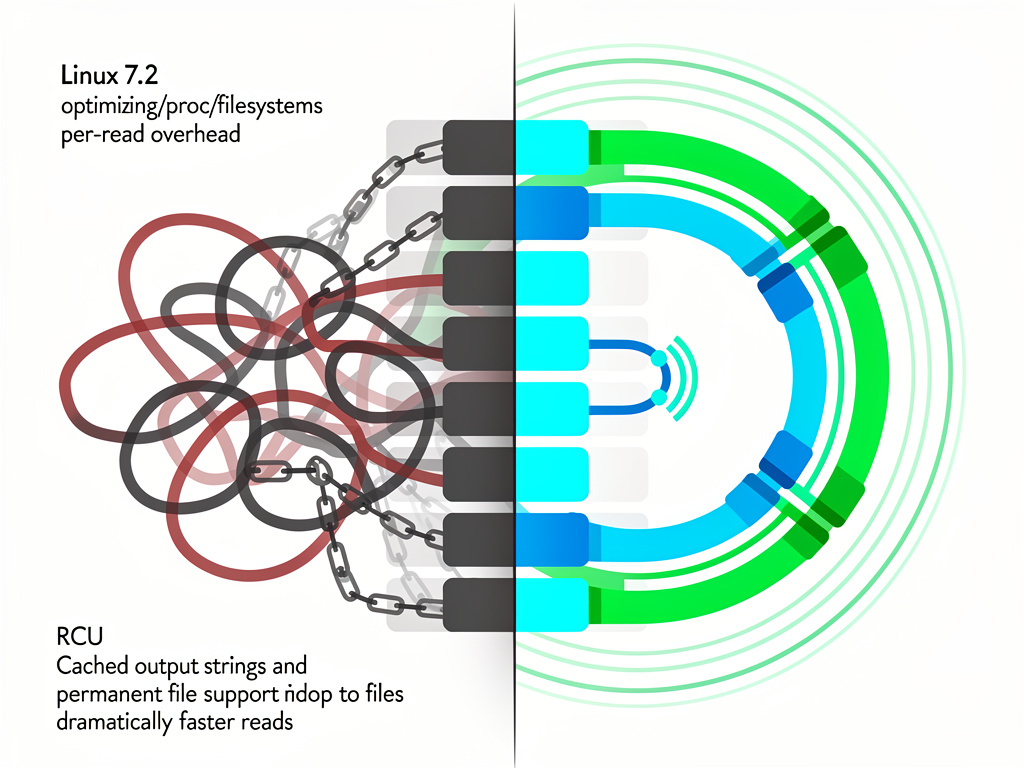
Christian Brauner tackled the problem head-on. He described the prior code bluntly. “The file was a mess with a hand-rolled linked list in desperate need of a cleanup.” His pull request laid out three fixes. The filesystems list now uses RCU. /proc files gain support for permanent marking outside the proc subsystem. Most visibly, the output string gets pre-generated and cached. No more pointer chasing or per-entry printf calls on every read. (Phoronix, June 15, 2026)
Performance jumps stand out. Tests show gains as high as 444% compared with current kernels. Scalability improves too. Reference counting on open and close gets bypassed entirely. The change feels small on paper. Its effect ripples across user-space workloads that query filesystem support repeatedly.
Linus Torvalds merged the series the same day. The timing fits the opening of the Linux 7.2 merge window. Such low-level VFS tweaks often land early. They set the tone for what follows in filesystems, security and performance.
This isn’t the only filesystem news arriving for 7.2. Separate patches now expose case-folding behavior of local filesystems to user space. The goal? Better interoperability with Windows NFS clients and other systems that need accurate case-insensitivity reporting rather than guesswork. (Phoronix, June 15, 2026)
Broader context helps. The kernel carries dozens of filesystems. Estimates put the count near 69 in recent trees. Maintenance burden grows when some see little active work. New requirements for proposed filesystems have begun to surface in VFS trees ahead of the merge window. Yet the /proc/filesystems optimization addresses existing reality instead of new code.
Procfs itself has always balanced convenience and correctness. Files appear as regular entries but generate content on the fly. Consistency questions arise when reads span multiple system calls. Earlier kernel versions showed races in files such as /proc/mounts or /proc/uptime until atomicity fixes arrived. The new pre-cached approach for /proc/filesystems sidesteps similar pitfalls by preparing data once.
But. The real story sits in the frequency. Libselinux isn’t some niche security component. It sits inside everyday binaries. Each invocation can trigger a read. Multiply that across containers, servers, desktops and monitoring tools. The cumulative tax adds up. Removing it yields measurable relief.
And the numbers tell part of the tale. Four-hundred forty-four percent faster sounds extreme. It reflects how cheap the old path had become under repeated calls. Pre-generation turns repeated formatting into a single cached buffer. RCU lets readers avoid locks in the common case. Permanent marking reduces per-open overhead. Each piece contributes.
Observers note that such fixes often surface only after profiling real workloads. Michael Larabel at Phoronix highlighted this one as the most surprising optimization seen so far in the 7.2 cycle. That surprise factor matters. It reminds kernel teams that even well-trodden paths can hide inefficiencies.
Production environments stand to benefit first. Container hosts with frequent process creation. Security tools that probe capabilities. Desktop sessions that launch many small programs. Each gains a sliver of efficiency. Those slivers compound.
The change also signals maturing procfs infrastructure. Allowing permanent files from outside fs/proc/ opens doors for other subsystems. Future patches may mark additional entries to avoid repeated setup costs. Expect similar cleanups elsewhere.
Still, not every workload will notice. Systems with few SELinux-dependent binaries see smaller gains. Yet the code path becomes objectively better for everyone. Cleaner list management. Less churn on open and close. Cached output that stays consistent.
Kernel 7.2 itself marks another step after the shift to the 7.x series earlier in 2026. Linux 7.0 arrived with memory management improvements, XFS enhancements and hardware updates. Later point releases tightened permissions on /proc/PID/mem to reduce attack surface. The pattern holds. Incremental gains accumulate into noticeable differences over time.
Developers working on user-space tools may now revisit how they query filesystem lists. Caching results locally becomes even more attractive when the kernel supplies faster answers. Scripts that once called external commands repeatedly can simplify.
So the optimization lands at an interesting moment. Filesystem proliferation continues. New drivers and features arrive. Yet attention returns to fundamentals. A single /proc file. A library used everywhere. A linked list that needed replacement. The result? Faster reads. Less overhead. Better scalability.
That combination explains why the patch series earned quick merge approval. It fixes a real, measurable drag on common operations. And it does so without altering the user-visible interface. Programs continue to read /proc/filesystems exactly as before. They simply receive answers quicker.
Watch for benchmarks as 7.2-rc cycles progress. Container orchestration tests. Desktop startup timings. Security policy loading. Each may show secondary improvements traceable to this one change. The direct 444% figure already makes the case. Indirect effects could prove larger still.
In the end, this story captures how Linux evolves. Not through grand redesigns alone. But through careful inspection of hot paths that everyone assumed were fine. A hand-rolled list. Repeated formatting. Frequent calls from unexpected places. Fix those pieces. The system gets faster. Quietly. Effectively.


 WebProNews is an iEntry Publication