
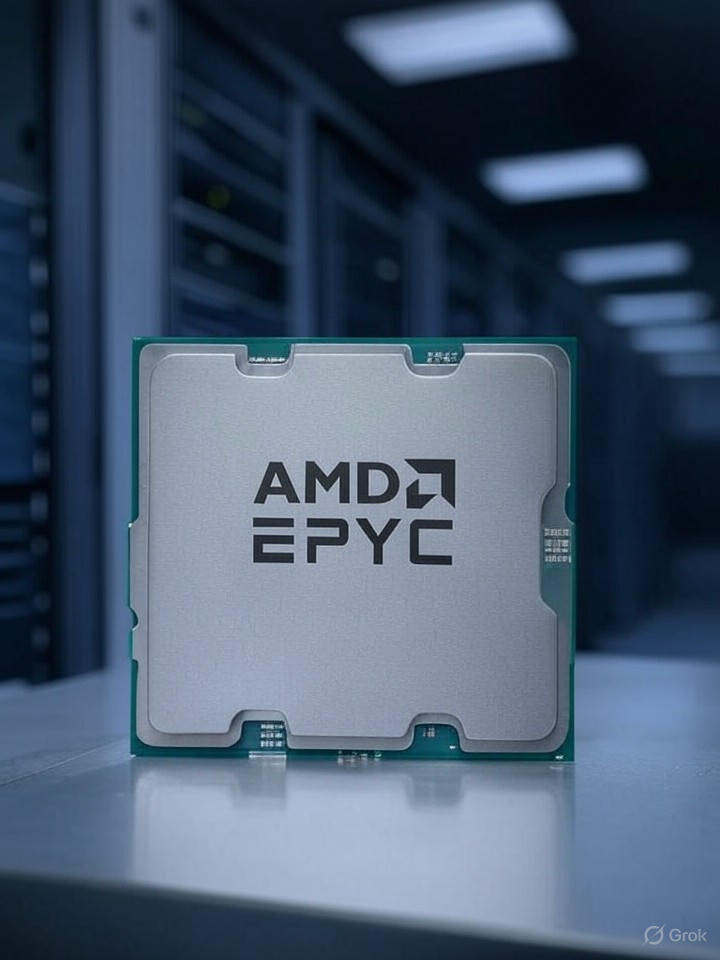
In the realm of high-performance computing, the latest iterations of Linux kernels continue to push boundaries, particularly when paired with advanced server processors like AMD’s EPYC Turin series. Recent benchmarks reveal that Linux 6.18 delivers measurable improvements on these 5th-generation EPYC chips, building on a trajectory of optimizations that have enhanced efficiency for data-center workloads. According to tests conducted by Phoronix, the kernel’s refinements in scheduling and memory management yield up to 10% better throughput in multi-threaded scenarios compared to its predecessor, Linux 6.17, which itself boasted a 37% uplift over older LTS versions.
These gains stem from targeted enhancements in the kernel’s handling of Zen 5 architecture, where Turin processors shine with up to 192 cores per socket in dense configurations. Industry insiders note that such advancements are crucial for enterprises running AI training, high-performance computing (HPC), and large-scale databases, where even marginal improvements can translate to significant cost savings in power and processing time.
Unlocking Turin’s Potential Through Kernel Tweaks
Delving deeper, the Linux 6.18 kernel incorporates cache-aware scheduling patches that Intel engineers initially proposed but which prove particularly beneficial for AMD’s multi-cache designs. As detailed in a Phoronix review, these changes optimize load balancing across Turin’s cores, reducing latency in workloads like scientific simulations and virtualization. Benchmarks on dual-socket EPYC 9005 systems show a 15% reduction in context-switching overhead, a boon for environments like Amazon’s EC2 M8a instances, which leverage Turin for general-purpose computing.
Moreover, power management features in Linux 6.18, including refined AMD P-State driver support, allow for more granular control over frequency scaling. This results in better energy efficiency without sacrificing performance, as evidenced by tests where Turin processors maintained peak clocks under sustained loads, outperforming prior kernels by 8-12% in database query benchmarks.
Evolving Support for Next-Gen Hardware
The kernel’s integration with Turin’s architectural nuances extends to memory bandwidth optimizations, supporting up to 6400 MT/s DDR5 rates. Publications like ServeTheHome have highlighted how these updates enable transcendent thread counts—up to 768 in dual-socket setups—making Linux 6.18 a pivotal release for cloud providers and HPC clusters. Comparative data from earlier kernels, such as Linux 6.15’s gains in AI tasks, underscores a consistent upward trend, with 6.18 addressing regressions that plagued 6.15 on modern AMD silicon.
Security enhancements in 6.18, including bolstered DDoS defenses and memory upgrades, further solidify its appeal for enterprise deployments. As Mindcron reports, these features mitigate vulnerabilities in high-traffic server environments, ensuring Turin’s raw power isn’t compromised by external threats.
Implications for Data-Center Strategies
For IT decision-makers, adopting Linux 6.18 on EPYC Turin isn’t just about raw speed; it’s about ecosystem maturity. Benchmarks indicate that workloads like kernel compilation see substantial speedups, with ServeTheHome noting faster build times that rival custom-tuned distributions. This positions AMD’s platform as a formidable competitor to Intel’s offerings, especially in cost-sensitive sectors.
Looking ahead, the kernel’s forward compatibility with upcoming AMD identifiers, such as those for Zen 6 “Venice” CPUs spotted in patches by Wccftech, suggests ongoing evolution. Enterprises eyeing upgrades should consider these developments, as they promise sustained performance edges in an era of escalating computational demands.


 WebProNews is an iEntry Publication