
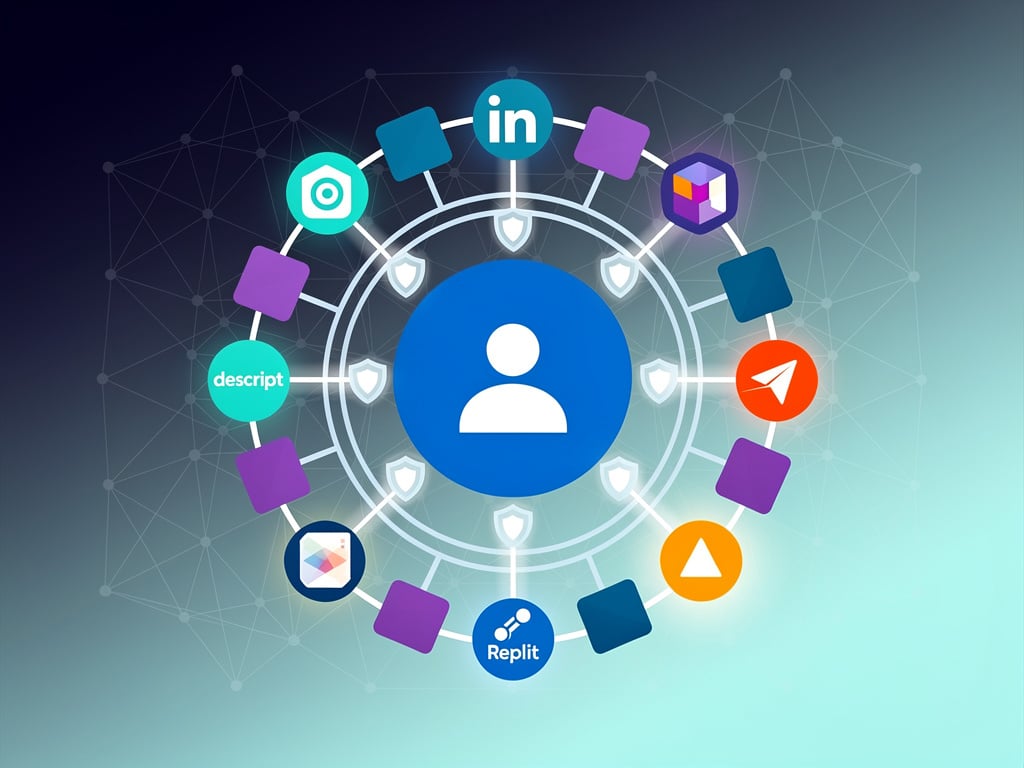
LinkedIn just made it possible for professionals to display concrete evidence of their software expertise directly on their profiles. The new Connected Apps feature pulls data from the tools people actually use every day. No more vague self-reported skills. Recruiters and hiring managers can now see verifiable signals based on real activity.
The announcement landed on June 18, 2026, via TechRadar. It builds on an earlier January push that focused heavily on AI tools. Back then LinkedIn teamed with Descript, Lovable, Relay.app and Replit. Those partners analyze usage patterns, project outcomes and in-tool performance. They issue certificates that members can add to their profiles. Not multiple-choice tests. Actual work.
But the June update expands the idea. Connected Apps automatically generate simple statements about what users do inside supported applications. Once linked, the app feeds data to LinkedIn. The resulting profile entry reads like a structured, data-backed description. Users receive notifications when summaries appear or change. They cannot edit the text themselves. The point is credibility.
“We’re building new ways for members to show real, credible proof of what they’re capable of, right on their LinkedIn profile,” said Dan Shapero, LinkedIn CEO, according to the TechRadar report. The message lands at a moment when employers increasingly question inflated resumes. With 1.3 billion members on the platform and 12 percent year-over-year revenue growth, LinkedIn sees this as a way to make profiles more trustworthy.
First wave partners include Descript for audio and video editing, Duolingo for language practice, Lovable, Relay.app for automation and Replit for coding. Adobe Express, Adobe Firefly and GitHub are slated to join soon. Gamma and Zapier appeared in the January announcement as upcoming additions. The list skews toward productivity, creative and developer tools. Exactly the categories that dominate modern knowledge work.
This isn’t entirely new territory. LinkedIn has offered skill assessments for years, though it quietly retired many of them. The platform now emphasizes examples of applied skills over quiz scores. The Verified on LinkedIn program already lets more than 100 million members confirm identity with government ID or workplace with company email, according to Microsoft Learn documentation updated in December 2025. An API makes those signals available to third-party apps for trust and safety purposes. Connected Apps take the concept further by tying verification to daily software use.
Early reaction on X mixed excitement with skepticism. Some users posted fresh badges earned through Microsoft AI Skills Fest playlists. Others questioned whether usage data truly reflects mastery. One developer noted that time spent in a tool doesn’t equal expertise. Yet the automatic nature removes the temptation to overstate capabilities. Profiles update based on activity. The system notifies the user. Transparency replaces trust-me language.
The timing aligns with broader shifts in hiring. Companies report difficulty distinguishing real proficiency from keyword-stuffed profiles. LinkedIn’s own data shows U.S. employees are more than twice as likely to use AI products daily or weekly compared with 18 months earlier. That surge creates demand for proof. A certificate from Replit or a usage summary from GitHub carries more weight than a self-added skill tag.
Integration happens through a simple profile section. Users go to Add section, select Connected apps, and authorize the partner tool. The app then pushes summaries. Members control whether to display them. They can also remove the connection later. But once shared, the statement stands as an objective record. No cherry-picking favorable metrics.
LinkedIn pairs the feature with other job-search improvements. A new tracker organizes applications, notes and network connections in one place. AI-powered search now supports Spanish, French, German and Portuguese alongside English. More than 25 million English-language job searches happen weekly on the platform. The company hopes these tools reduce friction while the verified skills section strengthens candidate signals.
For enterprise users the implications stretch beyond individual profiles. Teams that standardize on certain tools can surface usage data at scale. A marketing department heavy on Adobe Firefly might see team members automatically earn related credentials. Sales organizations using Relay.app could highlight automation expertise without extra effort. The data flows from the apps themselves. That reduces reliance on external certifications that cost time and money.
Of course challenges remain. Not every workplace app will integrate quickly. Privacy questions surface when usage data leaves one platform for another. LinkedIn says members must explicitly connect each app and receive notifications on updates. Still, the default toward more visibility could unsettle some users accustomed to curating their own narrative.
Analysts see this as part of a larger move toward skills-based hiring. Traditional degrees and job titles matter less when concrete evidence of tool proficiency appears on a profile. A junior marketer who mastered Descript for podcast production can prove it. A developer who ships regularly in Replit gains a visible edge. The feature rewards consistent users over occasional dabblers.
Adobe’s pending addition carries particular weight. Creative professionals have long struggled to demonstrate software fluency beyond portfolio pieces. An automated summary from Firefly or Express could quantify daily usage and specific capabilities. GitHub integration might highlight contribution patterns or repository activity in ways that static badges never could.
The January AI-focused launch and June Connected Apps expansion show LinkedIn iterating fast. Both tie into the Verified framework that already covers identity and workplace. Together they form a layered trust system. Identity confirms who you are. Workplace confirms where you work. Connected Apps confirm what you can actually do with the tools of your trade.
Hiring managers already spend hours verifying claims. This system promises to shorten that process. A quick glance at a profile reveals not just listed skills but linked evidence from the apps where work happens. For candidates it offers a low-effort way to stand out. Connect the tools. Let the data speak. Watch the profile update itself.
Whether the approach scales across thousands of enterprise applications remains to be seen. Early partners focus on popular productivity and AI tools. Success there could accelerate adoption by others. Microsoft, already LinkedIn’s parent, maintains deep integration through its own learning and certification ecosystem. The Verified on LinkedIn API gives third parties a path to participate.
One thing looks clear. The era of unchecked skill inflation on professional networks may be ending. LinkedIn’s move favors substance over declaration. Real usage. Observable outcomes. Shareable proof. Professionals who embrace the connected tools could gain a measurable advantage in a crowded 1.3-billion-member market. Those who don’t might soon find their self-reported expertise carries less weight than it once did.


 WebProNews is an iEntry Publication