
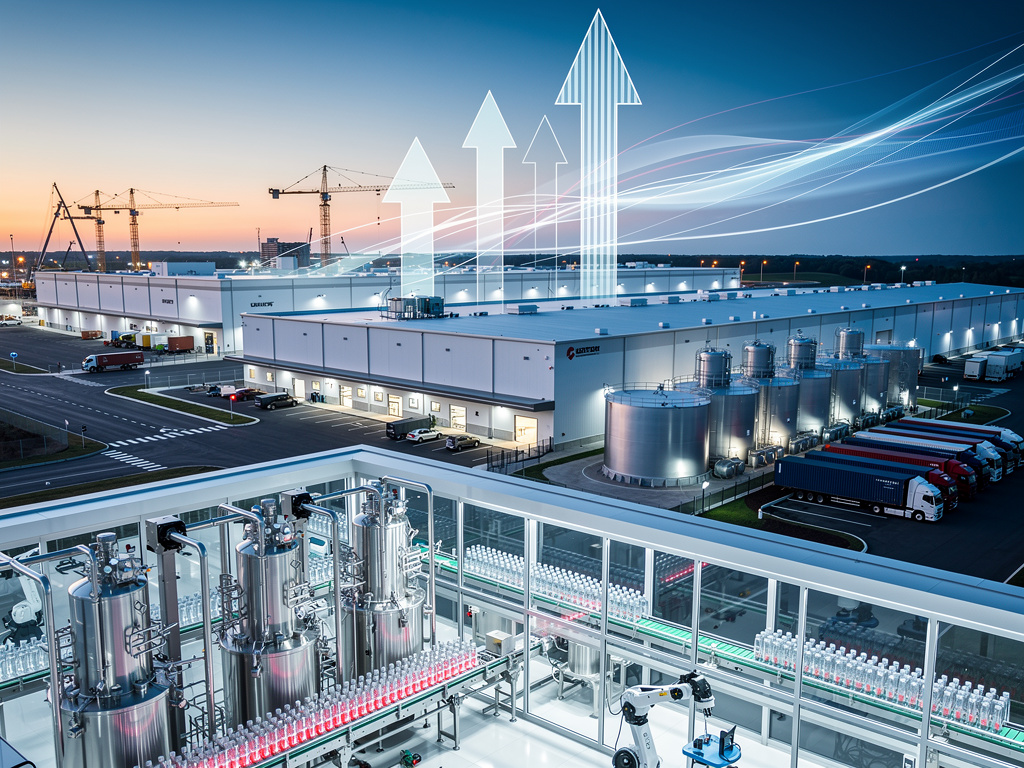
Eli Lilly and Co. unveiled plans Friday to invest more than $3.5 billion in a new manufacturing facility in Pennsylvania’s Lehigh Valley, targeting production of next-generation obesity treatments including its experimental drug retatrutide. The site in Fogelsville, Upper Macungie Township, marks the company’s fourth major U.S. plant announcement in a push exceeding $27 billion since February 2025, building on $23 billion invested domestically since 2020. Construction begins this year, with operations slated for 2031, creating 850 permanent jobs for engineers, scientists, operations staff and lab technicians, plus 2,000 construction positions.
Strategic Site Selection Amid Fierce Competition
The 150-acre property along Interstate 78 was chosen from over 300 proposals due to its proximity to universities and robust infrastructure, according to company statements. Pennsylvania sweetened the deal with up to $100 million in incentives, including $50 million in tax credits and grants, positioning the state as a life-sciences hub in a corridor stretching from Montgomery County to central New Jersey. "Lilly’s commitment to the Lehigh Valley and to Pennsylvania will bring billions of dollars of investment and hundreds of good-paying jobs, solidifying our position as a leader in the growing life sciences industry," said Don Cunningham, president and CEO of the Lehigh Valley Economic Development Corp., as reported by WFMZ.
Governor Josh Shapiro hailed the project as the largest by a life-sciences firm in state history, pledging swift permitting. "Pennsylvania continues to be a leader in health care innovation, and I will always support companies like Lilly making major investments to advance these technologies," said U.S. Sen. John Fetterman. Congressman Ryan Mackenzie added, "Having modern, robust pharmaceutical manufacturing capabilities here in the United States is essential for both our national security and domestic economy." These remarks came during a press conference in Allentown, per PR Newswire.
Retatrutide: The Triple-Hormone Powerhouse
At the heart of the investment is retatrutide, a once-weekly injectable dubbed the "triple G" agonist for targeting GLP-1, GIP and glucagon receptors. Late-stage trials showed average weight loss of 28.7%, or up to 71.2 pounds at 68 weeks, outperforming blockbuster Zepbound (tirzepatide) in obesity and knee osteoarthritis patients. Lilly plans data readouts from seven additional phase-three trials in obesity and type-2 diabetes this year, as noted by Reuters.
"All these sites, including this one, will be really state-of-the-art manufacturing to last many decades to come," Lilly CEO David Ricks said at the Allentown event, according to Devdiscourse. The facility will produce injectable medicines and devices, supporting retatrutide alongside current hits Mounjaro and Zepbound, which generated $10.1 billion in Q3 2025 sales alone, per PennLive.
Through the first nine months of 2025, tirzepatide—branded as Zepbound for obesity and Mounjaro for diabetes—topped global pharmaceutical sales, overtaking Merck’s Keytruda, as reported by The Inquirer. Q3 revenue hit $17.6 billion, up over 50% year-over-year, with the duo driving third-quarter profit to a record $5.58 billion.
Reshoring Amid Tariff Threats and Supply Pressures
The Pennsylvania plant fits Lilly’s aggressive U.S. expansion, including sites in Texas, Virginia and Alabama, amid President Donald Trump’s tariff warnings on imported drugs. Voluntary pricing deals have exempted Lilly and rival Novo Nordisk from levies for three years, easing concerns but accelerating domestic builds. Trump noted Thursday that Ricks informed him of plans for six U.S. plants, though unconfirmed by Lilly, via CNBC.
Previous shortages plagued GLP-1 drugs like Zepbound, Wegovy and Ozempic, prompting massive capacity ramps. Lilly’s total U.S. manufacturing commitments since 2020 exceed $50 billion across 10 sites. This reshoring bolsters supply chains for innovative therapies in oncology, immunology and neuroscience too, Ricks emphasized.
Pipeline Depth Fuels Long-Term Dominance
Beyond retatrutide, Lilly eyes approval for oral GLP-1 orforglipron this spring, potentially launching later in 2026 after Novo Nordisk’s recent obesity pill debut racked up thousands of U.S. prescriptions. Phase-three data showed orforglipron maintaining weight loss post-switch from injectables. A U.S. government deal caps Medicare costs at $50 monthly for Zepbound multi-dose pens and orforglipron starting April 2026, if approved, expanding access to millions, per investor updates.
Analysts forecast tirzepatide peaking at $64 billion by 2031, orforglipron at $13 billion, with Lilly’s obesity portfolio possibly hitting $101 billion. The firm leads with 71% of new U.S. obesity prescriptions for Zepbound. "What could be more important than controlling obesity?" Ricks asked in a prior statement on manufacturing needs, cited by CNN.
Economic Ripple and Regional Transformation
The 925,000-square-foot campus on former agricultural land owned by David Jaindl represents the Lehigh Valley’s biggest economic development project, rivaling Bethlehem Steel’s historical impact but in one swift move, Cunningham noted. It elevates the area’s profile from steel and trucking to biotech, amid Big Pharma’s billions chase for U.S. sites. Ohio was a finalist, but Pennsylvania prevailed.
Lilly, the world’s most valuable drugmaker, employs over 50,000 globally, with 23,000 in the U.S. This 10th domestic site underscores its manufacturing strategy blending internal expansions and CDMOs to seize the $150 billion global weight-loss market by 2030. As demand surges—with two in five U.S. adults obese—the Pennsylvania facility positions Lilly to sustain its edge over Novo Nordisk.


 WebProNews is an iEntry Publication