
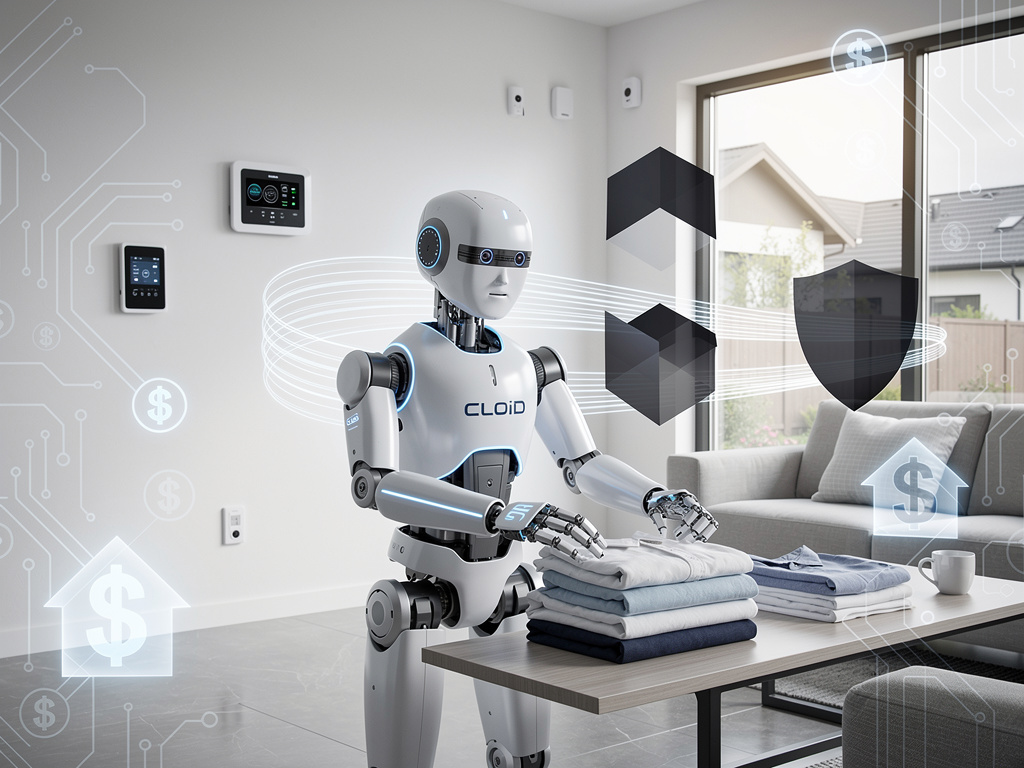
LG’s CLOiD: Ushering in an Era of Effortless Living Through Robotics
In the bustling world of consumer electronics, few events capture the imagination quite like CES, the annual Las Vegas showcase where innovation meets aspiration. This year, as CES 2026 approaches from January 6 to 9, South Korean giant LG Electronics is poised to steal the spotlight with the debut of its humanoid robot, CLOiD. Designed to tackle household chores, this machine represents a bold step toward what LG calls the “Zero Labor Home,” a vision where technology liberates humans from mundane tasks. Drawing from recent announcements, CLOiD features two articulated arms equipped with five individually actuated fingers, enabling it to perform a variety of domestic duties with precision.
The robot’s unveiling comes at a time when humanoid robotics is gaining traction across the industry, driven by advances in artificial intelligence and mechanical engineering. LG’s entry into this space isn’t entirely new; the company has a history of experimenting with service robots, from airport guides to hotel assistants. But CLOiD marks a pivot toward the home environment, where the stakes are higher due to the intimate nature of personal spaces. According to details shared in a press release, the robot’s head houses a powerful chipset, along with a display, speaker, camera, and an array of sensors, allowing it to navigate and interact intelligently.
Industry observers note that LG’s timing is strategic. With competitors like Tesla’s Optimus and Boston Dynamics’ Atlas pushing boundaries in humanoid forms, LG is leveraging its expertise in home appliances to carve out a niche in everyday automation. The company’s slogan, “Zero Labor Home, Makes Quality Time,” underscores a broader ambition: to free consumers from housework, potentially reshaping daily life. Yet, specifics on CLOiD’s capabilities remain scarce, with LG teasing only close-up images of its dexterous hands, leaving much to the imagination until the full reveal.
The Technological Backbone Powering CLOiD
At the heart of CLOiD’s design is a fusion of robotics and AI that promises seamless integration into smart homes. Reports indicate that the robot’s arms are engineered for tasks requiring fine motor skills, such as folding laundry or handling delicate objects. This level of dexterity sets it apart from simpler robotic vacuums or assistants like Amazon’s Astro, which lack humanoid manipulation. LG’s development draws on collaborations, including past work with the Korea Institute of Science and Technology on models like KAPEX, which incorporated advanced actuators and visual language models.
Sources from Interesting Engineering highlight that CLOiD is part of LG’s renewed push into home robotics, building on cognitive technologies for gestures and movement. This isn’t just about hardware; AI plays a crucial role in enabling the robot to learn and adapt to user habits. For instance, its sensors could detect clutter and autonomously organize spaces, or respond to voice commands with contextual awareness.
Beyond the mechanics, CLOiD’s integration with LG’s ecosystem of smart devices could create a unified home network. Imagine a robot that syncs with your LG refrigerator to restock groceries or coordinates with washing machines for laundry cycles. This interconnected approach aligns with trends in the smart home sector, where interoperability is key to user adoption. However, challenges remain, such as ensuring safety in dynamic environments with pets or children, areas where LG has yet to provide detailed assurances.
Market Implications and Competitive Dynamics
The introduction of CLOiD at CES 2026 arrives amid a surge of interest in humanoid robots for domestic use. Posts on X, formerly Twitter, reflect growing excitement, with users discussing how such devices could transform chores like sweeping, dusting, or even meal preparation. One thread from robotics enthusiasts compares CLOiD to emerging models like 1X Technologies’ NEO Gamma, which has been touted for its autonomy in tasks such as vacuuming and making tea.
LG’s move is also a response to broader industry shifts. Korean tech firms, including rivals Samsung and Hyundai, are gearing up for CES with AI-powered innovations, as noted in coverage from Korea JoongAng Daily. Samsung, for example, has teased advancements in AI companions, while Hyundai explores mobility robotics. LG’s focus on a “zero labor” paradigm positions it as a leader in making these technologies accessible for average households, potentially pricing CLOiD competitively against high-end appliances.
Economically, the humanoid robot market is projected to explode, with estimates suggesting growth into the billions by the end of the decade. LG’s entry could disrupt traditional home service sectors, from cleaning companies to personal assistants. Yet, insiders caution that adoption hinges on affordability and reliability. If CLOiD’s price point mirrors LG’s premium appliances—say, in the range of $5,000 to $10,000—it might appeal to affluent early adopters, but mass market penetration requires scaling production and addressing energy efficiency concerns.
Challenges in Deployment and Ethical Considerations
Deploying humanoid robots like CLOiD in homes isn’t without hurdles. Technical challenges include battery life, with current prototypes often limited to a few hours of operation before recharging. LG hasn’t disclosed CLOiD’s specs in this regard, but industry parallels suggest it may rely on docking stations for power management. Navigation in cluttered or multi-level homes poses another issue; while sensors and cameras help, real-world variability could lead to mishaps, as seen in early tests of similar devices.
Ethically, the rise of home robots raises questions about privacy and data security. CLOiD’s cameras and microphones could collect vast amounts of personal information, prompting concerns over surveillance. LG has emphasized user-centric design, but regulations like Europe’s GDPR or emerging U.S. privacy laws will influence its rollout. Moreover, there’s the societal impact: could such robots displace jobs in domestic services? Analysts argue that while they might reduce demand for certain roles, they could create new opportunities in robot maintenance and programming.
From a consumer perspective, acceptance will depend on trust. Posts on X reveal mixed sentiments, with some users enthusiastic about time-saving benefits, while others express unease about machines in intimate settings. LG’s marketing will need to address these fears, perhaps by highlighting customizable privacy settings or fail-safes against malfunctions.
LG’s Broader Vision and Historical Context
LG’s journey into robotics traces back over a decade, with initiatives like the CLOi series for commercial spaces. The new CLOiD builds on this foundation, incorporating lessons from deployments in hotels and airports. As detailed in PR Newswire, the robot embodies LG’s goal of enhancing quality time by automating drudgery, a theme echoed in its smart home AI agents introduced in prior years.
This vision aligns with global trends toward aging populations, particularly in South Korea and Japan, where labor shortages in caregiving are acute. CLOiD could extend to elder care, assisting with medication reminders or mobility support, expanding its utility beyond chores. Partnerships, such as those with AI firms for natural language processing, will be crucial for refining these capabilities.
Historically, LG has faced setbacks in robotics, including scaled-back projects due to high costs. But with AI advancements accelerating, CLOiD represents a calculated bet. Industry insiders speculate that success here could bolster LG’s position against tech behemoths like Google or Apple, who are dipping toes into home automation.
Anticipated Features and Future Iterations
Speculation abounds on what CLOiD will demonstrate at CES. Based on teasers, its hands suggest proficiency in tasks like loading dishwashers or sorting recyclables—areas where current robots falter. The head-mounted display might serve as an interactive interface, showing schedules or responding to queries, enhancing its role as a companion.
Looking ahead, iterations could incorporate machine learning for personalized behaviors, such as adapting to a family’s routines. Integration with voice assistants like Alexa or Google Home would broaden appeal, though LG might prioritize its ThinQ platform. Challenges in scaling production, from supply chain issues for actuators to software debugging, will test LG’s resolve.
Feedback from early previews, as covered in The Verge, indicates CLOiD’s design prioritizes natural interaction, potentially using gestures for communication. This human-like quality could make it more approachable, differentiating it from rigid industrial robots.
Industry Reactions and Potential Impact
Reactions within the tech community are buzzing, with X posts highlighting CLOiD as a game-changer for smart homes. Enthusiasts draw parallels to fictional robots like Rosie from “The Jetsons,” envisioning a future where chores vanish. Analysts from firms like Gartner predict that by 2030, humanoid assistants could be commonplace in 10% of affluent homes, driven by declining costs.
For LG, CLOiD’s success could catalyze investments in related technologies, such as advanced batteries or haptic feedback. Competitors are watching closely; a strong showing at CES might spur alliances or acquisitions in the robotics space.
Ultimately, CLOiD embodies the convergence of AI, robotics, and consumer needs, promising a shift toward more leisurely lifestyles. As CES 2026 unfolds, all eyes will be on LG to see if this humanoid can truly deliver on the dream of a labor-free home.
Global Perspectives and Adoption Strategies
From a global viewpoint, CLOiD’s rollout will vary by region. In Asia, where compact living spaces prevail, its compact design could shine, as noted in reports from The Korea Herald. In the U.S. and Europe, marketing might emphasize luxury and convenience, targeting suburban households.
Adoption strategies may include pilot programs, allowing select users to test CLOiD in real homes. Data from these trials could refine algorithms, addressing edge cases like pet interactions or emergency responses.
LG’s emphasis on sustainability—potentially using eco-friendly materials—aligns with consumer demands for green tech. This could position CLOiD as not just a helper, but a responsible addition to modern living.
Innovation Ecosystem and Collaborative Efforts
LG isn’t innovating in isolation. Collaborations with academia and startups infuse fresh ideas into CLOiD’s development. For example, integrating technologies from visual AI models enhances object recognition, crucial for chores.
The ecosystem around humanoid robots is expanding, with events like CES fostering cross-pollination. LG’s participation signals confidence in its tech stack, potentially attracting venture capital for further R&D.
As the field evolves, standards for robot ethics and interoperability will emerge, shaping CLOiD’s trajectory. LG’s proactive stance could influence these norms, ensuring humanoid robots enhance rather than disrupt human lives.
Path Forward for Home Robotics
The path ahead for devices like CLOiD involves balancing innovation with practicality. User education will be key, demystifying how to integrate such robots into daily routines.
Potential expansions include modular upgrades, allowing owners to add features like cooking arms or enhanced mobility. This flexibility could extend CLOiD’s lifespan, reducing electronic waste.
In the grand scheme, LG’s CLOiD might redefine home life, turning science fiction into reality one chore at a time. As CES 2026 draws near, the anticipation builds for a reveal that could set new benchmarks in domestic automation.


 WebProNews is an iEntry Publication