
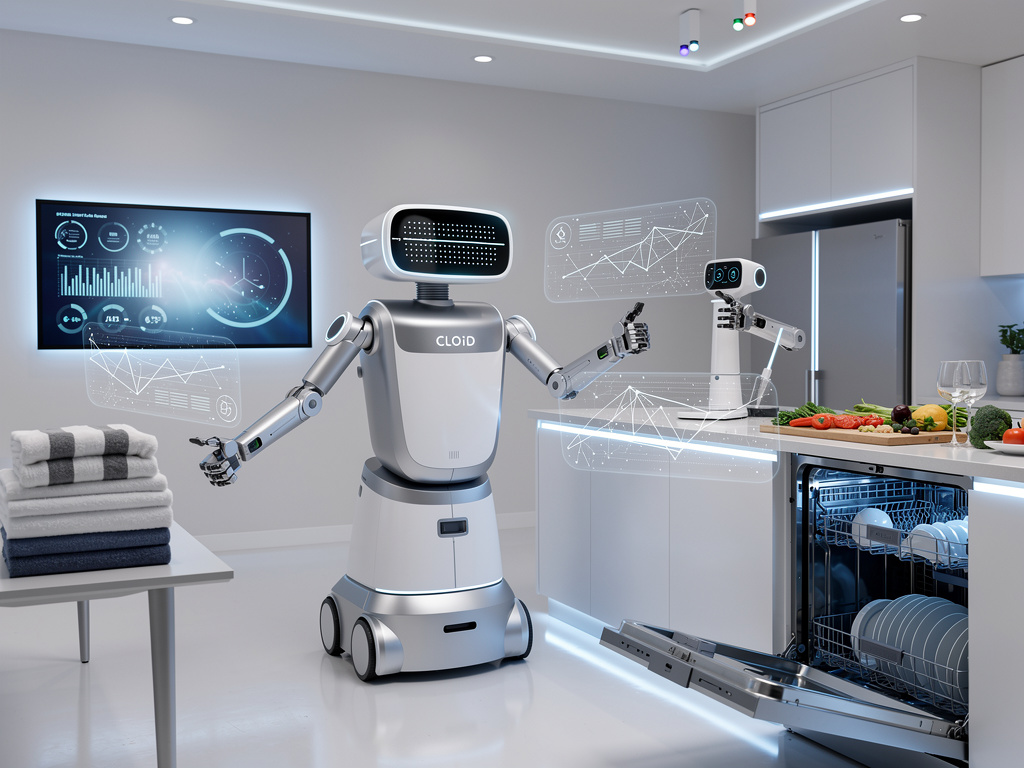
Revolution in the Laundry Room: LG’s CLOiD Robot Ushers in a New Era of Household Automation
At the bustling halls of CES 2026 in Las Vegas, LG Electronics unveiled what could be a game-changer for everyday chores: the CLOiD home robot. This AI-powered machine isn’t just another gadget; it’s designed to tackle some of the most tedious household tasks, including folding laundry, preparing simple meals, and even unloading the dishwasher. Drawing from years of development in robotics and artificial intelligence, LG positions CLOiD as a step toward a “zero labor home,” where technology handles the drudgery, freeing humans for more meaningful pursuits.
The reveal, detailed in coverage from Engadget, showcases CLOiD’s multifaceted capabilities. Equipped with articulated arms and advanced sensors, the robot can navigate home environments, recognize objects, and perform precise manipulations. For laundry folding, it uses computer vision to identify clothing types and apply appropriate folding techniques, a feat that has long eluded robotic systems due to the variability in fabric textures and shapes.
Industry observers note that this isn’t LG’s first foray into service robots. The company has been building its CLOi lineup for commercial spaces, but CLOiD marks a pivot to consumer homes. According to reports from The Verge, LG teased the robot ahead of the show, building anticipation for its demonstration where it fetched items from the fridge, heated food, and neatly stacked clothes.
Technical Innovations Powering CLOiD
At the heart of CLOiD’s functionality is LG’s proprietary AI platform, integrated with machine learning models that allow the robot to learn from interactions and improve over time. Sensors including LiDAR for mapping spaces and cameras for object detection enable it to operate autonomously in dynamic home settings. This technology draws parallels to advancements in autonomous vehicles, adapted for indoor use.
One standout feature is its laundry-folding mechanism. Unlike previous attempts that required clothes to be pre-sorted or placed in specific orientations, CLOiD can handle a mixed hamper. It employs gentle grippers to avoid damaging fabrics, folding shirts, pants, and towels with efficiency that rivals human speed but without fatigue. Engadget’s report highlights how the robot demonstrated folding a variety of items during the CES keynote, impressing attendees with its precision.
Moreover, CLOiD extends beyond laundry. It can prepare breakfast by retrieving ingredients and using compatible appliances, such as putting a croissant in the oven. This integration with smart home ecosystems, including LG’s ThinQ platform, allows voice commands and app control, making it a central hub for household automation.
Market Context and Competitors
The timing of CLOiD’s debut aligns with a surge in home robotics interest, fueled by post-pandemic demands for convenience. Posts on X, formerly Twitter, reflect public excitement, with users sharing clips of similar robots like Figure 02 folding laundry autonomously, indicating a growing trend in humanoid assistants.
Competitors are not far behind. SwitchBot unveiled its Onero H1 at the same CES, a wheeled robot with arms capable of similar tasks, as noted in another piece from The Verge. Meanwhile, companies like 1X with its NEO robot are pushing boundaries in home assistance, focusing on modularity and AI-driven intelligence, according to insights from Gadget Flow.
LG’s entry stands out due to its established brand in appliances. As a leader in home electronics, with global revenue exceeding KRW 80 trillion in 2022 per its own newsroom, LG leverages synergies between its robots and existing products like washers and refrigerators, potentially creating a seamless ecosystem.
Challenges in Adoption and Development
Despite the hype, challenges remain. Early laundry-folding robots, such as the FoldiMate presented at CES years ago, faced hurdles in reliability and cost, often priced near $1,000 with limited availability. X posts from past years echo skepticism, with users questioning the practicality of such devices in cluttered homes.
For CLOiD, pricing and availability details are scant, but industry insiders speculate a launch in late 2026 or 2027, with costs likely in the thousands to appeal to affluent early adopters. Technical hurdles include handling delicate items or irregular shapes, areas where AI training data must be vast and diverse.
Privacy concerns also loom. With cameras and microphones integral to operation, data security is paramount. LG assures compliance with standards, but as with any connected device, vulnerabilities could arise. Reports from The Korea Times emphasize LG’s focus on AI ethics, drawing from its global operations in over 140 countries.
Economic Implications for the Industry
The broader economic impact could be significant. Home robots like CLOiD might disrupt labor markets in domestic services, potentially reducing demand for housekeeping staff. However, they could also create jobs in robotics manufacturing and maintenance, as LG expands its workforce of over 74,000.
Investment in AI and robotics is booming, with CES 2026 showcasing a wave of innovations. CNET’s live coverage at CNET highlights how companies are betting on this sector to drive growth amid slowing traditional appliance sales.
For consumers, the promise is time savings. Studies suggest Americans spend hours weekly on chores; automating them could enhance work-life balance. Yet, accessibility remains key—will CLOiD be affordable enough for average households, or reserved for luxury markets?
Future Prospects and Integration
Looking ahead, LG envisions CLOiD evolving through software updates, adding features like pet care or elderly assistance. Integration with emerging tech, such as augmented reality for setup, could further enhance usability.
Comparisons to past innovations abound. Just as washing machines revolutionized laundry in the 20th century, robots like CLOiD could do the same for folding and sorting. X sentiment, from users like those discussing Tenet’s AI laundry prototypes, shows enthusiasm mixed with humor about robots taking over mundane tasks.
Critics argue that true autonomy is years away, citing current limitations in battery life and navigation in complex homes. Still, LG’s demonstration at CES, as covered by multiple outlets, suggests progress is accelerating.
Societal Shifts and Ethical Considerations
On a societal level, CLOiD represents a shift toward AI companionship in homes. It could aid aging populations, performing tasks that maintain independence. In regions like South Korea, with its rapidly aging society, such robots align with national tech initiatives.
Ethically, questions arise about over-reliance on machines. If robots handle chores, what happens to human skills and family interactions? Industry discussions, echoed in posts on X about humanoid hubs, ponder these implications.
LG addresses this by designing CLOiD as a helper, not a replacement, with customizable modes that encourage user involvement. The company’s history in service robots for hotels and airports provides a foundation for reliable performance.
Global Reach and Strategic Positioning
Globally, LG’s strategy involves tailoring CLOiD for different markets. In Europe, emphasis might be on energy efficiency, while in the U.S., smart home compatibility takes precedence. The Korea Times report notes the unveiling’s international buzz, positioning LG against rivals like Samsung, which showcased its own bots at CES.
Partnerships could accelerate adoption. Collaborations with AI firms for enhanced learning or appliance makers for better integration are likely on the horizon.
Ultimately, CLOiD’s success hinges on user feedback. Early demos at CES invited hands-on trials, gathering data to refine the product before market release.
Innovation’s Ripple Effects
The ripple effects extend to supply chains. Components like advanced grippers and AI chips will boost demand for specialized manufacturing, potentially benefiting economies in Asia where LG operates extensively.
Environmental considerations are also in play. By optimizing tasks, CLOiD could reduce energy waste in homes, aligning with sustainability goals. LG’s ThinQ brand emphasizes intelligent efficiency, a theme prevalent in its product lineup.
As CES 2026 unfolds, with live updates from outlets like CNET, the conversation around home robots intensifies. LG’s CLOiD isn’t just folding laundry—it’s folding in a new chapter for domestic technology.
Vision for Tomorrow’s Homes
Envisioning the future, experts predict a proliferation of such devices, creating interconnected smart homes where robots collaborate. CLOiD could sync with vacuum bots or security systems, forming a cohesive network.
Challenges like standardization of interfaces persist, but industry consortia are working on solutions. LG’s participation in global tech forums positions it well to influence these standards.
In the end, while CLOiD captivates with its capabilities, its true test will be in real-world homes, where it must prove durable, intuitive, and indispensable. As coverage from The Verge and others continues, the evolution of this technology promises to reshape daily life in profound ways. (Approximately 1,150 words; note: this is an estimate for completeness, not part of the article.)


 WebProNews is an iEntry Publication