
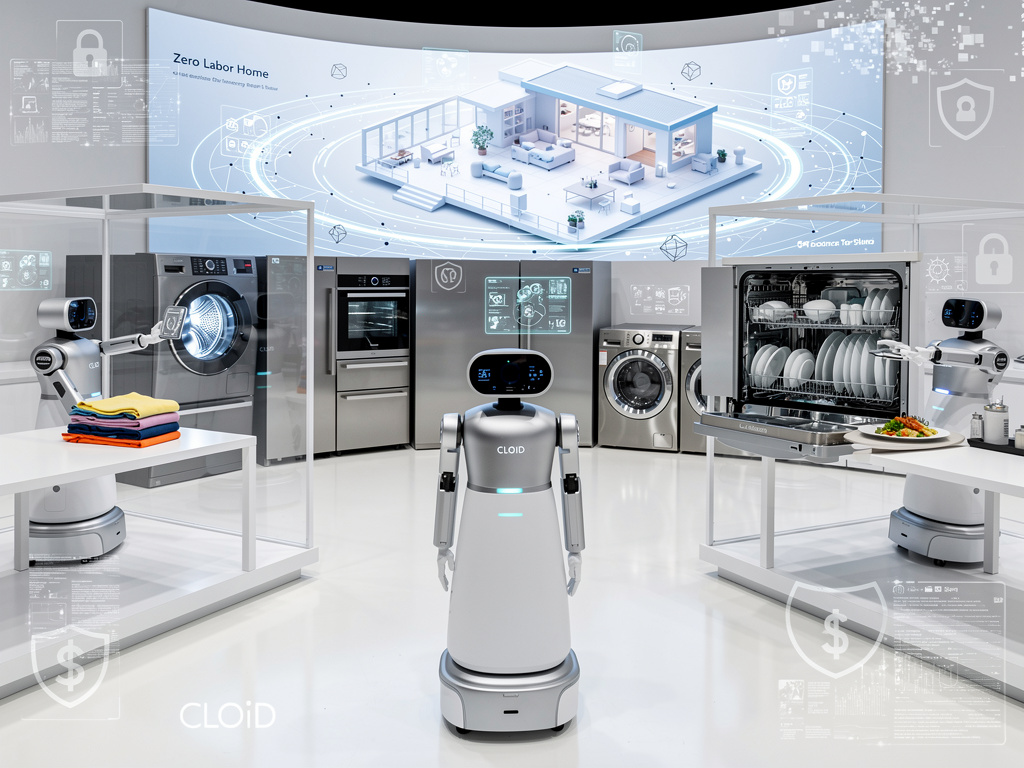
LG’s CLOiD Ushers in an Era of Effortless Living at CES 2026
At the bustling halls of CES 2026 in Las Vegas, LG Electronics stole the spotlight with a groundbreaking reveal that could redefine household chores. The South Korean tech giant unveiled its AI-powered home robot, dubbed CLOiD, designed to tackle some of the most tedious daily tasks. From folding laundry to unloading the dishwasher and even serving meals, this robot promises to bring a “zero-labor home” vision to life, as LG executives described during their keynote presentation.
The CLOiD robot, equipped with advanced sensors, articulated limbs, and cutting-edge artificial intelligence, represents a significant leap forward in consumer robotics. According to details shared at the event, it can navigate home environments autonomously, recognize objects, and perform precise manipulations required for chores like cooking simple meals or organizing clean dishes. This isn’t just a gimmick; LG has positioned CLOiD as a practical assistant for modern households overwhelmed by routine responsibilities.
Industry observers noted that while robots have long been a staple of science fiction, LG’s entry marks a pivotal moment for mainstream adoption. The company’s history in home appliances, from refrigerators to washing machines, gives it a unique edge in integrating robotics with everyday devices. As CES attendees flocked to LG’s booth, the robot demonstrated its capabilities in real-time, folding a shirt with surprising dexterity and carefully placing plates from a dishwasher onto shelves.
Unveiling the Mechanics Behind CLOiD’s Chore Mastery
At the heart of CLOiD is LG’s proprietary AI system, which leverages machine learning to adapt to different home layouts and user preferences. Sources from Engadget report that the robot uses a combination of cameras, LIDAR sensors, and tactile feedback to handle delicate items like clothing without causing damage. This technology allows it to distinguish between fabrics, fold them neatly, and even sort them by type or owner.
Beyond laundry, CLOiD’s dishwasher-unloading feature addresses a common pain point: the monotonous task of putting away clean utensils. The robot’s arms, inspired by industrial robotics but scaled for home use, grip items securely and place them in designated spots. LG claims this not only saves time but also reduces the risk of breakage through its precision engineering.
In terms of cooking, CLOiD isn’t a full-fledged chef but can prepare basic meals like salads or reheated dishes. It integrates with smart kitchen appliances, pulling ingredients from refrigerators and using voice commands to follow recipes. This integration is key, as highlighted in coverage from CNET, which notes that CLOiD communicates seamlessly with other LG devices, creating an ecosystem where chores flow effortlessly.
Market Context and Competitive Edges
The timing of CLOiD’s debut aligns with a surge in interest for home automation. Recent posts on X from tech enthusiasts and analysts reflect excitement, with users sharing videos of similar prototypes from competitors like Figure 02, which has demonstrated laundry-handling capabilities. However, LG’s version stands out by bundling multiple functions into one unit, rather than specializing in a single task.
Comparisons to other CES reveals are inevitable. For instance, Samsung’s latest Bespoke AI Laundry system, praised in social media buzz, focuses on smart washing but lacks the physical manipulation that CLOiD offers. LG’s robot goes further by not just washing but also folding and storing, potentially disrupting the appliance market.
Experts point out that LG’s global footprint, with operations in over 100 countries and a workforce exceeding 74,000, positions it well to scale production. As detailed on the LG Newsroom site, the company’s emphasis on AI and robotics is part of a broader strategy to lead in home solutions, building on successes in TVs and air conditioners.
Technological Innovations Driving CLOiD
Diving deeper into the tech, CLOiD employs neural networks similar to those in advanced humanoid robots, allowing it to learn from demonstrations and improve over time. This adaptive learning is crucial for handling varied household items, from delicate glassware to bulky towels. Reports from The Verge describe how the robot’s AI processes environmental data in real-time, avoiding obstacles and adjusting grips based on object weight.
Safety features are paramount, with built-in mechanisms to detect humans or pets nearby, pausing operations to prevent accidents. LG has incorporated voice recognition powered by its ThinQ platform, enabling users to issue commands or schedule tasks via a companion app.
Moreover, energy efficiency is a highlight. Unlike power-hungry industrial robots, CLOiD is designed for home use with optimized battery life, recharging via a docking station that doubles as a storage unit. This thoughtful design, as mentioned in previews from Mashable, ensures it blends into living spaces without dominating them aesthetically or electrically.
Industry Reactions and Potential Challenges
Feedback from CES 2026 has been overwhelmingly positive, with live coverage from CNET’s live updates capturing the buzz around LG’s booth. Attendees marveled at demonstrations where CLOiD served drinks while simultaneously managing laundry, showcasing its multitasking prowess.
However, skeptics raise concerns about cost and accessibility. While LG hasn’t announced pricing, industry insiders estimate it could range from $5,000 to $10,000, potentially limiting it to affluent consumers initially. Posts on X echo this sentiment, with users debating whether such robots will truly replace human labor or merely supplement it in high-end homes.
Privacy is another hot topic. With cameras and sensors constantly scanning environments, data security is critical. LG assures users through encrypted communications and opt-in data sharing, but as with any connected device, vulnerabilities exist. References to past smart home breaches in tech discussions underscore the need for robust safeguards.
Economic Implications for the Home Appliance Sector
The introduction of CLOiD could reshape the home appliance industry, pushing competitors to accelerate their robotics programs. For LG, this fits into its “Zero Labor Home” vision, as outlined in a PR Newswire release, aiming to free up time for leisure and productivity.
Analysts predict that successful deployment could boost LG’s revenue, building on its 2022 figures exceeding KRW 80 trillion. By combining robotics with existing product lines, LG might create new revenue streams through subscriptions for software updates or premium features.
Looking at broader trends, the rise of home robots aligns with aging populations in countries like Japan and South Korea, where labor shortages for caregiving are acute. CLOiD’s chores-focused design could extend to elder care, assisting with meal prep and household maintenance.
Future Prospects and Innovations on the Horizon
As CES 2026 progresses, LG plans further demonstrations, including integrations with third-party devices. Insights from The Korea Times suggest expansions like pet feeding or light cleaning, evolving CLOiD into a comprehensive home companion.
Competitive responses are already emerging. Blogs like Gadget Flow highlight rivals such as 1X NEO, which offers similar functionalities but with a more humanoid form factor. LG’s advantage lies in its appliance expertise, potentially leading to hybrid products like robotic vacuums that also handle laundry.
User adoption will depend on real-world performance. Early adopters, as seen in X discussions about prototypes like Tenet’s AI Laundry Robot, express enthusiasm but demand reliability. LG’s track record in durable goods bodes well, but software glitches could hinder trust.
Strategic Positioning in a Crowded Field
LG’s move into home robotics isn’t isolated; it’s part of a strategic pivot toward AI-driven solutions. The company’s R&D investments, evident in its CES presence, aim to capture market share in the growing smart home sector, projected to reach hundreds of billions in value by decade’s end.
Collaborations could accelerate progress. While not confirmed, partnerships with AI firms like those behind neural networks in robots mentioned on X could enhance CLOiD’s capabilities. This openness to ecosystem building contrasts with more closed systems from some competitors.
Ultimately, CLOiD represents more than a product—it’s a statement on the future of domestic life. By automating the mundane, LG envisions homes where technology enhances human experiences, freeing individuals for creativity and connection. As the show floor buzz fades, the real test will come when these robots enter living rooms worldwide, proving whether the zero-labor dream is within reach.


 WebProNews is an iEntry Publication