
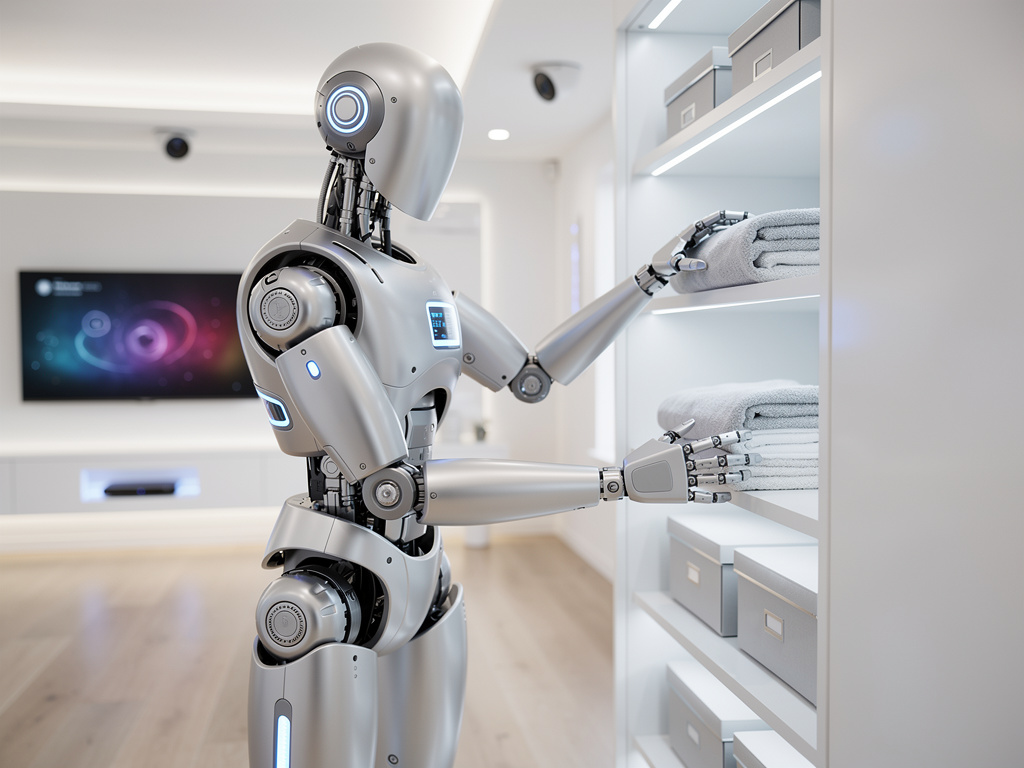
LG’s CLOiD: Pioneering the Era of Effortless Living
In the rapidly evolving world of home automation, LG Electronics is poised to introduce a groundbreaking innovation that could redefine daily routines. At the upcoming CES 2026 in Las Vegas, the South Korean tech giant will unveil its latest creation, the LG CLOiD robot, designed to tackle household chores with unprecedented efficiency. This humanoid assistant represents a significant leap forward in robotics, aiming to create what LG calls the “Zero Labor Home,” where technology handles mundane tasks, freeing up time for more meaningful pursuits. Drawing from recent announcements, CLOiD is equipped with advanced AI, articulated arms, and sensors that enable it to perform a wide array of indoor activities, from folding laundry to organizing spaces.
The robot’s development stems from LG’s long-standing commitment to integrating artificial intelligence into everyday appliances. According to details shared in LG’s official newsroom, CLOiD embodies the company’s vision of enhancing quality of life by minimizing the drudgery of housework. Unlike previous LG robots that focused on mobility and basic voice interactions, CLOiD features two articulated arms with seven degrees of freedom each, allowing for precise manipulations akin to human dexterity. This design shift highlights LG’s push toward more sophisticated home helpers, powered by what the company terms “Affectionate Intelligence,” which learns and adapts through user interactions.
Industry observers note that CLOiD arrives at a time when consumer demand for smart home devices is surging. With global revenue in LG’s home appliance sector exceeding KRW 80 trillion in recent years, as reported on the LG Newsroom, the company is leveraging its expertise in consumer electronics to enter the competitive robotics market. Early previews suggest CLOiD can navigate homes autonomously, using AI to refine its responses and behaviors over time, making it a personalized companion rather than a mere gadget.
Unveiling the Tech Behind CLOiD’s Capabilities
At the heart of CLOiD is a sophisticated chipset integrated into its head, serving as the robot’s “brain.” This processor enables real-time decision-making, allowing the device to assess environments and execute tasks with minimal human intervention. For instance, demonstrations planned for CES will showcase CLOiD handling real-life scenarios like sorting items or assisting with meal preparation, as detailed in coverage from Engadget. The robot’s sensors and limbs work in tandem to detect objects, avoid obstacles, and perform delicate operations, marking a departure from wheel-based predecessors.
LG’s approach draws on advancements in robotics research, including collaborations with institutions like the Korea Institute of Science and Technology for models such as KAPEX, which influenced CLOiD’s dexterity. Posts on X from robotics enthusiasts highlight similar innovations, with users discussing how such humanoid designs incorporate visual language models for better environmental understanding. This integration ensures CLOiD isn’t just reactive but proactive, anticipating needs based on household patterns.
Moreover, the robot’s “Affectionate Intelligence” technology fosters a user-friendly interaction style. It refines responses through repeated engagements, potentially evolving from a basic helper to a seamless part of family life. As noted in a recent article on MSN, this could mean CLOiD learning preferences for tasks like laundry folding or room tidying, thereby making home management more intuitive and less time-consuming.
From Concept to Consumer Reality
While CES has historically been a venue for futuristic prototypes, LG appears committed to bringing CLOiD closer to market viability. The robot’s form factor is optimized for modern living spaces, with a height and build that allow it to maneuver through typical homes without disruption. According to insights from The Verge, CLOiD’s arm-equipped design is teased as a chore-completing powerhouse, capable of tasks that go beyond simple vacuuming or reminders.
Industry insiders speculate on the broader implications for home automation. With competitors like Samsung’s Ballie and emerging players in humanoid robotics, LG’s entry could accelerate adoption rates. X posts from tech analysts, such as those emphasizing endurance in robots like AgiBot, underscore the growing sentiment that devices like CLOiD represent a shift toward fully autonomous home assistants. LG’s vision aligns with this, promising to reduce the burden of daily chores and enhance quality time.
However, challenges remain in scaling such technology. Production costs, safety certifications, and integration with existing smart home ecosystems are key hurdles. LG’s track record in appliances, including its ThinQ platform, positions it well to address these, potentially bundling CLOiD with other devices for a cohesive experience.
Integration and User Experience Innovations
One of CLOiD’s standout features is its ability to interact neutrally and adaptively, avoiding the pitfalls of overly anthropomorphic designs that might unsettle users. As explored in Mashable, the robot employs AI and sensors to assist around the house, with limbs that enable versatile actions. This could transform routines, such as automatically unloading dishwashers or organizing closets, based on learned behaviors.
For industry professionals, the technical specs reveal deeper innovations. The articulated arms, powered by high-end motors, provide precision that’s crucial for handling fragile items. Drawing from web searches on recent robotics news, similar advancements in multi-tactile hands, as seen in collaborative projects, enhance CLOiD’s grip and manipulation capabilities, making it suitable for diverse household environments.
User feedback loops are integral, with the robot refining its performance through interactions. This learning mechanism, highlighted in posts on X about home robots like NEO Gamma, suggests CLOiD could evolve to manage complex tasks like pet care or elderly assistance, expanding its utility beyond basic chores.
Market Impact and Future Prospects
LG’s ambitious project fits into a larger pattern of technological convergence, where AI meets physical robotics. With CES 2026 serving as the launchpad, visitors will witness CLOiD in action at LG’s booth, demonstrating scenarios that illustrate its potential. Coverage from TechSpot emphasizes the departure from earlier models, focusing on dexterity that could set new standards in the sector.
Economically, the introduction of CLOiD could influence job markets and consumer spending. As home robots become more accessible, they might shift how households allocate time and resources. Recent X discussions on robotics innovations, including endurance tests and autonomy, reflect optimism among tech communities, with some users predicting widespread adoption by the end of the decade.
Yet, ethical considerations loom large. Ensuring privacy in AI-driven devices is paramount, and LG must navigate regulations around data usage. The company’s global presence, with over 74,000 employees, equips it to address these, potentially through transparent AI frameworks.
Advancing Toward Widespread Adoption
To make CLOiD a household staple, LG is likely focusing on affordability and scalability. Prototypes at CES will provide clues on pricing and availability, with industry whispers suggesting a phased rollout starting in select markets. Insights from Interesting Engineering describe the robot as a home assistant poised to handle daily chores, aligning with LG’s goal of effortless living.
Comparisons with rivals reveal CLOiD’s strengths in integration. Unlike standalone devices, it could sync with LG’s ecosystem, enhancing smart home functionality. Web news on similar robots, such as those from NEO 1X, indicates a competitive field where precision and user adaptation are key differentiators.
For insiders, the real value lies in CLOiD’s potential to drive R&D investments. Partnerships and technological spillovers could accelerate advancements in related fields like healthcare robotics.
Challenges and Strategic Responses
Despite the excitement, skepticism persists about whether CLOiD will transcend the proof-of-concept stage. Past CES unveilings have seen innovative ideas fizzle out, but LG’s track record suggests otherwise. As per The Robot Report, the dual-armed design targets automation of household tasks, positioning it as a serious contender.
Strategic responses include robust testing for reliability. X posts on robotics endurance highlight the need for real-world durability, which LG addresses through advanced actuators and AI models.
Ultimately, CLOiD could mark a turning point, blending convenience with cutting-edge tech to reshape domestic life.
Envisioning the Broader Ecosystem
Expanding on its core functions, CLOiD might integrate with emerging technologies like augmented reality for enhanced navigation. This could allow for virtual previews of task executions, further personalizing the experience.
Industry analysis points to synergies with LG’s other divisions, such as vehicle components, potentially leading to cross-applications in mobility.
As the field progresses, CLOiD stands as a testament to innovation’s role in simplifying existence, promising a future where homes run themselves.


 WebProNews is an iEntry Publication