
LG Display’s Bold AI Pivot: Revolutionizing Production Lines in a High-Stakes Tech Race
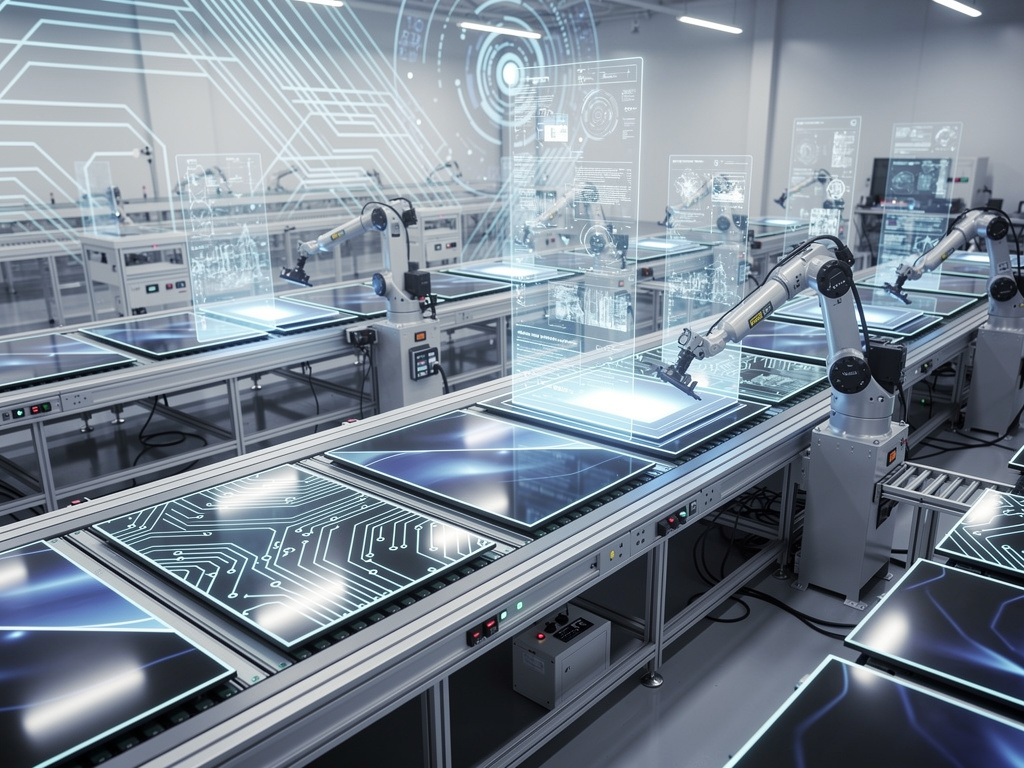
In the fiercely competitive world of display manufacturing, LG Display Co. is charting an ambitious course for 2026, with its chief executive pledging to accelerate the integration of artificial intelligence into core production processes. This move comes amid intensifying pressure from rivals and a broader industry shift toward smart manufacturing. According to a recent report, LG Display’s CEO, Jeong Cheol-dong, emphasized during a New Year’s address that AI would be pivotal in enhancing efficiency and innovation across the company’s operations.
The announcement aligns with a wave of similar strategies among South Korea’s tech giants. For instance, conglomerates like Samsung, LG, SK, and Hyundai have all positioned AI transformation as a central pillar in their organizational overhauls for the coming year, as detailed in a Digitimes article. This collective focus underscores how AI is no longer seen merely as an add-on but as an essential tool embedded in research, development, manufacturing, and beyond.
LG Display, a key player in OLED and LCD panels, faces challenges including fluctuating demand and competition from Chinese manufacturers. By vowing to “speed up AI transformation in production,” Jeong aims to leverage AI for predictive maintenance, quality control, and supply chain optimization, potentially reducing downtime and costs in facilities that produce screens for everything from smartphones to televisions.
AI’s Role in Reshaping Manufacturing Efficiency
Delving deeper, LG Display’s strategy involves deploying AI algorithms to analyze vast datasets from production lines in real-time. This could enable automated adjustments to machinery, minimizing defects in high-precision processes like OLED panel fabrication. Industry insiders note that such transformations are crucial for maintaining South Korea’s edge in display technology, where precision and yield rates directly impact profitability.
The CEO’s address highlighted 2026 as a turning point, building on earlier initiatives. For example, LG has already showcased AI-powered innovations in consumer products, such as the UltraGear evo monitors featuring on-device AI upscaling, set to debut at CES 2026. Posts on X from tech enthusiasts like Mukul Sharma and GameGPU highlight the excitement around these displays, which use AI to enhance image quality without burdening graphics processors, signaling LG’s broader AI ambitions.
Moreover, this push extends beyond displays into mobility and home solutions. LG’s vehicle component solutions, powered by affectionate intelligence, are redefining in-vehicle experiences, as reported in an LG Global newsroom post. By integrating generative AI with high-performance computing, LG is setting standards for AI-defined vehicles, which could inform similar advancements in display production.
Strategic Overhauls and Competitive Pressures
LG Display’s AI focus is part of a larger corporate restructuring. The company, which reported global revenues contributing to LG Electronics’ over KRW 80 trillion in 2022, is embedding AI across its four main divisions: home appliances, entertainment, vehicle solutions, and business solutions. This holistic approach mirrors strategies at peers like Samsung, where AI is woven into end-to-end processes, as noted in the same Digitimes coverage.
Challenges abound, however. The display sector has grappled with oversupply and price erosion, prompting LG Display to shutter some LCD lines and pivot to premium OLEDs. AI transformation could be a game-changer here, enabling smarter resource allocation. For instance, predictive AI models might forecast market demand more accurately, helping avoid the inventory gluts that plagued the industry post-pandemic.
Insights from X posts reveal current sentiment: users are buzzing about LG’s CES 2026 reveals, including a 52-inch ultra-wide monitor with AI upscaling, as shared by accounts like Times Of Games and techAU. These innovations suggest LG Display is testing AI in product features that could loop back to production enhancements, creating a virtuous cycle of technological advancement.
Innovation in Display Technologies and AI Integration
Looking at specific technologies, LG’s recent unveiling of the world’s first stretchable display, capable of expanding by 50%, demonstrates its innovative prowess. Developed with micro-LED tech, this prototype can stretch repeatedly while maintaining resolution, as reported by Sawyer Merritt on X. Such breakthroughs could benefit from AI-optimized production, where machine learning refines manufacturing tolerances for flexible materials.
In gaming and professional monitors, LG is pushing boundaries with AI-driven features. The UltraGear evo lineup, including a 39-inch OLED and a 27-inch Mini LED display, incorporates on-device AI upscaling to reduce GPU load, according to a The Patriot article. This not only enhances user experience but also hints at how AI could streamline the assembly of complex panels, cutting energy use and waste.
Furthermore, LG’s collaboration with Dolby in audio systems, like the Modular LG Sound Suite with Dolby Atmos FlexConnect, showcases AI’s role in consumer electronics. Debuting at CES 2026, these products emphasize flexibility and intelligence, per an LG Newsroom release. Translating this to production, AI could automate testing protocols for audio-visual integration in displays.
Broader Industry Implications and Collaborative Ventures
LG’s AI strategy isn’t isolated; it’s bolstered by ventures like LG Nova, which unveiled AI-first initiatives at CES 2026 targeting health, energy, and enterprise sectors. As detailed in an LG Global newsroom update, these collaborative projects use AI for contextual intelligence, potentially applicable to display manufacturing’s data-heavy environments.
In mobility, LG’s AI Cabin Platform promises personalized experiences via generative AI, as covered in a Highways Today piece. This integration of AI with hardware like Snapdragon platforms could inspire production line robotics, where AI-driven arms handle delicate panel assembly with human-like empathy, reducing errors.
Even in home robotics, LG’s CLOiD robot, equipped with affectionate intelligence, represents a shift toward empathetic AI, according to a Mashable article. While not directly tied to displays, this tech could influence factory automation, where AI systems “understand” operational contexts to optimize workflows.
Challenges and Future Prospects in AI Adoption
Implementing AI at scale poses hurdles, including data security and workforce reskilling. LG Display must navigate these while complying with regulations in key markets. The CEO’s vow to accelerate transformation suggests investments in talent and infrastructure, possibly including partnerships with AI chipmakers.
Comparisons with rivals are inevitable. Samsung’s AI emphasis in displays and semiconductors sets a high bar, but LG’s focus on production-specific AI could differentiate it. X posts from Aime highlight LG Display’s upcoming 720Hz OLED panels, underscoring rapid innovation that AI could accelerate.
Financially, this strategy aims to boost margins in a sector where innovation drives premiums. By 2026, AI could help LG Display capture more of the growing market for smart devices, from EVs to AR glasses, where advanced displays are crucial.
Global Reach and Market Dynamics
LG’s international footprint, with operations in nearly every country and a workforce exceeding 74,000, positions it well for AI-driven growth. The company’s premium brands like LG SIGNATURE and ThinQ already incorporate AI, as seen in past TV launches with Alpha processors enhancing picture and sound quality, per older X posts from Mukul Sharma.
Emerging technologies like the LG Micro RGB evo TV, powered by dual AI engines, point to a future where displays are inherently intelligent. This evolution could transform production from labor-intensive to AI-orchestrated, improving yields and sustainability.
As CES 2026 approaches, LG Display’s announcements will be scrutinized. The integration of AI in production isn’t just about efficiency—it’s about survival in a tech arena where adaptability reigns supreme.
Pioneering a New Era of Intelligent Manufacturing
Ultimately, Jeong’s pledge reflects a broader vision: positioning LG Display as a leader in AI-augmented manufacturing. By embedding AI deeply into operations, the company aims to outpace competitors and meet the demands of an increasingly digital world.
Collaborations, such as those with Qualcomm for mobility tech, amplify this potential. A LG Global release details how generative AI in vehicles could inspire similar applications in display fabs, like AI-simulated testing to preempt defects.
In the grand scheme, LG Display’s 2026 AI transformation could redefine industry standards, fostering innovations that ripple across consumer electronics and beyond. As the year unfolds, all eyes will be on how this vow translates into tangible advancements.


 WebProNews is an iEntry Publication