
The Vanishing Edge: Laptop Traits Poised for Obsolescence in the 2026 Tech Shift
As the tech world hurtles toward 2026, laptop manufacturers and users alike are bracing for a wave of changes that could render many current devices relics of a bygone era. Drawing from recent analyses, including a comprehensive slideshow from MSN, experts highlight features that may soon fall out of favor. This isn’t just about incremental upgrades; it’s a fundamental shift driven by advancements in AI, connectivity, and hardware efficiency. For industry insiders, understanding these evolutions means anticipating market demands and investment strategies.
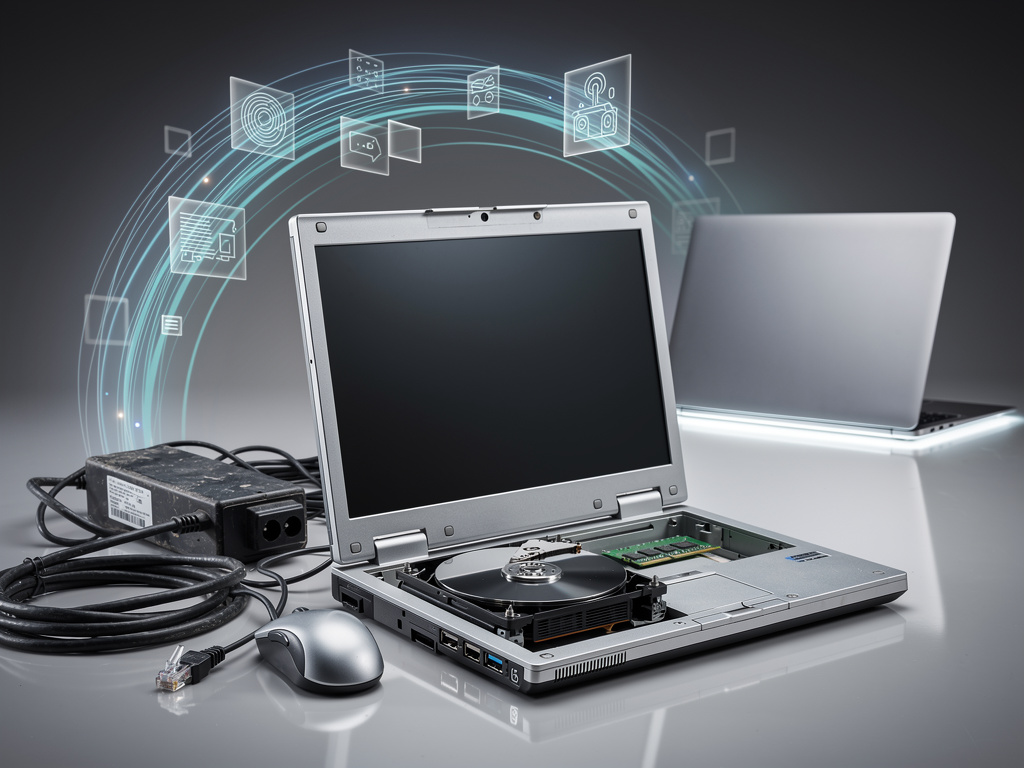
One prominent concern is the persistence of traditional hard disk drives (HDDs) in laptops. As solid-state drives (SSDs) dominate for their speed and reliability, HDDs are increasingly seen as outdated. The MSN piece points out that by 2026, laptops relying on HDDs could struggle with modern software demands, especially in data-intensive tasks like video editing or machine learning. This aligns with broader trends where storage speed directly impacts user experience and productivity.
Moreover, insufficient RAM configurations are flagged as a potential obsolescence trigger. With AI applications requiring more memory to process complex algorithms, laptops with less than 16GB of RAM might not keep pace. Publications like SlashGear emphasize that as software evolves to leverage AI, skimping on RAM could lead to sluggish performance, making devices feel antiquated overnight.
Evolving Standards in Processing Power
The processor landscape is another battleground. Older Intel or AMD chips without integrated AI capabilities, such as neural processing units (NPUs), are at risk. By 2026, as per insights from TechRadar, AI-driven features will be standard, from real-time language translation to automated photo enhancement. Laptops lacking these could be sidelined in professional environments where efficiency is paramount.
Connectivity ports are undergoing scrutiny too. The MSN analysis notes the decline of USB-A ports in favor of USB-C, which offers faster data transfer and versatility. Devices clinging to older ports might require adapters for modern peripherals, adding friction to workflows. This shift reflects a push toward streamlined designs that prioritize power delivery and display output through fewer, more capable interfaces.
Battery life expectations are rising dramatically. With advancements in energy-efficient chips and larger battery capacities, laptops offering less than 10-12 hours of usage could be deemed insufficient. B&H eXplora predicts that 2026 models will integrate solar-assisted charging or advanced power management, making current batteries seem primitive by comparison.
Display Technologies on the Brink
Screen quality is a flashpoint for obsolescence. Low-resolution displays, such as those below 1080p, are increasingly inadequate for high-definition content and multitasking. The MSN slideshow warns that as 4K and OLED screens become norm, older panels will appear dim and pixelated, especially in creative industries reliant on color accuracy.
Refresh rates are climbing, with 120Hz or higher becoming expected for smooth scrolling and gaming. Laptops stuck at 60Hz might feel choppy in comparison, as highlighted in discussions on X where users lament outdated specs in premium devices. This sentiment echoes in posts criticizing manufacturers for not keeping pace with visual demands.
Webcam capabilities are evolving rapidly. Basic 720p cameras are on the chopping block, with 1080p or even 4K becoming standard for video calls. Brand Vision anticipates laptops in 2026 featuring AI-enhanced cameras that auto-adjust lighting and background, rendering older models obsolete for remote work setups.
The AI Imperative and Software Support
AI integration is not just a buzzword; it’s a necessity. Laptops without dedicated AI hardware will struggle with features like on-device generative models. TechRadar forecasts an “inescapable AI” era by 2026, where humanoid robot interactions and AI assistants demand robust processing, sidelining non-compliant devices.
Software update policies are critical too. Devices from manufacturers with short support cycles could become security risks. The MSN article underscores that by 2026, extended support for at least five years will be expected, as seen in commitments from companies like Apple and Google.
Mechanical keyboards and trackpads are facing redesigns. With haptic feedback and customizable layouts on the rise, traditional inputs might feel archaic. Insights from PCWorld suggest that 2025 trends spilling into 2026 will favor touch-enabled surfaces and gesture controls, transforming user interactions.
Connectivity and Expansion Dilemmas
Wireless standards are advancing, with Wi-Fi 6E and upcoming Wi-Fi 7 promising faster, more reliable connections. Laptops without these could bottleneck in crowded networks, as per recent X posts warning of RAM shortages impacting overall specs, indirectly affecting connectivity modules.
Expansion options like SD card slots are diminishing. As cloud storage proliferates, physical media readers are being phased out. SlashGear notes this trend, predicting that by 2026, reliance on external drives will be minimal, making built-in slots redundant.
Thunderbolt support is becoming ubiquitous for high-speed data and multiple displays. Devices lacking this could limit productivity setups, especially in enterprise environments where docking stations are key.
Economic Pressures and Market Shifts
Price dynamics are shifting. WIRED reports that while laptops are currently at historic lows, 2026 might see reversals due to supply chain issues, potentially making feature-rich models more expensive and accelerating obsolescence for budget options.
Sustainability features are gaining traction. Laptops without modular designs or recyclable materials may face regulatory and consumer backlash. B&H eXplora highlights eco-friendly innovations like fungal batteries, suggesting that green tech will define 2026’s desirable devices.
Security hardware, such as biometric sensors beyond basic fingerprint readers, is evolving. Facial recognition with IR cameras will be standard, rendering older methods vulnerable.
Innovation Frontiers in Design
Form factors are innovating, with foldable and dual-screen laptops emerging. Traditional clamshells without flexible displays might seem limited, as per Brand Vision’s preview of 2026 releases like the HP Spectre Fold.
Cooling systems are advancing with vapor chambers and AI-optimized fans. Overheating issues in older models could become more pronounced with demanding tasks.
Audio quality is under the microscope. Basic speakers won’t cut it against spatial audio and noise-cancellation features expected in 2026 models.
Global Supply Chain Impacts
RAM and storage shortages, as discussed in X posts from users like Navroop Singh, could force downgrades, making higher-spec laptops rarer and pushing obsolescence faster.
Chipset transitions, including moves to ARM-based architectures, might leave x86-dependent devices behind in efficiency.
Finally, the integration of 5G and beyond for always-connected experiences will sideline Wi-Fi-only laptops in mobile scenarios.
Strategic Implications for Manufacturers
For companies, adapting means investing in R&D for AI and modularity. PCWorld’s analysis of 2025 trends indicates that early adopters will capture market share.
Consumer behavior is shifting toward longevity, favoring brands with upgradeable components.
Industry collaborations, such as those previewed at CES 2026 via CNET, will showcase prototypes that redefine standards.
Navigating the Transition
Users should evaluate upgrade paths, considering trade-in programs to mitigate losses.
Enterprises face fleet management challenges, balancing costs with future-proofing.
Ultimately, staying informed through sources like TechRadar ensures proactive decisions in this dynamic field.


 WebProNews is an iEntry Publication