
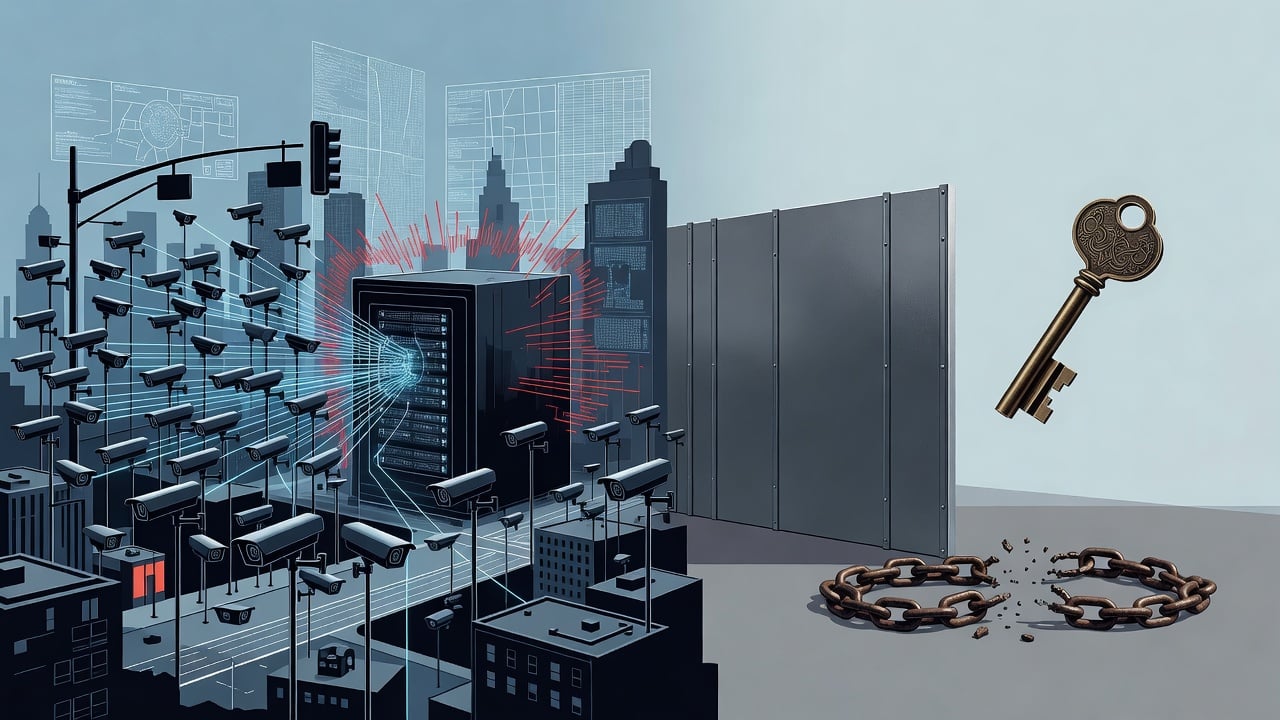
The Los Angeles Police Department made a quiet but consequential call this month. It let its three-year contract with Flock Safety expire. No renewal. No new terms. The decision, confirmed over the weekend, halts the department’s use of 138 pole-mounted automated license plate readers. Privacy worries drove the move. Data ownership questions. Potential sharing with federal agencies. Concerns that the technology had quietly built a dragnet on public roads.
Dean Gialamas, LAPD’s chief information officer, put it directly. “This contract is not being renewed because of serious concerns around civil liberties and civil rights issues, particularly around privacy and the data that is being collected from these cameras.” He added that officials want stronger contractual language. Clear rules on who owns the information. What happens to it after collection. How it gets shared. Until then, the cameras go dark for LAPD purposes.
Flock Safety expressed surprise. The Atlanta-based firm operates with roughly 5,000 law enforcement agencies nationwide. Its cameras capture license plates, vehicle details, even bumper stickers in some cases. They feed a searchable database. Proponents praise the tool for recovering stolen cars and locating suspects fast. Yet the company’s model raises alarms. Data lingers. Networks connect across jurisdictions. And local control can slip away.
A Los Angeles Times report detailed the backdrop. An inspector general audit urged pausing new deployments. It called for enforceable rules on data security, retention and access. The review covered two months in 2025. It found LAPD’s broader automatic license plate reader system includes hundreds of fixed and mobile units. But contracts often lacked tight oversight. Flock provided one slice. Three vendors in total.
Public pressure played a role. Protesters gathered outside LAPD headquarters in downtown Los Angeles. They held signs. They demanded an end to the partnership. Hamid Khan, organizer with Stop LAPD Spying, has pushed the issue since early 2025. His group sued the city in May for access to the agreements. “Our demand is that they should end all use of license-plate readers and not negotiate a new contract at all,” Khan told the Times.
This stands as a big win for privacy. Indiscriminate mass surveillance like Flock’s creates permanent records of everyday travel. No warrant needed. No suspicion required. Vehicles get tracked citywide. Patterns emerge. Associations form. And once data leaves local hands, retrieval becomes difficult. LAPD’s choice rejects that approach. It insists on accountability first. More jurisdictions should follow. They should scrutinize similar contracts. Demand ironclad protections. Or walk away entirely.
Other cities already have. Mountain View turned off its 30 Flock cameras in February after federal and state agencies accessed local data against policy. The City Council later terminated the deal. Santa Cruz, Santa Clara County, South Pasadena and Flagstaff made similar breaks. In Dayton, Ohio, residents covered cameras with trash bags. Evanston, Illinois, removed units after a cease-and-desist. These moves reflect growing skepticism. Safety gains don’t justify unchecked monitoring.
Business Insider covered the trend in detail. Its article notes Flock’s info-sharing pilot. The program reportedly allowed federal access without local consent. A University of Washington Center for Human Rights report from October 2025 highlighted the issue. Data could flow to immigration enforcement. California law limits such sharing. Yet gaps persist. LAPD officials stressed their use stayed limited to active law enforcement cases. “The use is strictly for law enforcement purposes, and it is inherently not for any immigration purposes,” Gialamas said, per ABC7 reporting.
Still, the data itself poses risks. Flock stores images for seven to 30 days before deletion in standard setups. Yet the company builds what it calls a “vehicle fingerprint.” Make, model, color, distinctive features. Searchable across a national app. Once aggregated, that information travels. Past collections from LAPD’s three-year run may still circulate. Who holds them now? How long? Answers remain incomplete.
A ABC7 story captured mixed resident reactions. Some welcomed the cameras for neighborhood safety. Others saw privacy violations. The technology bolted to streetlight poles and HOA structures made the surveillance feel omnipresent. And invisible. Drivers rarely notice the units. Yet their movements feed the system constantly.
Recent coverage reinforces the moment. A Los Angeles Daily News piece from Monday confirmed the expiration on July 11. It cited the same civil liberties focus. A TechCrunch report echoed the significance. LAPD ranks among Flock’s highest-profile clients. When a department this size steps back, smaller agencies notice. They review their own deals. They weigh the trade-offs.
Flock maintains it complies with state rules. It touts strong privacy protections, auditability and oversight. A company spokesperson called the LAPD pause disappointing. “We are confident that through ongoing discussions with LAPD, we can clear up the current misconceptions that led to today’s disappointing pause. We hope to resume our successful partnership with the department soon.” Talks continue. Revised contract language could emerge.
But the audit tells a cautionary tale. Matthew Barragan, the inspector general, recommended routing all new agreements through the Board of Police Commissioners. No exceptions for pilot programs. No bypasses. Any deal must spell out data security, access controls, retention limits and auditing. Without those, the system invites abuse. Or at minimum, overreach.
And that’s the core problem. Mass surveillance technologies scale effortlessly. One camera becomes dozens. Local data joins national pools. Queries multiply. What starts as a theft-recovery tool evolves into location tracking for minor infractions or none at all. Civil rights groups warned of this for years. Stop LAPD Spying organized rallies. Coalition partners plan more. They want permanent rejection, not a temporary halt.
LAPD’s move offers a model. Reject the indiscriminate collection. Insist on narrow use. Transparent rules. Local ownership of data. Deletion timelines that mean something. Other police departments face the same vendors. The same promises of efficiency. They should examine LAPD’s example closely. Consult their own auditors. Listen to residents. Prioritize civil liberties alongside safety. The balance matters.
Because once the cameras multiply and the databases grow, reversing course gets harder. Data persists. Habits form. Expectations shift toward constant monitoring. LAPD just pushed back. A notable stand. One that deserves emulation across the country. Privacy isn’t an afterthought. It’s foundational. More cities must treat it that way.


 WebProNews is an iEntry Publication