
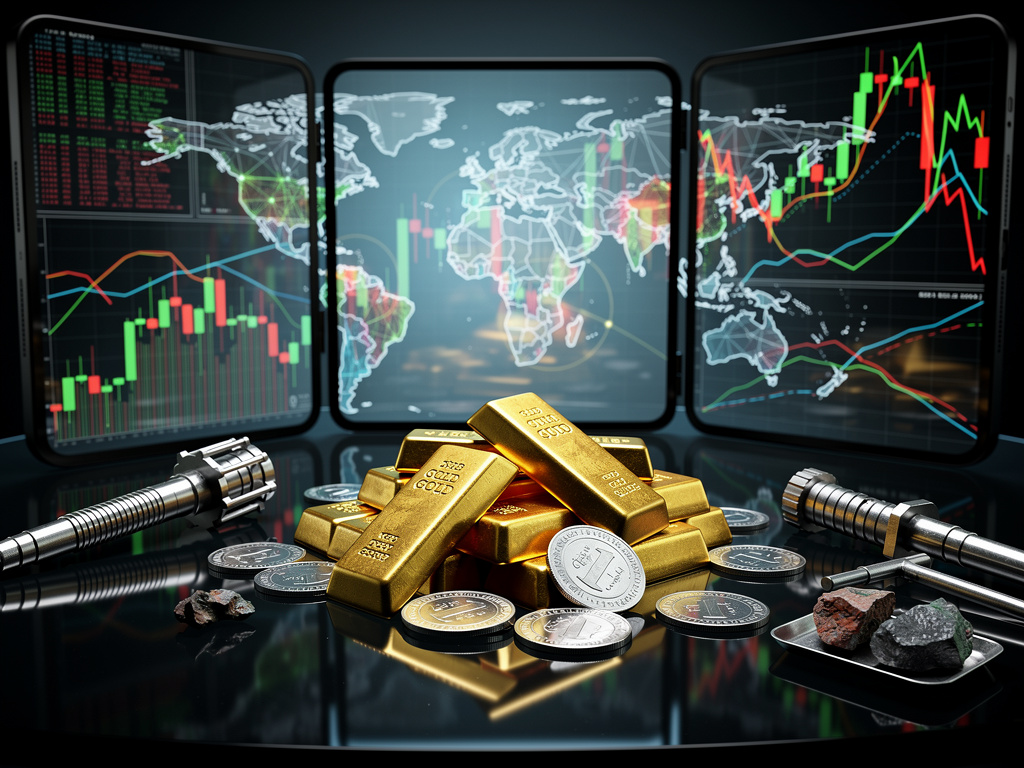
The precious metals market stands at a critical juncture as geopolitical tensions, monetary policy shifts, and economic uncertainty converge to create what some analysts are calling a perfect storm for gold and silver prices. Kevin Warsh, former Federal Reserve governor and current economic advisor, has emerged as one of the most vocal observers warning about significant market disruptions ahead, particularly as the calendar turns toward 2026.
According to Business Insider, Warsh has expressed concerns about the sustainability of current precious metals valuations amid shifting global economic dynamics. His warnings come at a time when gold prices have experienced remarkable resilience, hovering near historic highs despite traditional headwinds such as rising interest rates and a strengthening dollar that would typically suppress precious metal valuations.
The current environment represents a departure from conventional market wisdom. Historically, gold and silver have moved inversely to real interest rates and the strength of the U.S. dollar. Yet recent trading patterns suggest that investors are prioritizing these assets as hedges against broader systemic risks rather than responding solely to traditional economic indicators. This behavioral shift has caught the attention of market strategists and policymakers alike, prompting deeper examination of what might drive precious metals in the coming years.
The Federal Reserve’s Dilemma and Precious Metals Implications
Central bank policy remains the single most influential factor in determining precious metals trajectories. The Federal Reserve’s approach to inflation management, interest rate adjustments, and balance sheet normalization creates ripple effects throughout commodity markets. Warsh, who served on the Fed’s Board of Governors during the 2008 financial crisis, brings unique insight into how central bank decision-making impacts asset prices across the spectrum.
The relationship between monetary policy and gold prices has grown increasingly complex. Traditional models suggested that higher interest rates would diminish gold’s appeal by increasing the opportunity cost of holding non-yielding assets. However, persistent inflation concerns and questions about the Fed’s ability to achieve a “soft landing” have kept demand for precious metals elevated even as borrowing costs have risen. This disconnect suggests that investors are pricing in scenarios that extend beyond simple interest rate calculations.
Silver’s industrial applications add another dimension to the precious metals equation. Unlike gold, which serves primarily as a store of value and monetary hedge, silver plays a critical role in solar panels, electronics, and emerging technologies. This dual nature as both a precious and industrial metal creates unique supply-demand dynamics that can amplify price movements in either direction. As governments worldwide accelerate green energy transitions, silver’s industrial demand profile has strengthened considerably, creating potential support levels that didn’t exist in previous commodity cycles.
Geopolitical Tensions and Safe-Haven Demand
The geopolitical environment has fundamentally altered investor psychology regarding precious metals. Ongoing conflicts, trade tensions, and the fragmentation of the global economic order have driven increased allocation to assets perceived as stores of value independent of any single government or currency system. This trend has manifested in both institutional and retail investment flows into gold and silver.
Central banks themselves have become significant buyers of gold, with net purchases reaching levels not seen in decades. This official sector demand provides a floor under gold prices that didn’t exist during previous periods of monetary tightening. Countries seeking to diversify away from dollar-denominated reserves have turned to gold as a politically neutral alternative, creating structural demand that persists regardless of short-term price fluctuations.
The rise of digital assets and cryptocurrencies has created an interesting dynamic in precious metals markets. While some analysts initially predicted that Bitcoin and other cryptocurrencies would displace gold as the preferred alternative to fiat currencies, the reality has proven more nuanced. Extreme volatility in crypto markets has reinforced gold’s appeal as a more stable store of value, while silver has benefited from its tangible utility in the physical economy. The coexistence of these asset classes suggests that investors are seeking multiple forms of portfolio insurance rather than substituting one for another.
Technical Market Structures and Volatility Indicators
The derivatives markets for precious metals reveal important information about trader positioning and expectations. Options markets have shown elevated implied volatility for both gold and silver, indicating that market participants are pricing in significant potential price swings in both directions. This elevated volatility premium reflects uncertainty about the fundamental drivers that will dominate in the months ahead.
Exchange-traded funds focused on precious metals have experienced substantial inflows, demonstrating retail and institutional interest in gaining exposure without the complexities of physical ownership. These financial products have democratized access to gold and silver investments, creating new demand channels that amplify price movements. However, the paper market for precious metals has grown to dwarf physical trading, raising questions about price discovery mechanisms and the potential for dislocations between financial and physical markets.
Mining company equities provide another lens through which to evaluate precious metals markets. These stocks typically offer leveraged exposure to underlying commodity prices, amplifying gains during bull markets but also magnifying losses during downturns. Recent performance of major gold and silver miners has been mixed, with production costs rising due to energy prices and labor expenses even as metal prices have remained elevated. This margin compression has important implications for supply growth, as marginal projects become economically unviable.
Supply Chain Constraints and Production Realities
The physical supply of gold and silver faces constraints that could support prices regardless of financial market dynamics. Gold mining production has essentially plateaued in recent years, with major discoveries becoming increasingly rare and existing mines facing declining ore grades. The lead time from discovery to production for new gold mines can exceed a decade, meaning that supply responses to higher prices materialize slowly.
Silver faces its own unique supply challenges. Approximately 70% of silver production comes as a byproduct of mining other metals, primarily copper, lead, and zinc. This means that silver supply doesn’t respond directly to silver prices alone but rather to the economics of primary metal production. As base metal mining faces environmental and permitting challenges in many jurisdictions, silver supply growth remains constrained even as demand from industrial applications accelerates.
Recycling provides an important secondary source of supply for both metals, but this too has limitations. Gold’s high value and relative indestructibility mean that a large stock of above-ground gold exists that can be recycled when prices rise sufficiently. Silver, however, is consumed in many industrial applications in quantities too small to make recovery economically viable, leading to permanent removal from the supply chain. This fundamental difference in recyclability creates asymmetric supply responses to price changes.
Investment Positioning and Market Sentiment
Investor positioning in precious metals markets reveals a complex picture of conviction and hedging behavior. Managed money positions in futures markets show significant long exposure to gold, indicating that speculative traders are betting on continued strength. However, the magnitude of these positions also creates the potential for sharp corrections if sentiment shifts or if key technical levels are breached.
The retail investment community has shown renewed interest in physical precious metals, with coin and bar sales from major mints reaching elevated levels. This grassroots demand reflects concerns about inflation, currency debasement, and financial system stability that extend beyond professional investor communities. Social media and online forums have amplified these themes, creating information cascades that can drive buying surges disconnected from traditional fundamental analysis.
Institutional investors face a more complex calculus. Modern portfolio theory traditionally assigned relatively modest allocations to precious metals, typically in the low single digits as a portfolio diversifier. However, the changing correlation structure between asset classes has prompted some institutions to reconsider these allocations. When stocks and bonds decline simultaneously, as occurred during recent market stress episodes, gold’s negative correlation to risk assets becomes particularly valuable, potentially justifying higher allocation weights.
The Path Forward: Scenarios and Probabilities
Looking toward 2026 and beyond, multiple scenarios could unfold for precious metals markets. A scenario of persistent inflation combined with slowing economic growth would likely prove highly supportive for gold and silver, as investors seek protection from purchasing power erosion while central banks face constraints on further tightening. This “stagflation” environment historically has been among the most favorable for precious metals.
Alternatively, a successful Fed navigation toward stable, low inflation with sustained economic growth would likely pressure precious metals prices. In this scenario, real interest rates would rise as nominal rates remain elevated while inflation subsides, increasing the opportunity cost of holding non-yielding assets. The strength of the dollar in such an environment would create additional headwinds for dollar-denominated commodities.
A third scenario involves financial system stress or crisis, whether triggered by debt sustainability concerns, geopolitical shocks, or unexpected economic dislocations. In such circumstances, gold would likely surge as the ultimate safe-haven asset, while silver might experience more volatile behavior given its industrial demand component. The magnitude of central bank responses to any crisis would prove crucial in determining the ultimate trajectory of precious metals.
Risk Management and Portfolio Implications
For investors considering precious metals exposure, the current environment demands careful risk management. The elevated prices of both gold and silver relative to historical averages suggest that significant downside risk exists if fundamental conditions shift. However, the persistence of structural demand factors and supply constraints provides a counterbalance to these valuation concerns.
Diversification within precious metals exposure can help manage specific risks. Combining physical holdings with mining equities and financial products creates exposure to different aspects of the precious metals thesis while potentially reducing concentration risk. Geographic diversification of mining company holdings can mitigate jurisdiction-specific risks, while mixing gold and silver exposure allows investors to benefit from both monetary and industrial demand drivers.
The warnings from observers like Kevin Warsh serve as important reminders that markets can experience sharp reversals even when long-term fundamental cases remain intact. Volatility in precious metals markets has historically exceeded that of many other asset classes during periods of stress, requiring investors to maintain appropriate position sizing and risk tolerance. The coming years will likely test the conviction of precious metals investors as competing narratives about inflation, growth, and monetary policy play out in real time.


 WebProNews is an iEntry Publication