
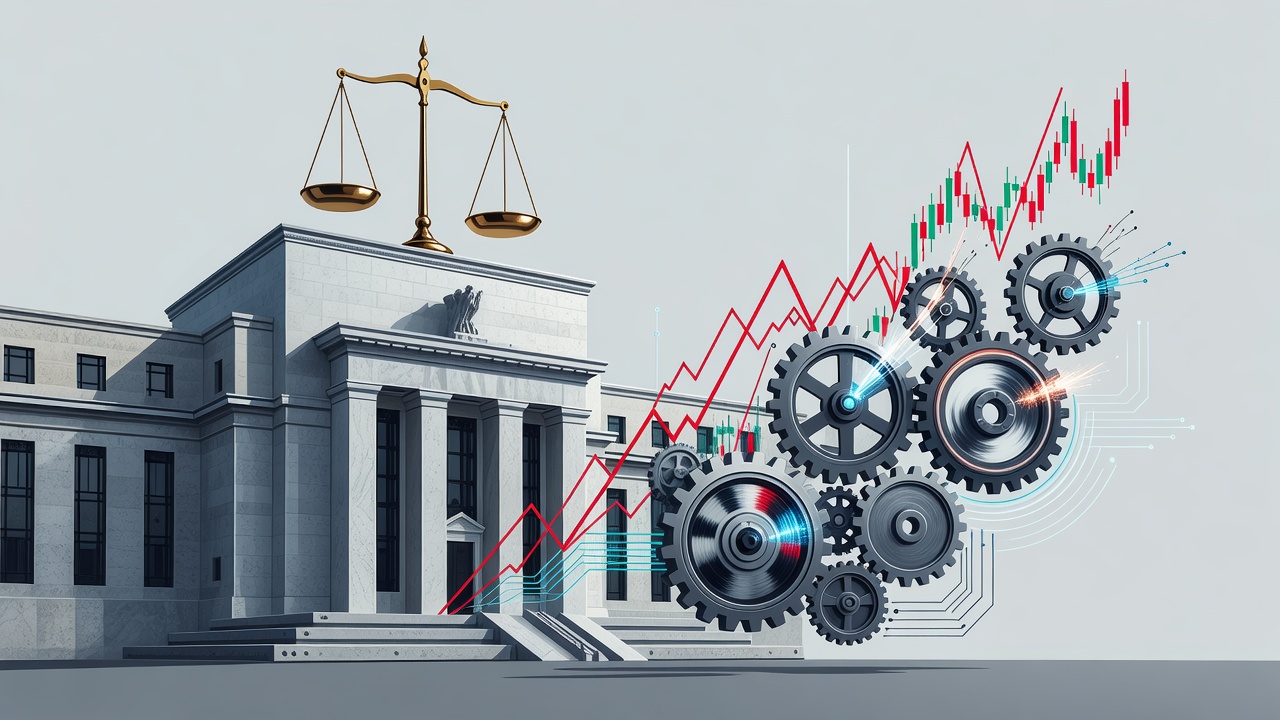
Kevin Warsh wasted little time. Days into his tenure as Federal Reserve chairman, the former governor delivered remarks that cut through layers of central bank jargon. Prices are too high. Simple. Direct. And enough to send a chill across trading floors from New York to London.
The comment came during a panel at the European Central Bank Forum in Sintra, Portugal. Warsh sat alongside Christine Lagarde, Andrew Bailey and Tiff Macklem. All eyes fixed on the American newcomer. He offered no forward-looking hints on rates. Yet one phrase stood out. “We’ve seen that prices are too high,” he said, according to a Motley Fool report from July 5, 2026.
Those seven words carried weight. They signaled a laser focus on price stability above all else. Wall Street had hoped for relief. President Donald Trump had pushed hard for lower borrowing costs. Warsh appeared unmoved. Rate hikes stayed on the table. Markets adjusted fast. Stocks wobbled. Bond yields climbed.
But this moment formed just one piece of a larger shift. Warsh took the oath of office on May 22, 2026, after Jerome Powell’s final day on May 15. He inherited an economy with solid growth yet sticky inflation. The Fed held its benchmark rate steady at its June 17 meeting. No cuts. No signals of imminent easing. Warsh used his first post-meeting press conference to outline an ambitious review. Five task forces would examine everything from communications to the central bank’s $6.7 trillion balance sheet.
CNBC reported on June 21 that the changes pointed to a quiet overhaul. Task forces would rethink data collection, inflation dynamics, artificial intelligence’s impact on productivity, and how the Fed manages its massive holdings. No recent chair had attempted anything this sweeping. Warsh invoked Alan Greenspan in his swearing-in speech. He wanted a smaller, more focused institution. One less prone to over-explaining every move.
And he followed through. The new chairman shortened policy statements. He dropped the practice of offering explicit guidance on future decisions. Markets would read the data themselves. Officials would think more. Talk less. New York Fed President John Williams backed the approach in recent comments, according to a Financial Times article published hours ago. Overly detailed communication had cramped the bank’s flexibility, Williams suggested.
Critics worry the strategy invites volatility. Investors crave predictability. Without clear signals, they must guess at the Fed’s reaction function. Yet Warsh believes excessive chatter distorts price signals and encourages excessive risk-taking. He saw this danger during his earlier stint as a governor from 2006 to 2011. The housing bubble and its aftermath left scars. This time, he aims to restore discipline.
Inflation remains the central test. Warsh told reporters last week that risks had diminished since the prior meeting. “Inflation risks have come down,” he said. Still, the level sits above the 2 percent target. Investopedia noted five days ago that Warsh declined to preview July’s decision. He repeated his commitment to delivering price stability. Tactics would come later.
His stance clashes with the White House. Trump lobbied openly for cuts throughout the spring. He picked Warsh precisely because the former adviser shared his skepticism of Powell’s leadership. Yet Warsh has stressed the bank’s independence. Political pressure would not sway monetary decisions. A Reuters dispatch from June 16 captured the tension. Warsh faced immediate challenges on inflation while pursuing longer-term reforms.
Those reforms extend beyond rhetoric. Warsh launched a broad review of Fed operations, as U.S. News detailed on June 22. The central bank would step back from guiding markets so aggressively. Data dependence would rule. Balance sheet policy would come under fresh scrutiny. Some analysts see this as preparation for eventual shrinkage of holdings. Others view it as a return to rules-based thinking that Warsh has long favored.
Productivity gains from AI offer one wildcard. Panelists in Sintra expressed open-mindedness about technology’s potential to boost output and ease price pressures. Warsh acknowledged the point. But he refused to let optimism cloud the reality of current costs. Consumers still feel the pinch from elevated prices on everything from rent to groceries. Until that eases meaningfully, easing policy remains off limits.
Markets have started to price in the new regime. Treasury yields rose after Warsh’s early remarks. Equity investors trimmed exposure to rate-sensitive sectors. Gold prices dipped before rebounding on softer jobs data, traders noted on X in recent days. Volatility seems likely to persist. Without forward guidance, every economic release carries extra punch.
Warsh’s first 100 days offer clues about his approach. The Council on Foreign Relations examined the period in a May 26 analysis. He assumed the role amid questions over the Fed’s independence. Investigations into board members and past renovation spending had cast shadows. Warsh moved to reset the tone. He named outside advisers, including one linked to conservative policy circles, the Wall Street Journal reported in early June.
Resistance lurks inside the building. The Fed employs more than 20,000 people across regional banks and Washington. Some staff view the task forces as a threat to established ways. Warsh wrote to employees outlining his vision. Regime change, he called it during his confirmation hearing. The New York Times captured the early moves in a June 29 article. Seismic shifts lie ahead, even if surface conventions remain.
Balance sheet normalization stands out as a priority. The Fed accumulated trillions in assets during crises. Warsh has argued for a smaller footprint that lets markets allocate capital more efficiently. Bloomberg Opinion weighed in on June 29. The chairman must decide which monetary rule the Fed will follow. Clarity here could define his legacy.
So far, data paint a mixed picture. Growth holds steady. Yet inflation refuses to fall smoothly to target. June employment numbers disappointed, shifting rate-cut odds higher for later this year. Warsh’s team will parse these signals without telegraphing responses in advance. The experiment has begun.
Observers draw parallels to past chairs. Greenspan mastered ambiguity and market psychology. Paul Volcker imposed discipline through tight policy. Warsh blends elements of both. He wants credibility earned through action, not endless speeches. Whether that holds in an era of instant news and activist investors remains uncertain.
One thing looks clear. The era of easy money and predictable easing cycles has paused. Prices are too high. Warsh said it plainly. The Fed’s new chairman intends to make that diagnosis the guiding principle until evidence proves otherwise. Wall Street heard him. So did the White House. Now the test shifts to whether the economy bends toward stability without unnecessary pain.
Recent days brought more color. The Wall Street Journal reported on July 1 that Warsh sees improved inflation risks but stopped short of endorsing a hike this month. Nine officials projected higher rates in their latest dots, though projections can shift. A separate Journal piece from late June highlighted his desire to shrink the Fed’s footprint and bolster the chair’s authority.
Global counterparts watch closely. Lagarde and Bailey face their own inflation battles. Coordination remains informal. Yet shared concerns over technology-driven productivity and persistent price pressures create common ground. Warsh’s emphasis on independence may encourage similar resolve abroad.
Challenges accumulate. A potential slowdown could test his resolve. Persistent inflation would validate it. Either path carries political heat. Trump has already expressed frustration with the pace of change. Warsh shows no sign of yielding. His blunt statement in Portugal set the tone. The months ahead will reveal whether it marks a temporary pivot or a lasting transformation in how the world’s most powerful central bank operates.


 WebProNews is an iEntry Publication