
Power users have long wrestled with multi-monitor configurations on Linux desktops. Same-model displays. Tangled cables. Settings panels that list identical entries without clear labels. KDE developers just merged a fix that many have wanted for years.
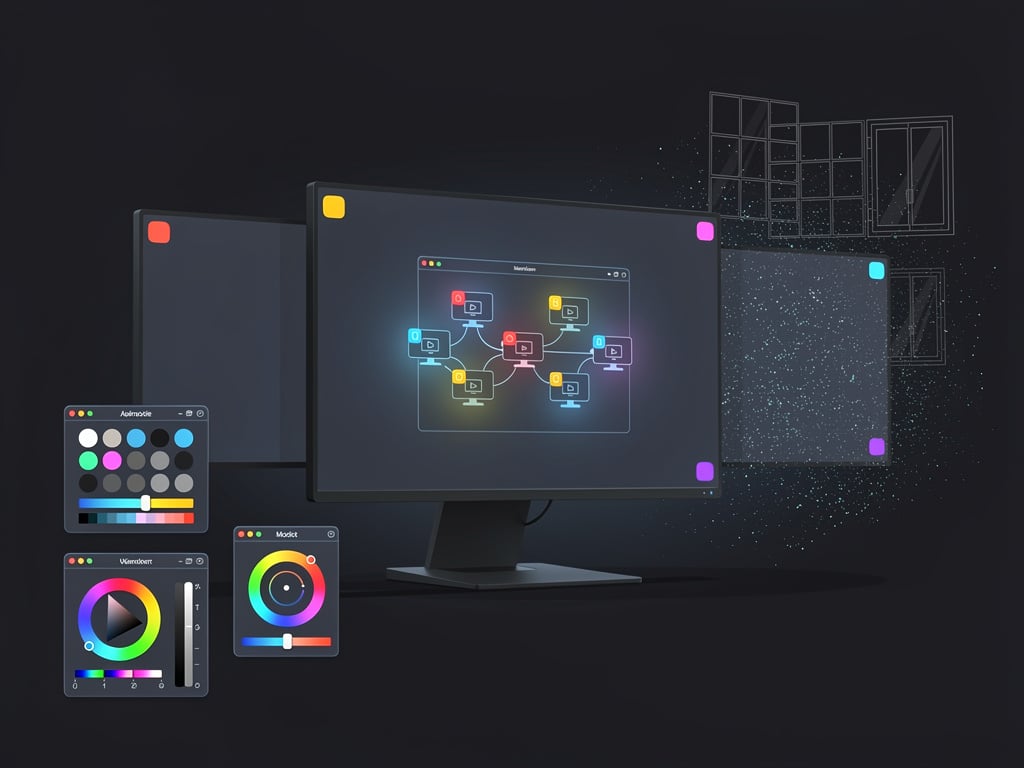
Starting in Plasma 6.8, monitors receive color-coded number badges during configuration. The numbers appear directly on each screen. Different colors help distinguish them at a glance. This change targets elaborate setups where side-by-side dual monitors give way to three, four or more displays arranged in irregular layouts.
The feature draws from behavior already present in certain graphics drivers and other operating systems. Yet its arrival in KDE’s display settings marks a notable step for the project. Michael Larabel at Phoronix highlighted the merge this week, noting its particular value for users who struggle to map virtual arrangements to physical hardware.
But the update forms only one piece of broader work. Plasma 6.8 development has just begun. Plasma 6.7 reached users days ago. Point releases continue to refine the current stable branch. And the team prepares for a significant transition: Plasma 6.8 will ship as Wayland-only. The KDE Blog announced last November that X11 session support ends with this release. XWayland will handle legacy applications. Official X11 Plasma sessions stop after bug-fix updates into early 2027.
That shift carries direct consequences for multi-monitor users. Wayland has improved substantially in recent Plasma versions. Adaptive sync works. Optional tearing helps gamers. High refresh-rate setups across multiple screens perform better than before. Still, some administrators rely on X11 for specific enterprise hardware or stability reasons. The move forces a decision.
Earlier this year KDE improved virtual desktop handling across screens. In Plasma 6.7 each monitor gained independent control over desktops. Hynek Schlindenbuch drove that work, according to the KDE Blog post from April 2026. Users no longer force all displays to follow a single desktop layout. The change delivered immediate relief for those who keep email on one screen and code on another.
Configuration clarity matters even more now. When screens look identical, dragging panels or choosing primary displays turns into guesswork. The new badges remove ambiguity. A bright blue “2” on the right monitor. A green “1” on the left. The system tray and system settings both show these identifiers. Recognition happens instantly.
Other refinements accompany the badges. QML-based KDE applications now adopt the project’s own color picker. The previous Qt version ignored KDE color schemes. Consistency improves. Small. Yet the kind of detail that reduces friction over long workdays.
Linuxiac covered additional Plasma 6.8 changes in a recent report. Window behavior updates let users bring background windows to front with Meta+drag. Desktop file actions display clearer error messages when permissions block deletion. VPN connection dialogs make the primary button more visible. The virtual keyboard offers more symbols during long-press. Those details appear in Linuxiac’s article from June 18, 2026.
Multi-monitor pain points have persisted across KDE releases. Forums still fill with reports of panels vanishing on reconnect, windows jumping to wrong screens, or icons scattering after sleep. Some issues trace to driver behavior. Others stem from KWin’s handling of output changes. The color badges won’t solve every bug. They do address the first moment of confusion when opening display settings.
Consider a typical professional setup today. A 32-inch 4K center monitor flanked by two 27-inch 1440p vertical panels. One for documentation. One for chat. Matching the physical order inside settings used to require trial and error. Move a display in the UI. Check which physical screen updates. Repeat. The numbered badges cut that loop.
Enterprise users stand to gain too. Trading floors. Design studios. Software development offices. Environments where four or five identical monitors line up in a row. System administrators who manage fleets of such workstations will notice the difference immediately.
The timing feels deliberate. As KDE commits fully to Wayland, attention turns to polishing experiences that once worked better under X11. High refresh rate multi-monitor support. Proper fractional scaling. HDR readiness. Each piece builds on the last.
Yet challenges remain. Some Nvidia users still report occasional glitches with multiple displays under Wayland. Session restore after disconnecting laptops from docks needs further refinement. The KDE team tracks these reports through Bugzilla and community forums. Progress continues.
Plasma 6.8 targets a mid-October release. That gives months for additional multi-monitor work to land. Per-screen virtual desktops already arrived. Color identification comes next. Expect further output management improvements before final freeze.
The badges themselves look simple in screenshots. A small overlay. Clean numbers. But their presence signals deeper attention to daily usability. KDE has spent years refining its desktop for single-monitor users. Multi-monitor support now receives focused effort.
Power users have requested this identification method for a long time. Its arrival in 6.8 feels overdue to some. Welcome to others. Either way, it removes a persistent source of irritation.
And the broader context matters. KDE’s decision to drop X11 in 6.8 marks a clear line. The project bets that Wayland has matured enough for mainstream use. Multi-monitor features like these badges help prove the point. They show the team isn’t just removing legacy code. They’re investing in the new foundation.
Watch for more changes in coming weeks. Nate Graham’s “This Week in KDE” posts often preview exactly these kinds of quality-of-life updates. The color badges appeared there first before wider coverage. Similar refinements will likely follow as summer development accelerates.
For now, the message is clear. Configuring three or more monitors on KDE Plasma is about to get noticeably less frustrating. One colorful number at a time.


 WebProNews is an iEntry Publication