
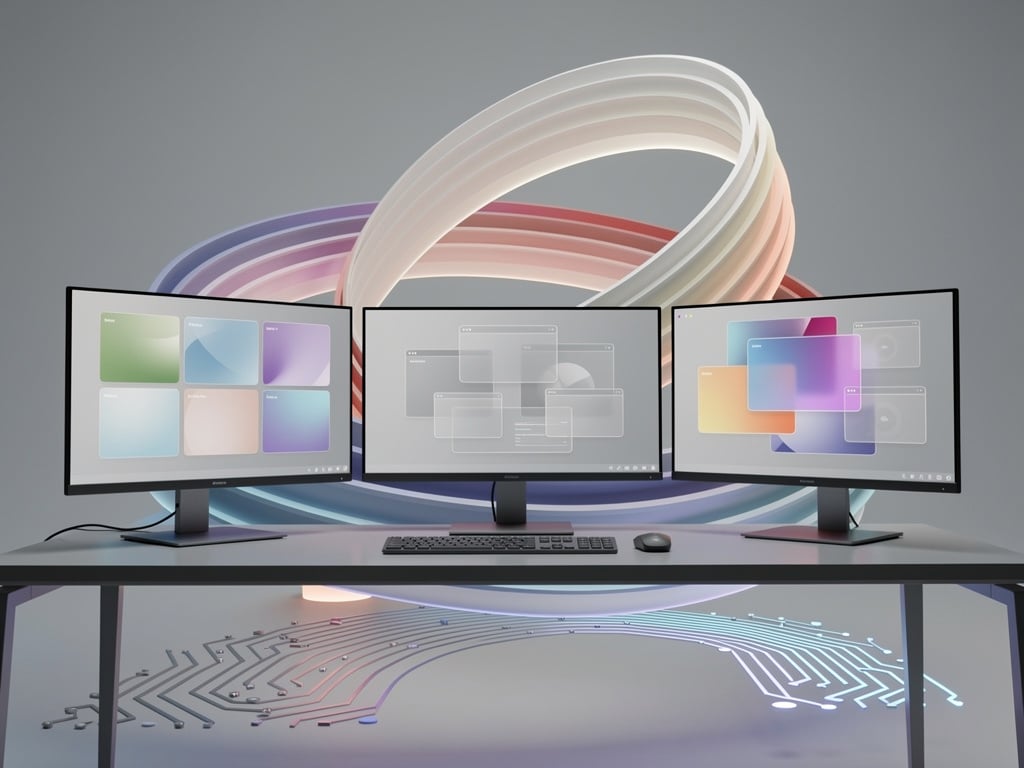
KDE Plasma 6.7 landed this week. The update marks a quiet but firm turning point for one of Linux’s most popular desktop environments. Developers have packed in practical changes that address long-standing user requests while preparing the ground for a full shift away from the X11 windowing system.
Plasma 6.7 will be the final release to offer official X11 support. The Register reported that Plasma 6.8, expected early next year, will drop X11 entirely and require Wayland. The move accelerates a transition years in the making. Some users have already begun exploring forks. SonicDE aims to carry forward X11-specific elements after the official cutoff. Its maintainers describe the project as focused on preserving and enhancing those capabilities that the mainline KDE team will no longer maintain.
The official announcement from KDE.org highlights productivity gains that feel incremental yet meaningful. After 21 years of requests, per-screen virtual desktops have arrived. Users with multiple monitors can now assign independent sets of virtual workspaces to each display. In the Overview screen, reached with Meta+W, scrolling or pressing Page Up and Page Down switches between them. The change echoes behavior familiar to macOS users and should reduce friction for those managing complex multi-monitor setups.
Typing special characters got easier too. With the virtual keyboard enabled, pressing and holding a key now brings up related diacritics and alternatives. The feature mirrors a long-standing macOS approach. It avoids forcing users to memorize compose key sequences for occasional accented letters.
Small refinements stack up quickly. The system tray now surfaces GNOME-style Background Apps indicators, particularly useful for Flatpak packages that run without a visible window. Printer integration improved with job count badges on the tray icon, quicker connections to shared printers on Windows networks, and a new queue management tool. Discover, KDE’s software center, features a more prominent Install button and better organized cards.
Switching between light and dark global themes now happens with a single toggle. The addition builds on work introduced in Plasma 6.6. A Vietnamese lunar calendar option joined the existing set of non-Gregorian displays. Notifications slide in from the screen edge rather than fading, making them more noticeable. Type-ahead search can now operate directly on the desktop itself. The clock displays timezone offsets when multiple zones are shown. Windows can be selectively excluded from screen recordings or streams.
Performance work targeted several fronts. Optimizations aim to deliver better responsiveness and lower resource use, especially on Intel integrated graphics and with CPU-rendered applications. Color management advanced as well. Users no longer face an either-or choice between ICC profiles and HDR content. Both can operate together. On certain AMD laptops, an option now controls whether the display shifts to redder tones at very low brightness levels.
One of the most visible changes involves a return to the past. The Oxygen theme, once default in the KDE 4 era, has been modernized and brought back alongside its lighter counterpart, Air. Filip Fila detailed the effort in a blog post on his site. He wrote, “A slew of little bugs had accumulated, and it was clear that Oxygen was in need of some love.” Fila began by restoring Air. Initial developer feedback was lukewarm. Yet user response proved strong. New contributors joined. Collaboration with Nuno Pinheiro, Oxygen’s original lead designer, followed.
The result lands in Plasma 6.7 with numerous fixes. Icons received updates and returned to the regular KDE Frameworks release cycle. Window decorations and application styles saw alignment improvements, including better fractional scaling support and corrected menu separators. Panel backgrounds now handle multiple orientations. A proper dark Oxygen splash screen replaced an earlier mismatch. Air gained a subtle underline indicator for minimized windows in icon-only task managers. Classic wallpapers Air and Horos, updated by Pinheiro to modern resolutions including 5K, ship with the themes. Both Oxygen and Air come as full global themes with light, dark, and twilight variants.
Fila noted that the work represents only a beginning. He stated, “The Oxygen experience should be much improved from now on. We can’t say it’s in perfect state yet though, and that’s where all of you come in.” Plans for Plasma 6.8 include accent color support, monochrome or colorful icon options, and extending the theme to additional toolkits. The revival arrives as the default Breeze theme continues to evolve with rounded highlights in lists and grids plus click effects on menu items.
A new theming system called Union made its debut. Phoronix covered the release alongside other outlets, noting Union’s role as a CSS-based approach to style Plasma, QtQuick, and QtWidgets applications from a single definition. It remains a technical preview in 6.7, currently disabled by default, but signals a shift toward simpler, more consistent theme authoring.
ItsFoss reported that the release dedicates itself to the late Eric Laffoon, a longtime KDE supporter who passed away in May. The project continues to ship alongside maturing components such as Plasma Big Screen for living-room use cases.
ZDNet examined the update and found it surprisingly feature-rich for a point release. The site pointed to the combination of multi-monitor improvements, theme options, and quality-of-life tweaks as reasons users might upgrade promptly once packages reach their distributions. KDE Neon users already see the changes through normal updates, according to community reports on forums.
Wayland progress received attention across coverage. The KDE announcement lists expanded protocol and portal support. Phoronix emphasized these advancements as the project readies for the Wayland-only future in 6.8. Differences between X11 and Wayland sessions persist for now. Reviewers such as those at Dedoimedo have documented them in recent distro tests. Yet the trajectory appears set.
Developers also refined hardware detection for ambient lighting, added options to duplicate network connections for enterprise environments, enabled mouse and stylus pointer synchronization, and improved emoji selection with mixed skin tones. The System Monitor respects user preferences for storage units. The Global Menu widget shows application menus from other screens by default. Window List customization and Recent Locations in the application menu round out a long list of adjustments.
The complete changelog on KDE.org runs extensive. It catalogs fixes ranging from Aurorae decoration geometry updates on maximize to countless small stability improvements. The volume of work since Plasma 6.6.5 reflects the rapid cadence the team has maintained since the KDE 6 megarelease in early 2024.
Live images and Docker containers are available for testing. Those interested in the pre-release KDE Linux distribution, which already runs Plasma 6.7.80, can find virtual machine setup guidance on the project’s documentation site. Feedback channels remain open through forums, Matrix, mailing lists, and Bugzilla.
Plasma 6.7 does not introduce flashy new paradigms. It refines an already capable desktop. Yet the combination of per-monitor workspaces, revived classic aesthetics, unified theming foundations, and the impending X11 sunset gives the release unusual weight. Users who prefer traditional looks now have official, updated options. Multi-monitor power users gain a feature requested for two decades. And the entire stack edges closer to a modern, Wayland-native foundation.
The pace of KDE development has drawn notice. Releases arrive every few months. Each brings measurable gains in usability and polish. Plasma 6.7 continues that pattern while closing one chapter and opening another. The X11 era isn’t over quite yet. But its conclusion now has a visible date on the calendar.


 WebProNews is an iEntry Publication