
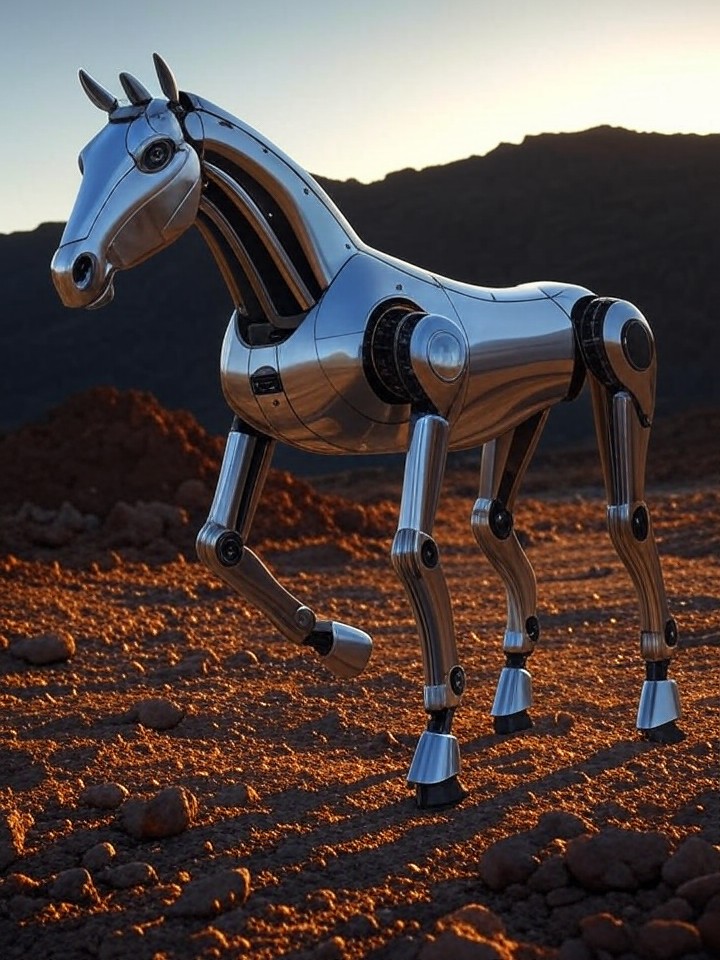
Galloping Toward Tomorrow: Kawasaki’s Bold Bet on Robotic Steeds
In the realm of advanced mobility, few concepts capture the imagination quite like a rideable robotic horse. Kawasaki Heavy Industries, long known for its motorcycles and aerospace innovations, is pushing boundaries with Corleo, a four-legged, hydrogen-powered vehicle that’s now accelerating from concept to production. What began as a futuristic vision showcased in a CGI-heavy video last April is evolving into a tangible product, with plans for a debut at the Riyadh Expo in 2030 and commercial availability by 2035. This development signals a shift in how companies blend robotics, alternative energy, and personal transport, potentially reshaping off-road exploration and industrial applications.
The origins of Corleo trace back to Kawasaki’s “2050 vision,” a forward-looking initiative that initially positioned the robot as a distant dream. However, recent announcements have dramatically shortened that timeline. According to reports, Kawasaki has formed a dedicated “Safe Adventure Business Development Team” to oversee the project’s progression. This team is tasked with transforming the conceptual model into a functional prototype, leveraging the company’s expertise in heavy machinery and precision engineering. The robot’s design mimics equine movement, allowing it to navigate challenging terrains like icy crevasses, rocky paths, and forested areas with remarkable agility.
At its core, Corleo is powered by a hydrogen fuel cell, aligning with global pushes toward sustainable energy sources. This choice not only reduces emissions but also provides the endurance needed for extended adventures. Riders control the machine through body movements rather than traditional handlebars, creating an intuitive interface that feels more like taming a living creature than operating a vehicle. Early demonstrations, including a full-scale model at the Osaka-Kansai Expo in 2025, have generated buzz, with videos showing the robot leaping and traversing obstacles while carrying an adult rider.
From Concept to Prototype: Accelerating Development
Industry observers note that Kawasaki’s decision to fast-track Corleo stems from advancements in robotics and AI. The system constantly analyzes the positions of both the robot and the rider, ensuring stability and safety. This technology draws from Kawasaki’s experience in aerospace, where precision and reliability are paramount. As detailed in a recent article from New Atlas, the company is now targeting a production model decades ahead of the original 2050 schedule, with commercial sales slated for 2035.
Social media platforms like X have amplified the excitement, with posts highlighting Corleo’s sci-fi appeal. Users have shared videos and discussions praising its potential for search-and-rescue operations or recreational use in rugged environments. One post from last year described it as “straight out of sci-fi,” emphasizing its ability to run, jump, and climb. These sentiments underscore a growing public fascination with bio-inspired robotics, where machines emulate animal locomotion for superior adaptability.
Kawasaki’s move isn’t isolated; it reflects broader trends in the robotics sector. Competitors like Boston Dynamics have popularized quadrupedal robots, but Corleo stands out by being rideable and hydrogen-fueled. This integration could open doors to new markets, from agriculture to disaster response. Analysts suggest that by combining motorcycle heritage with robotic innovation, Kawasaki is positioning itself at the forefront of hybrid mobility solutions.
Unveiling the Technology: Power and Precision
Diving deeper into Corleo’s mechanics, the robot employs advanced actuators and sensors to replicate a horse’s gait. Its four legs are engineered for dynamic balance, allowing it to adjust in real-time to uneven surfaces. The hydrogen power cell, derived from Kawasaki’s work in clean energy, provides a lightweight yet powerful energy source, avoiding the bulk of battery systems. This setup enables longer operational times, crucial for all-terrain vehicles.
Safety features are a priority, with AI-driven systems that prevent falls and maintain rider security. As reported in ZME Science, the initial announcement video, though mostly CGI, was more than hype—it previewed feasible technology. Kawasaki’s formation of a specialized team confirms their commitment, aiming for a physical debut in 2030.
Comparisons to traditional motorcycles highlight Corleo’s advantages in versatility. While bikes excel on roads, this robotic horse thrives off them, potentially revolutionizing adventure tourism or military logistics. Industry insiders speculate on its cost, estimating prototypes could range from high-end consumer prices to specialized industrial models, depending on customizations.
Market Potential and Challenges Ahead
The path to market involves navigating regulatory hurdles, particularly around hydrogen infrastructure and safety standards for rideable robots. Kawasaki’s strategy includes partnerships for fuel supply chains, essential for widespread adoption. Insights from Futurism indicate that the company is investing heavily in R&D to meet these challenges, with production ramping up to deliver units by the mid-2030s.
On X, recent posts reflect optimism, with users sharing updates on Kawasaki’s progress and speculating about real-world applications. One account noted the robot’s potential in “our clanker future,” evoking images of mechanized companions in daily life. These discussions reveal a mix of enthusiasm and skepticism, with some questioning the practicality of hydrogen power in remote areas.
Economically, Corleo could boost Kawasaki’s portfolio, diversifying beyond motorcycles amid fluctuating demand. The global robotics market is expanding, projected to reach trillions by decade’s end, and bio-mimetic designs like this could capture niche segments. However, competition from electric alternatives poses risks, as battery tech advances rapidly.
Industry Implications: Redefining Mobility
For industry insiders, Corleo represents a convergence of sectors: automotive, robotics, and renewable energy. Kawasaki’s aerospace background informs the robot’s durability, potentially leading to spin-offs in unmanned systems. As covered in Yahoo News Australia, the shift from vaporware to reality underscores the company’s agility in responding to technological breakthroughs.
Collaborations might be key, with possibilities for integrations like AI enhancements from tech giants. This could evolve Corleo into a platform for modular upgrades, extending its utility across industries. In agriculture, for instance, it might assist in monitoring vast farmlands, while in entertainment, it could star in themed experiences.
Critics, however, point to environmental concerns with hydrogen production, often reliant on fossil fuels. Kawasaki addresses this by emphasizing green hydrogen from renewables, aligning with sustainability goals. The robot’s design also minimizes ecological impact, traversing sensitive areas without the soil compaction of wheeled vehicles.
Innovation’s Broader Horizon: Future Visions
Looking ahead, Corleo could inspire a wave of animal-inspired transports, from avian drones to aquatic bots. Kawasaki’s initiative might encourage rivals to explore similar hybrids, fostering innovation in personal and professional mobility. Reports from Forbes highlight how this “man-made horse” bridges traditional engineering with cutting-edge robotics.
Public reception on platforms like X continues to build momentum, with viral posts from influencers amplifying its visibility. These organic endorsements could drive pre-orders and investor interest, crucial for funding further development.
Ultimately, Corleo’s journey from expo model to production line exemplifies how bold ideas can materialize swiftly in today’s tech environment. As Kawasaki gallops forward, it invites us to reconsider the boundaries of movement, blending the grace of nature with mechanical prowess.
Strategic Moves and Global Reach
Kawasaki’s global footprint, spanning Asia, Europe, and North America, positions Corleo for international markets. The Riyadh Expo debut in 2030 will serve as a high-profile launchpad, targeting regions with diverse terrains like the Middle East’s deserts or Europe’s mountains. This strategic choice leverages expos for networking and feedback, refining the product before full commercialization.
Financially, the project draws from Kawasaki’s robust balance sheet, with investments in robotics signaling long-term growth strategies. Analysts from Stockhouse note the potential stock implications, as successful innovations could elevate the company’s valuation in emerging tech sectors.
Challenges remain, including scaling production and ensuring affordability. Yet, Kawasaki’s track record in motorcycles suggests they can navigate these, perhaps by offering tiered models from basic to advanced configurations.
Evolving Ecosystems: Integration and Adaptation
Integration with smart ecosystems could enhance Corleo’s appeal, such as connectivity for route planning or health monitoring. This would appeal to tech-savvy users, expanding its role beyond mere transport. Drawing from Parametric Architecture, the project’s phase into production bridges heavy industry with quadrupedal robotics, a niche ripe for expansion.
Sentiment on X reflects this, with posts praising the innovation’s role in advancing AI and mobility. Users envision applications in emergency services, where Corleo’s terrain-handling could save lives in inaccessible areas.
As development progresses, Kawasaki may release prototypes for testing, gathering data to iterate designs. This iterative approach, common in tech, ensures Corleo meets real-world demands.
Pioneering Paths: Legacy and Prospects
Kawasaki’s foray into robotic horses builds on a legacy of pushing limits, from jet skis to spacecraft components. Corleo embodies this spirit, potentially setting standards for future rideable robots. Insights from Design and Development Today emphasize the accelerated timeline, arriving much sooner than anticipated.
In the broader context, this innovation could influence policy on robotics regulation, prompting discussions on safety and ethics. For insiders, it’s a case study in agile adaptation, turning visionary concepts into market-ready products.
With commercial horizons in sight, Corleo stands as a testament to human ingenuity, merging the allure of equestrian freedom with robotic reliability. As it charges ahead, it promises to redefine adventure in an increasingly mechanized world.


 WebProNews is an iEntry Publication