
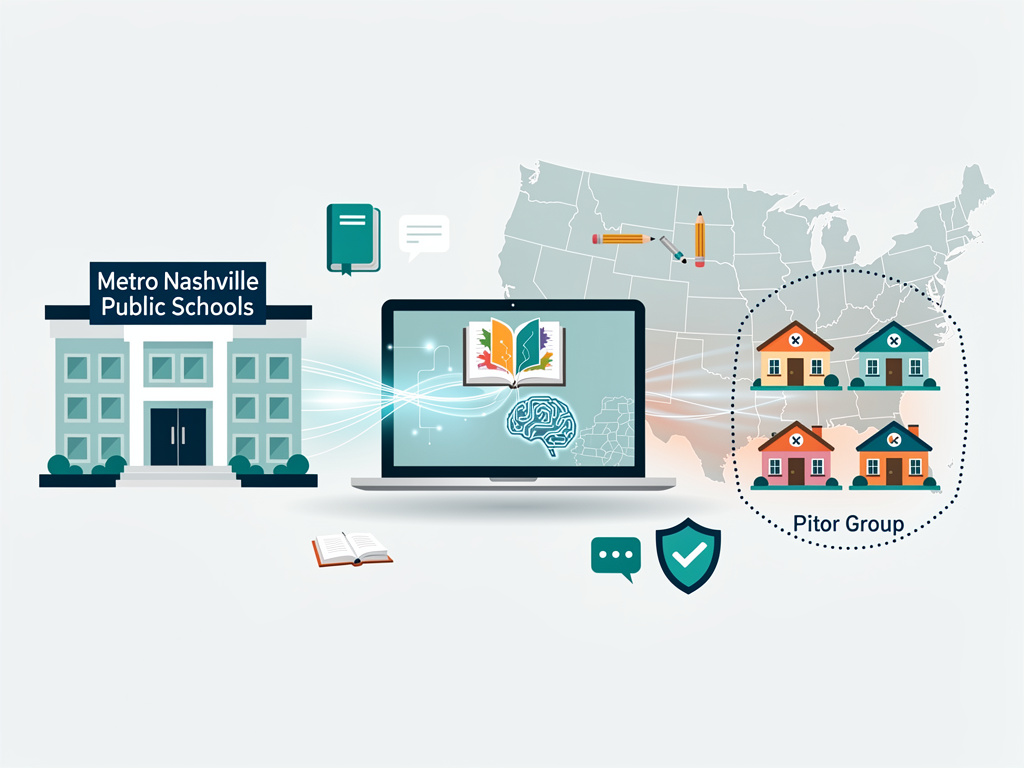
In the heart of Tennessee’s largest school district, a former NFL quarterback is reshaping how students wield artificial intelligence. Metro Nashville Public Schools has kicked off a pilot program with Lumi Story AI, the platform founded by Colin Kaepernick in 2024, aiming to fuse technology with creative expression. Announced January 23, 2026, the initiative targets storytelling, literacy, and responsible AI use across select campuses.
Students at Jones Elementary, McKissack Middle, Whites Creek High, and Antioch High—sites Kaepernick visited on January 22—now access Lumi to craft characters, narratives, and visuals. The platform, backed by a private philanthropic gift funneled through nonprofit PENCIL, starts small with guided teacher implementation before phased expansion. District leaders emphasize ethical guardrails, teaching transparency, academic integrity, and AI evaluation.
Pilot’s Core Mechanics
“We want our students to approach artificial intelligence with confidence and curiosity, not fear,” said MNPS Director Dr. Adrienne Battle in the district release, covered by WSMV. “This pilot allows students to use AI as a tool for creativity and communication, while reinforcing our strong literacy framework and our belief that every student’s voice matters.”
Kaepernick, during his tour, echoed the vision: “Storytelling has always been one of the most powerful ways people understand themselves and the world around them. Lumi is about giving students tools to tell their own stories, develop their creativity, and see technology as something that expands what’s possible rather than limiting it.” The ex-49ers star, who raised $4 million for Lumi from investors like Alexis Ohanian’s Seven Seven Six, positions the tool as an empowerment engine, per TIME.
PENCIL President and CEO Christiane Buggs hailed the collaboration: “PENCIL exists to help turn innovation into opportunity for students. By bringing together private donors, educators, and partners like Lumi, we can support new learning experiences that build creativity, literacy, and belonging for students across Nashville,” as quoted in multiple outlets including The Tennessee Tribune.
Lumi’s Classroom Engine
At its core, Lumi deploys structured AI prompts for K-12 users to brainstorm characters, themes, and plots aligned with curricula. Teachers oversee progress with built-in feedback, multilingual scaffolds, and read-aloud features, ensuring FERPA compliance and no data training on student inputs, according to the platform’s site lumistory.ai. Outputs emphasize revision, culminating in publishable stories or graphic novels for showcases.
This mirrors successes elsewhere: Newark Public Schools reported boosted engagement, with one teacher noting students “build confidence,” and a pupil saying, “Lumi helped me transform from a shy middle-schooler to a confident creator.” Similar pilots thrive in Portland Public Schools and Clayton County, Georgia, where 16 STEM-focused sites integrate it for multimedia projects, per News-Daily.
In Prince George’s County, Maryland—launched December 2025 at Largo High—interim Superintendent Dr. Shawn Joseph praised it for letting students “author their own narratives,” overcoming voice recognition biases for diverse learners, as detailed in Maryland Matters. There, Lumi joins seven other AI tools district-wide.
From Gridiron to Code
Kaepernick’s pivot stems from publishing hurdles with Ra Vision Media and Kaepernick Publishing, where gatekeeping stifled creators. “Lumi addresses an unnecessary dependency on gatekeepers that slows creators down,” he told TechCrunch. Initially manga-focused, it evolved for education, prioritizing human oversight amid AI ethics debates.
MNPS aligns this with its AI principles at mnps.org/ai, viewing tech as a teaching enhancer. McKissack Middle posted on X: “We are incredibly grateful to Colin Kaepernick for visiting our school and selecting us to pilot Lumi… His message underscored the importance of innovation, critical thinking, and access to future-ready skills.” NPEF’s Dr. Diarese George introduced the platform, signaling civic buy-in.
Funding opacity persists—no exact figures beyond “private gift”—but PENCIL’s role underscores Nashville’s public-private model. Post-pilot reviews will gauge literacy gains, engagement, and scalability, potentially influencing broader adoption.
National Pilot Momentum
Nashville marks Lumi’s latest foothold after Prince George’s (10+ schools), Portland (targeting literacy strugglers), and Clayton County. In PGCPS, student Nina Anderson called it “a very creative program for someone who’s like an out-of-the-box thinker,” per Maryland Matters. Kaepernick stressed teacher transparency: “Teachers have full transparency on the platform.”
Critics, though sparse in recent coverage, question AI’s classroom fit amid cheating fears, but Lumi’s safeguards—structured prompts, no open chat—address them. Districts report amplified creativity, not replacement, echoing Newark’s Dr. Ortiz: “AI doesn’t wash away creativity—it amplifies it,” from lumistory.ai testimonials.
As MNPS monitors outcomes, the pilot tests if Kaepernick’s vision—democratizing narratives—can elevate urban education. With phased rollout underway, early signals from visited schools suggest students are embracing the tools, blending tech savvy with timeless storytelling.
Equity and Innovation Stakes
For MNPS, serving diverse Nashville, Lumi promises equity: tools for multilingual learners and the disengaged. Battle added: “This is a great example of how leaders from various industries… can come together to enhance… learning,” per WSMV. PENCIL’s Buggs envisions it fostering belonging.
X chatter from WSMV and school accounts amplifies buzz, with NPEF touting the partnership. As pilots proliferate, Nashville’s could set benchmarks, proving AI’s role in literacy amid national debates on tech integration.


 WebProNews is an iEntry Publication