
Orbiting Behemoths: K2 Space’s Quarter-Billion Dollar Leap into Mega-Satellite Innovation
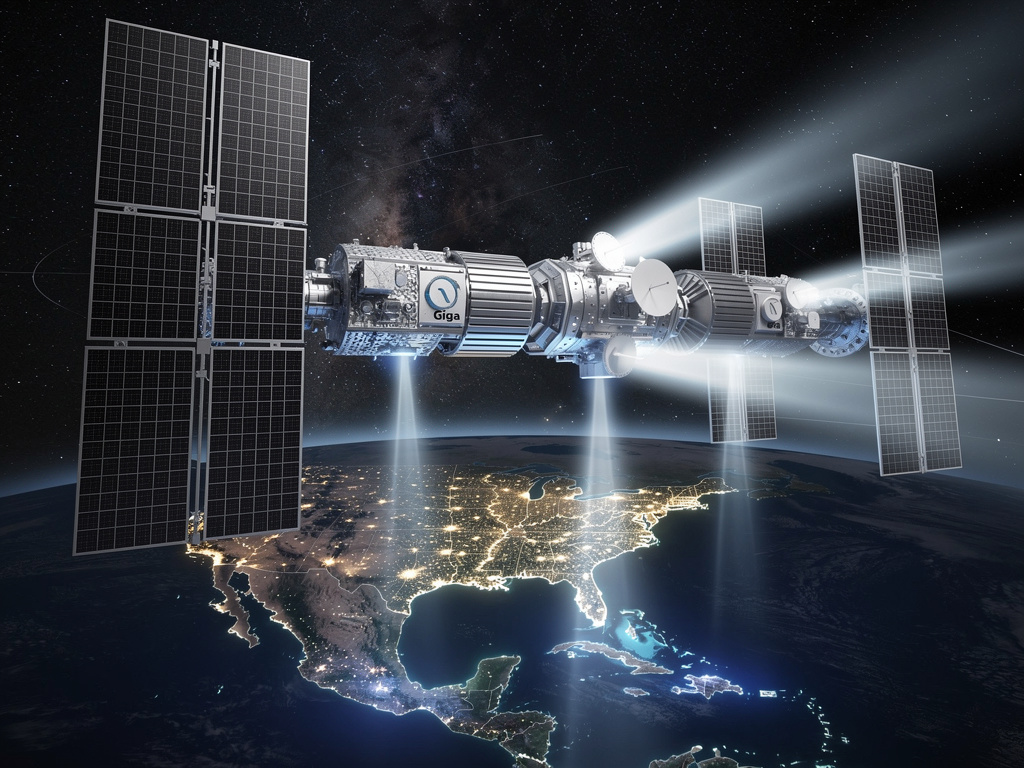
In the rapidly evolving realm of space technology, a Los Angeles-based startup is making waves with an ambitious plan to revolutionize satellite manufacturing. K2 Space, founded by brothers Karan and Neel Kunjur in 2022, has secured a staggering $250 million in fresh funding to scale up production of what it calls “Giga” satellites—massive orbital platforms designed to deliver unprecedented power and capability at a fraction of traditional costs. This investment round, led by Redpoint Ventures and including participation from giants like Bessemer Venture Partners and Initialized Capital, catapults the company’s valuation to $3 billion, quadrupling it in under a year. The funds will fuel the expansion of K2’s manufacturing facilities and accelerate the deployment of satellites that promise to transform communications, defense, and Earth observation sectors.
At the heart of K2 Space’s innovation is a radical departure from the industry’s shift toward small satellites, or smallsats. While companies like SpaceX have popularized constellations of diminutive orbiters for global internet coverage, K2 is betting on bigger birds. Their Giga satellites, with bus sizes ranging from 500 kilograms to several tons, are engineered to handle power levels up to 25 kilowatts—far exceeding the capabilities of most current models. This approach leverages economies of scale in manufacturing, drawing on the founders’ experience at SpaceX, where they honed skills in high-volume production. By focusing on larger platforms, K2 aims to reduce per-unit costs dramatically, making high-performance satellites accessible to a broader range of customers, from telecom providers to government agencies.
The timing of this funding couldn’t be more fortuitous, as the space sector experiences a resurgence in investor interest. According to a report from Reuters, global investments in space startups surged 31% in the fourth quarter of last year, driven by advancements in launch technology and increasing demand for satellite services. K2’s raise aligns with this trend, positioning the company to capitalize on a market projected to grow exponentially. Insiders note that the defense sector, in particular, is eyeing these powerful platforms for applications like secure communications and reconnaissance, amid rising geopolitical tensions.
Engineering the Future of Orbital Power
K2 Space’s technical edge lies in its modular design philosophy, which allows for rapid assembly and customization. Unlike legacy satellite builders that rely on bespoke, expensive components, K2 employs off-the-shelf parts and automated production lines to slash costs. Karan Kunjur, the CEO, explained in a recent interview that their satellites can deliver the same functionality as traditional geostationary birds but at one-tenth the price. This cost efficiency is crucial in an era where data demands are skyrocketing, from 5G networks to remote sensing for climate monitoring.
The company’s first major milestone came with the successful testing of its Mega-class satellite bus, capable of supporting payloads that require substantial energy. Investors are drawn to this potential, as evidenced by the involvement of HV Capital and other venture firms in the round. A piece in SpaceNews highlights how K2 plans to use the funds to ramp up production, aiming for dozens of satellites per year by 2027. This scalability is key, as the space industry grapples with supply chain bottlenecks exacerbated by global events.
Beyond hardware, K2 is innovating in software integration, embedding advanced AI for autonomous operations. This allows satellites to optimize power usage and adapt to mission needs in real-time, a feature that’s particularly appealing for defense contracts. Posts on X from industry observers, including those tracking space investments, underscore the excitement around K2’s approach, with many noting parallels to SpaceX’s disruption of the launch market. One prominent thread praised the startup’s focus on “interstellar sweet spots,” referring to underutilized orbital regimes where larger satellites can operate more efficiently.
Investor Confidence Amid Market Shifts
The $250 million infusion isn’t just capital—it’s a vote of confidence in K2’s vision amid a competitive field. Established players like Lockheed Martin and Boeing have long dominated large satellite production, but their high costs and long lead times have opened doors for agile startups. K2’s valuation jump to $3 billion reflects broader optimism in space tech, as detailed in a Forbes profile that describes the company’s satellites as game-changers for communications and defense. The article points out how K2’s designs target medium Earth orbits, an area less crowded than low Earth orbit constellations, offering advantages in coverage and latency.
Redpoint Ventures’ Elliot Geidt, who led the round, emphasized the startup’s potential to disrupt entrenched markets. This marks Redpoint’s first foray into space tech, signaling a widening investor base. Other backers, including those from previous rounds like Bessemer, see K2 as a hedge against the volatility in smallsat ventures, where failures like recent constellation bankruptcies have spooked some funders. Data from Space Capital, as referenced in various reports, shows that while smallsat investments dipped, funding for innovative manufacturing has held strong.
On X, sentiment echoes this enthusiasm, with posts from space enthusiasts and analysts highlighting K2’s raise as a bellwether for 2025. One viral thread discussed how the funding could accelerate satellite tech innovation, drawing comparisons to early investments in SpaceX. These social media insights reveal a community buzzing about the implications for global connectivity, especially in underserved regions where affordable, high-power satellites could bridge digital divides.
Challenges and Strategic Horizons
Despite the hype, K2 faces hurdles in a sector known for technical and regulatory pitfalls. Launch availability remains a bottleneck, though partnerships with providers like SpaceX could mitigate this. Regulatory approvals from bodies like the FCC for spectrum allocation add layers of complexity, particularly for defense-oriented payloads. Insiders whisper about potential delays in scaling production, given the precision required for space-grade hardware.
Yet, K2’s strategy includes aggressive expansion, with plans to double its workforce and open new facilities. The Ars Technica coverage delves into the philosophical underpinnings, quoting Kunjur on how building better platforms enables “new questions about what’s possible in orbit.” This mindset resonates with investors seeking moonshot bets in a post-SpaceX world.
Looking ahead, K2’s trajectory could influence broader industry dynamics. As constellations like Starlink saturate low orbits, the push toward larger, more capable satellites might redefine orbital economics. Collaborations with telecom giants or government entities could further solidify K2’s position, potentially leading to multi-billion-dollar contracts.
Pioneering Paths in Satellite Evolution
The founders’ SpaceX pedigree lends credibility, with Neel Kunjur’s engineering expertise complementing Karan’s business acumen. Their prior work on Falcon rockets informs K2’s emphasis on reusability and modularity, principles that could extend to in-orbit servicing in the future. Industry reports, such as those from Satellite Today, list K2 among top startups to watch, even as it bucks the smallsat trend.
Investor diversity in this round—spanning venture capital to strategic funds—suggests a maturing market where space tech intersects with AI and clean energy. Posts on X from venture capitalists highlight this convergence, with some predicting that K2’s tech could enable solar-powered orbital data centers, addressing Earth’s energy constraints for AI computations.
As K2 ramps up, the ripple effects could extend to international partnerships. With global space spending on the rise, as noted in analyses from Tech Startups, opportunities abound in emerging markets like India and Southeast Asia, where satellite infrastructure is key to development.
Scaling Ambitions and Orbital Impacts
Production scaling is central to K2’s roadmap, with the new funds earmarked for advanced robotics in assembly lines. This could cut manufacturing times from months to weeks, a boon for time-sensitive missions. Defense applications, in particular, stand to benefit, with potential for resilient networks in contested environments.
Critics, however, caution about over-reliance on large platforms, which could be vulnerable to debris or anti-satellite threats. K2 counters this with designs incorporating maneuverability and redundancy, drawing from lessons in recent orbital incidents.
Ultimately, this funding round positions K2 as a frontrunner in reimagining satellite paradigms. By blending size with affordability, the startup is not just building hardware—it’s crafting the backbone for tomorrow’s connected world.
Visionary Bets on Celestial Frontiers
The enthusiasm from backers like Initialized Capital underscores a belief in K2’s long-term vision. As detailed in The Information, the company’s rapid valuation growth reflects confidence in its execution. This capital will support launches planned for 2026, testing the Giga satellites in real-world scenarios.
On the social front, X discussions amplify the narrative, with threads exploring how such innovations could spur economic growth in space-related industries. From job creation in manufacturing hubs to advancements in materials science, the implications are vast.
As K2 navigates this ascent, its story exemplifies the bold risks defining modern space entrepreneurship. With $250 million in hand, the startup is poised to elevate the possibilities of what satellites can achieve, one massive platform at a time.


 WebProNews is an iEntry Publication