
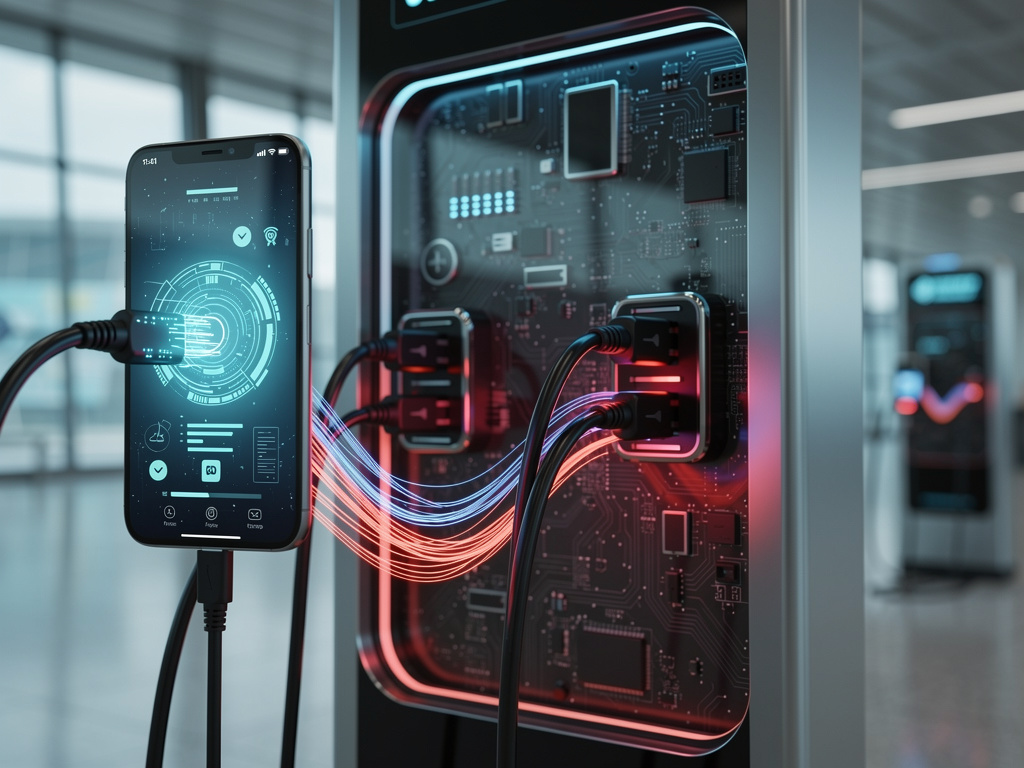
The Stealthy Surge: Unmasking Juice Jacking Dangers in the 2026 Tech Realm
In an era where smartphones are extensions of our very selves, the quest for a quick charge can turn perilous. Public charging stations, ubiquitous in airports, cafes, and malls, promise salvation for dwindling batteries. Yet, beneath their convenient facade lurks a cyber threat known as juice jacking, where malicious actors exploit these ports to siphon data or inject malware. As we edge into 2026, experts warn that evolving tactics make this risk more insidious than ever.
The concept isn’t new; it dates back over a decade. According to a Wikipedia entry on the subject, the term emerged from demonstrations at security conferences, where researchers showcased how tampered USB ports could steal data from connected devices. Fast-forward to today, and the threat has matured alongside technology. Modern smartphones boast advanced security features, but hackers continually adapt, finding chinks in the armor.
Recent alerts from authorities underscore the persistence of this issue. The Federal Communications Commission, in a 2023 advisory available on their site, cautioned against using free USB ports in travel hubs, noting the potential for unfortunate consequences like data breaches. This warning resonates even more in 2026, as device connectivity deepens with IoT integrations and 5G ubiquity.
The Mechanics of Malicious Charging
At its core, juice jacking exploits the dual function of USB cables: they deliver power and transfer data. When you plug into a compromised station, malware can infiltrate your device, harvesting sensitive information such as passwords, contacts, or financial details. A post from security researcher Kyle Osborn in 2012, referenced in historical accounts, introduced frameworks like P2P-ADB that could unlock phones and pilfer authentication keys.
Experts interviewed in a recent TechRadar piece explain that while iOS and Android have built-in protections—such as prompting users before data transfer—sophisticated attacks can bypass these. For instance, zero-day vulnerabilities, undiscovered flaws in software, allow hackers to execute code without user interaction.
Moreover, the rise of wireless charging hasn’t eliminated risks; many public setups still rely on cables. A 2025 article from Freeman Mathis & Gary highlights how travelers’ reliance on these conveniences amplifies exposure, especially in high-traffic areas like airports where devices are often low on power.
Evolving Threats in a Connected World
As we delve deeper, it’s clear that juice jacking isn’t just about individual data theft; it poses broader implications for businesses and infrastructure. The ISACA Now Blog, in a 2023 entry, emphasized protecting enterprise data from such risks, recommending juice jack blockers and personal chargers to safeguard sensitive corporate information.
In 2026, with the proliferation of AI-driven devices, the stakes are higher. Hackers could leverage compromised phones to access linked smart home systems or corporate networks. A McAfee learn article updated in 2025 warns of scenarios where a low battery leads to hasty decisions, urging caution at public stations.
Social media sentiment on platforms like X reflects growing awareness. Posts from users and experts alike stress avoidance tactics, such as using power-only modes or personal batteries, echoing warnings from years past but updated for current tech realities. One viral thread from 2025 cautions against Type-C ports in public, advising to force charge-only settings to disable data pins.
Real-World Incidents and Expert Insights
Documented cases, though rare due to underreporting, illustrate the danger. The Michigan Attorney General’s 2023 press release warned consumers about juice jacking, citing potential for identity theft. Fast-forward to recent news: a CNET article from weeks ago questions if the threat is overhyped, yet acknowledges its validity, especially with modified cables that look innocuous.
Industry insiders, like those quoted in TechRadar, note that while major incidents are scarce, the potential for widespread attacks grows with global travel rebounding post-pandemic. “It’s not about if, but when,” one cybersecurity expert remarked, pointing to the ease of tampering with unattended stations.
Furthermore, a LastPass blog post from October 2025 describes juice jacking as a scam that’s not typical, involving malware sides with free charges. It details how attackers might embed hardware in kiosks to log keystrokes or mirror screens, turning a simple plug-in into a data heist.
Prevention Strategies for the Vigilant User
Arming oneself against juice jacking requires a multi-layered approach. Foremost, invest in portable power banks; they’re compact, reliable, and eliminate the need for public ports. DuckDuckGo’s archived tips from 2020, still relevant, advocate carrying personal chargers and opting for wall outlets over USB when possible.
For those unavoidable situations, use data-blocking cables or adapters that allow power flow but sever data lines. These “juice jack blockers” are endorsed by ISACA and available widely, acting as a physical barrier against intrusion.
Software vigilance is equally crucial. Keep devices updated with the latest patches, as manufacturers like Apple and Google routinely fortify against known exploits. Enabling features like USB restricted mode on iOS, which prevents data access on locked devices after an hour, adds another shield.
Business Implications and Regulatory Responses
On the corporate front, juice jacking threatens more than personal privacy; it endangers intellectual property. Freeman Mathis & Gary’s analysis suggests businesses train employees on these risks, incorporating them into cybersecurity protocols alongside phishing defenses.
Regulatory bodies are stepping up. The FCC’s ongoing advisories push for safer public infrastructure, while state attorneys like Michigan’s Nessel advocate consumer awareness campaigns. In 2026, we might see mandates for tamper-proof charging stations in public venues, driven by increasing cyber insurance claims related to such breaches.
X posts from security professionals, such as one outlining a “PLUG” checklist—Power with own gear, Lock device, Use power-only cables, Go with battery pack—gain traction, fostering community-driven prevention. These grassroots efforts complement formal guidelines, creating a robust defense network.
Technological Innovations Countering the Risk
Innovation is key to outpacing threats. Emerging tech like blockchain-secured data transfers could render juice jacking obsolete by encrypting communications at the hardware level. Meanwhile, AI algorithms in antivirus software, as discussed in McAfee’s resources, detect anomalous behavior during charging sessions.
Wireless charging standards are evolving too, with Qi2 promising enhanced security protocols that minimize physical connections. However, adoption lags in public spaces, where cost and infrastructure hurdles persist.
Experts from TechRadar predict that by mid-2026, biometric authentication for charging could become standard, requiring fingerprint or facial recognition before power delivery, thus deterring unauthorized access.
The Human Element in Cyber Defense
Ultimately, awareness trumps technology. The Indian Express’s recent technology news piece urges travelers to think twice before plugging in, breaking down juice jacking mechanics and safety measures. It emphasizes education as the first line of defense.
Personal anecdotes shared on X highlight close calls: users discovering unusual app behavior post-charging, prompting factory resets. These stories humanize the threat, encouraging proactive habits.
For industry insiders, understanding juice jacking involves monitoring threat intelligence feeds. Resources like Alibaba’s product insights on airport charging safety provide data on real risks, including how USB ports can leak information unwittingly.
Future-Proofing Against Emerging Vulnerabilities
Looking ahead, as 6G networks dawn, interconnected devices will amplify juice jacking potentials. Hackers might exploit vehicle charging stations or smart city infrastructure, expanding the attack surface.
Countermeasures must evolve accordingly. Collaborative efforts between tech giants, governments, and cybersecurity firms could standardize secure charging protocols globally.
In essence, while juice jacking remains a niche but potent threat in 2026, informed choices and technological advancements offer a path to safer mobility. By blending caution with innovation, users and enterprises can charge ahead without fear.


 WebProNews is an iEntry Publication