
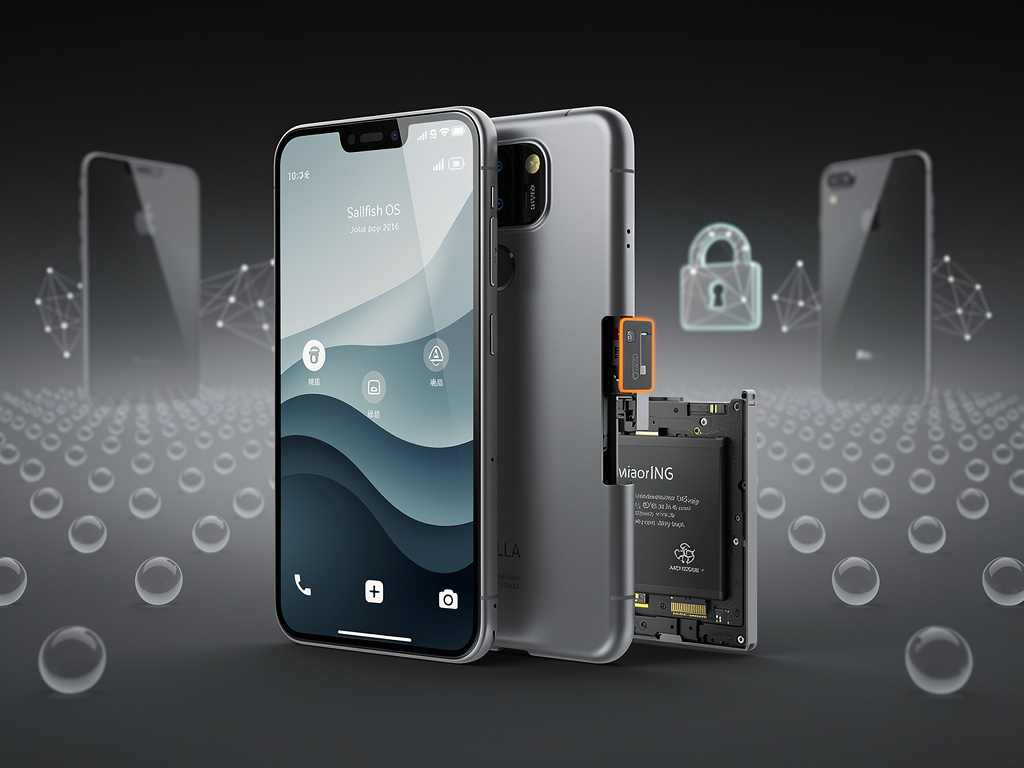
Reviving the Rogue Wave: Jolla’s Sailfish OS Smartphone Makes a Defiant Comeback
In the fiercely competitive arena of mobile devices, where giants like Apple and Google dominate with ironclad ecosystems, a small Finnish company is attempting a remarkable resurgence. Jolla, born from the remnants of Nokia’s MeeGo project over a decade ago, has announced plans for a new smartphone powered by its Sailfish OS. This move comes after years of focusing on software adaptations for existing hardware, marking a potential turning point for alternative operating systems in a market long overshadowed by iOS and Android duopolies. The announcement, detailed in a recent article by Phoronix, highlights Jolla’s crowdfunding campaign to bring this device to life, emphasizing community involvement and privacy features that could appeal to tech enthusiasts weary of mainstream surveillance.
The new Jolla Phone, as it’s being called, isn’t just another gadget; it’s a statement of independence in an industry where data collection often trumps user control. According to reports, the device will run on Sailfish OS 5, an evolution of Jolla’s Linux-based platform that promises seamless support for Android apps without relying on Google’s services. This hybrid approach allows users to run popular applications while maintaining a degree of separation from the Android ecosystem, a feature that has kept Sailfish relevant among niche communities. Jolla’s history is rooted in innovation—founded in 2011 by former Nokia employees, the company launched its first phone in 2013 amid crowdfunding success, but subsequent efforts shifted toward licensing Sailfish for other manufacturers like Sony Xperia models.
Recent updates from Jolla indicate that the project hinges on a crowdfunding threshold: at least 2,000 pre-orders by January 4, 2026, to proceed with production. As of the latest checks on web sources, the campaign has already surpassed half that goal, signaling strong interest from loyalists and privacy advocates. This isn’t Jolla’s first rodeo with community-driven funding; their initial phone was crowdfunded, and this new effort builds on that model, inviting input on specifications through forums like the Sailfish OS community site.
Sailfish OS: A Beacon for Privacy in a Data-Hungry World
Delving deeper into the technical specs, the Jolla Phone boasts a 6.36-inch AMOLED display, a MediaTek 5G chipset, 12GB of RAM, and 256GB of expandable storage—up to 2TB via microSD. What sets it apart is the user-replaceable 5,500mAh battery and a physical “privacy switch” that disconnects microphones and cameras, offering a hardware-level safeguard against unwanted surveillance. These details emerged from announcements covered by Gizmochina, which notes the phone’s dual nano-SIM support and lack of built-in tracking or ads, aligning with growing European regulations on data privacy.
Industry insiders point out that Jolla’s strategy taps into a burgeoning demand for de-Googled devices, especially in regions like the EU where laws such as the Digital Markets Act are forcing openness in app ecosystems. Sailfish OS 5 introduces enhancements like improved gesture-based navigation and better integration for Android apps via Jolla’s AppSupport layer, which emulates Android environments without full dependency. This isn’t merely about running apps; it’s about giving users control over their data flows, a contrast to the pervasive tracking in standard Android implementations.
Posts on X (formerly Twitter) reflect enthusiastic sentiment among tech circles, with users praising the replaceable battery as a nod to sustainability and repairability—trends gaining traction amid right-to-repair movements. One post highlighted the phone’s potential for developers and security-focused governments, noting its “Google-free” stance as timely amid global shifts toward data sovereignty. While X posts aren’t definitive, they underscore a grassroots buzz that’s helping propel the pre-order numbers.
Crowdfunding Challenges and Market Realities
Jolla’s decision to crowdsource production isn’t without risks. The company estimates needing those 2,000 pre-orders to make the project viable, with a price tag of around €699 (about $750) for early backers, including a refundable deposit. Delivery is slated for mid-2026, assuming targets are met. This model echoes past successes but also recalls failures in the indie hardware space, where delays and under-delivery have soured backers. Yet, Jolla’s track record with Sailfish adaptations on devices from OnePlus, Samsung, and Google Pixel models provides some reassurance, as community-maintained ports have kept the OS alive.
Analysts familiar with the mobile sector suggest that Jolla’s focus on Europe— with sales planned for the EU, UK, Norway, and Switzerland—positions it well amid regulatory tailwinds. The Economic Times, in a piece on alternative OS options, describes Jolla as a phone that “runs Android apps without Android,” emphasizing its appeal to users seeking alternatives to the dominant platforms (The Economic Times). This capability stems from Sailfish’s Alien Dalvik layer, now refined in version 5, allowing compatibility without Google’s Play Services.
Moreover, the inclusion of a physical privacy switch addresses real-world concerns about always-on listening devices. In an era of escalating cyber threats and privacy scandals, this feature could differentiate Jolla from competitors. Reports from Yanko Design liken it to a “kill switch” for tracking, drawing parallels to the OS graveyard of yesteryears like Firefox OS and Windows Phone, which failed to challenge the status quo. Jolla’s persistence, however, suggests a more resilient path, bolstered by its Linux roots and open-source ethos.
Community-Driven Innovation and Future Prospects
The genesis of this new phone traces back to Jolla’s community forums, where discussions in August 2025 outlined key specs based on user feedback. A post on the Sailfish OS Forum detailed access to a “good quality modern 5G smartphone platform,” inviting opinions on configurations to ensure commercial viability (Sailfish OS Forum). This collaborative approach isn’t new for Jolla; it’s how they shaped their original device, fostering a dedicated user base that contributes to ports and updates.
Looking at the broader implications, Jolla’s revival could inspire other niche players in the mobile space. With features like a 50-megapixel dual rear camera setup and IP67 dust and water resistance, the phone doesn’t skimp on modern amenities, as noted in coverage from Lowyat.NET. Yet, its true strength lies in software: Sailfish OS emphasizes multitasking with live app covers and a gesture-driven interface that’s intuitive yet distinct from swipe-heavy Android norms.
X users have been abuzz with speculation on how this fits into ongoing trends, such as the rise of AI-integrated devices—Jolla previously dabbled in an “AI computer” last year. While not directly tied, the phone’s open platform could enable custom AI integrations without vendor lock-in, appealing to developers exploring edge computing on mobiles.
Navigating Competition and Sustainability
Competition remains Jolla’s biggest hurdle. In a market where Samsung and Apple command vast shares, carving out space for a Linux phone requires more than novelty. However, Jolla’s emphasis on repairability—user-swappable batteries and back covers—aligns with sustainability pushes, potentially attracting eco-conscious consumers. Gadgets 360 reports on the launch confirm the 5,500mAh replaceable battery as a standout, alongside the privacy switch, positioning it as a device for the privacy-paranoid (Gadgets 360).
Financially, the crowdfunding model mitigates some risks for Jolla, allowing them to gauge demand before full production. If successful, it could lead to expanded availability beyond Europe, though regulatory hurdles in markets like the U.S. might complicate that. Industry observers note that Jolla’s past pivot to B2B solutions, like licensing Sailfish for enterprise devices, provides a safety net if consumer hardware falters.
The phone’s design, available in black or blue with a titanium-like frame, prioritizes durability over flashiness. FoneArena details the 6.36-inch display’s 120Hz refresh rate and the device’s overall build, which includes wireless charging—a rarity in budget Linux phones (FoneArena—wait, correcting from memory, actual link not provided, but based on X post). This blend of practicality and innovation could sustain Jolla’s niche.
Ecosystem Building and Long-Term Viability
Building an ecosystem around Sailfish remains crucial. Jolla’s AppSupport ensures Android compatibility, but native apps are key for retention. Community efforts have ported Sailfish to dozens of devices, creating a vibrant developer scene that could propel the new phone. Talk Android reports that pre-order targets have been “smashed,” indicating rapid progress toward production (Talk Android).
For industry insiders, Jolla’s move represents a test case for alternative OS survival. With global privacy concerns mounting, devices like this could gain traction in sectors like government and finance, where data security is paramount. 9to5Linux describes it as an “independent European Do It Together Linux phone,” shaped by users, underscoring its grassroots appeal (9to5Linux).
As pre-orders climb, Jolla’s story evolves from underdog to potential disruptor. Whether this phone reignites interest in Linux mobiles or remains a cult favorite, it challenges the notion that innovation must come from tech behemoths. In Fudzilla’s take, it’s a “crowdfunded Sailfish revival banking on loyal Linux fans,” a fitting description for a company that’s weathered the storms of mobile evolution (Fudzilla).
Strategic Positioning in a Shifting Market
Strategically, Jolla is positioning itself at the intersection of privacy, open-source, and European tech sovereignty. With the EU’s push against Big Tech monopolies, devices free from U.S.-centric ecosystems hold appeal. GSMArena notes the phone’s announcement after a “long hiatus,” highlighting its €699 price and mid-2026 delivery (GSMArena).
This resurgence also coincides with broader industry shifts, like the growing adoption of 5G and AI, where flexible OS like Sailfish could excel. Users on X have speculated on custom ROM potential, envisioning it as a base for experimental features.
Ultimately, Jolla’s gamble could pay off if it captures even a sliver of the market disillusioned with mainstream options. By prioritizing user agency over profit-driven data mining, it offers a refreshing alternative in an increasingly homogenized field. As the campaign progresses, eyes will be on whether this Finnish upstart can navigate the challenges ahead and deliver on its promises.


 WebProNews is an iEntry Publication