
Skyward Bound: Joby Aviation’s AI-Powered Leap into Urban Flight Hubs
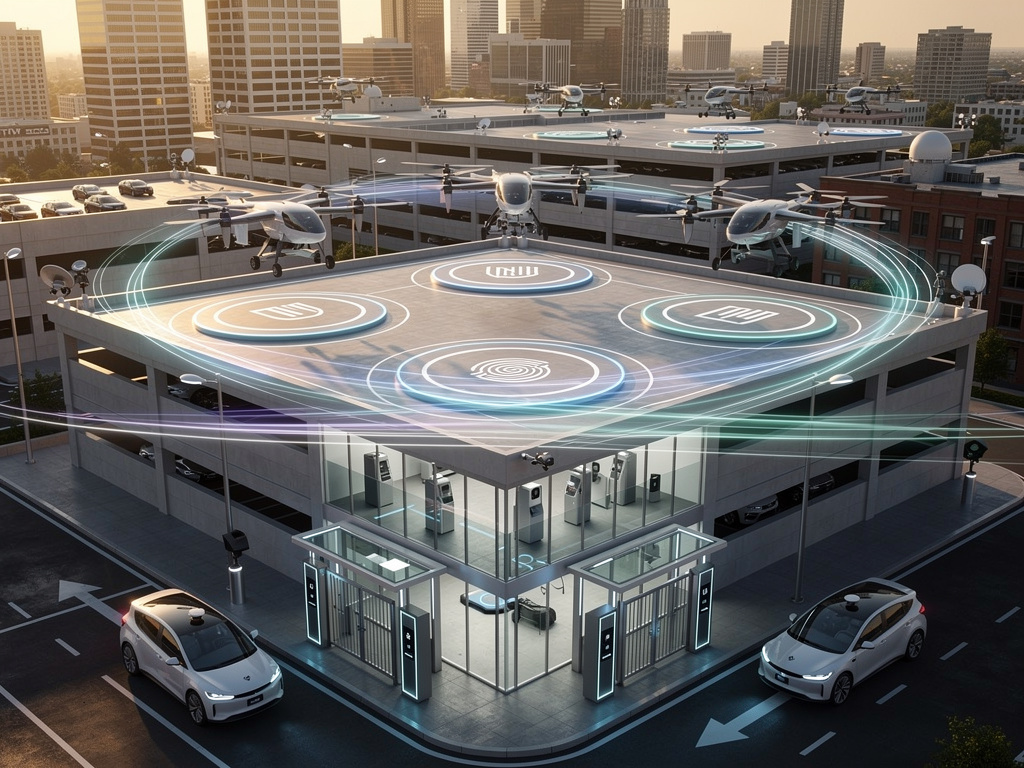
In a move that could reshape urban mobility, Joby Aviation has teamed up with Metropolis Technologies to develop 25 vertiports across the United States, integrating advanced artificial intelligence for seamless passenger experiences. This partnership, announced in mid-December 2025, aims to transform existing parking facilities into takeoff and landing pads for electric air taxis, blending ground transportation with aerial travel. At the heart of this initiative is Metropolis’s AI recognition technology, which employs biometrics and computer vision to streamline check-ins, baggage handling, and security processes, potentially eliminating the need for traditional ticketing and identification checks.
Joby, a Santa Cruz-based pioneer in electric vertical takeoff and landing (eVTOL) aircraft, has been steadily advancing toward commercial operations. The company’s all-electric air taxis promise speeds up to 200 mph and ranges of about 150 miles, targeting congested urban areas where time-saving flights could bypass traffic snarls. Metropolis, known for its AI-driven solutions in parking and real estate, brings a network of over 600 locations that can be repurposed for these vertiports. The collaboration not only accelerates Joby’s infrastructure rollout but also positions the vertiports as integrated mobility hubs, where passengers might park their cars, check bags, and board flights in one fluid motion.
Early implementations are already underway, with near-term plans to leverage Metropolis’s Bags VIP services in the New York City area for Joby’s affiliate, Blade Urban Air Mobility. This integration hints at a future where air travel becomes an extension of daily commutes, much like hailing a ride-share. Industry observers note that such developments are crucial for eVTOL adoption, as infrastructure has long been a bottleneck in the sector’s growth.
Unveiling the Tech Behind Seamless Skies
The AI recognition system at the core of these vertiports relies on sophisticated computer vision and biometric tools to identify passengers and vehicles automatically. According to details from Flying Magazine, this technology could allow for frictionless entry, where facial recognition or license plate scanning handles everything from parking validation to flight boarding. This isn’t just about convenience; it’s a strategic play to handle high-throughput operations, essential for vertiports that might see dozens of flights per hour in busy metros.
Joby’s vision extends beyond hardware. The company has been investing heavily in software ecosystems, including a recent partnership with Nvidia for its IGX Thor computing platform to enhance real-time decision-making in flight operations. Posts on X highlight how this could improve safety through AI-driven simulations and analytics, drawing from Nvidia’s expertise in high-performance computing. Such integrations underscore Joby’s holistic approach, combining aircraft design with ground-based intelligence to create a cohesive network.
Moreover, the vertiports are designed with sustainability in mind. Joby’s aircraft are emissions-free, and by retrofitting existing structures like parking garages, the partnership minimizes new construction’s environmental footprint. This aligns with broader industry trends toward greener aviation, where electric propulsion and smart infrastructure converge to reduce urban congestion and pollution.
Rivals in the Race for Aerial Dominance
Competition in the eVTOL space is heating up, with California-based players like Archer Aviation vying for market share. A report from the Los Angeles Times details Archer’s plans to control Hawthorne Municipal Airport near LAX, signaling aggressive expansion in key regions. Joby, however, differentiates itself through global ambitions, including vertiport construction in Dubai and demonstration flights in Korea, as noted in the company’s Q4 2024 earnings updates shared on X.
Joby’s financial backing bolsters its position. With investments from heavyweights like Toyota—totaling $894 million after a $500 million infusion in October 2024—and partnerships with Delta, Uber, and Intel, the company boasts a cash reserve exceeding $900 million. This funding supports not just vertiport development but also certification milestones. In a historic agreement facilitated by international regulators, five countries have streamlined eVTOL certification paths, paving the way for Joby’s commercial launches targeted for late 2025 or early 2026.
Yet, challenges loom. Regulatory hurdles, particularly from the FAA, remain a critical path. Joby has made record progress on certification, delivering its second aircraft to the U.S. Air Force, but scaling to 25 vertiports will require navigating zoning laws, noise regulations, and public acceptance. Industry insiders point out that while AI can optimize operations, ensuring privacy in biometric systems will be paramount to avoid backlash.
Infrastructure as the Backbone of Urban Air Mobility
The 25 vertiports planned under this partnership will span major U.S. cities, leveraging Metropolis’s extensive real estate footprint. As outlined in a press release from Joby Aviation’s investor relations site, these sites will feature integrated charging stations for eVTOLs, passenger lounges, and AI-managed traffic flow to prevent bottlenecks. This setup could revolutionize airport transfers, offering quick hops from city centers to major hubs like JFK or LAX.
Recent news from Airport Technology emphasizes how the collaboration will incorporate Metropolis’s AI for real-time monitoring, ensuring efficient use of space in densely populated areas. For instance, computer vision could dynamically allocate landing pads based on flight schedules and weather data, enhancing reliability. This level of automation is seen as a game-changer, potentially reducing operational costs by 20-30% compared to traditional heliports.
Beyond the U.S., Joby’s international footprint provides a blueprint. The first vertiport in Dubai is already under construction, part of a network aimed at Middle Eastern expansion. X posts from aviation enthusiasts reflect growing excitement, with mentions of how these developments could inspire similar projects in Europe and Asia, fostering a global ecosystem for electric air travel.
Investment Surge and Market Momentum
Financial analysts are bullish on Joby’s trajectory. A piece from Seeking Alpha highlights the partnership’s potential to enhance urban mobility, driving stock surges of over 66% in the past year despite the company’s pre-profit status. With a market valuation around $12 billion, Joby is attracting attention from investors eyeing the burgeoning eVTOL market, projected to reach $1 trillion by 2040 according to some estimates.
Toyota’s repeated investments underscore confidence in Joby’s technology. As detailed in X posts from financial bloggers, the Japanese automaker’s involvement extends to manufacturing support, helping Joby scale production of its quiet, efficient aircraft. This vertical integration—from battery systems to flight controls—positions Joby as a leader in bringing eVTOLs to market.
However, market volatility persists. Competitors like Archer are securing their own deals, such as potential takeovers of regional airports, which could fragment the sector. Joby’s edge lies in its AI-forward approach, where partnerships like the one with Metropolis not only build infrastructure but also collect data to refine algorithms, creating a feedback loop for continuous improvement.
Navigating Regulatory and Ethical Horizons
As vertiports proliferate, ethical considerations around AI come into focus. Biometric recognition raises privacy concerns, prompting calls for robust data protection measures. Joby and Metropolis have pledged compliance with standards like GDPR equivalents in the U.S., but insiders warn that any mishandling could stall adoption.
On the regulatory front, international cooperation is accelerating. A June 2025 agreement among five nations, celebrated in Joby’s X updates, streamlines certification, reducing timelines from years to months. This could enable Joby to launch passenger services sooner, with initial operations in high-demand corridors like New York to Washington, D.C.
Looking ahead, the integration of AI in vertiports could extend to predictive maintenance and autonomous ground handling, further automating the ecosystem. As one aviation executive noted, this isn’t just about flying taxis; it’s about redefining how cities function, with air mobility as a core component.
Pioneering a New Era of Connectivity
Joby’s partnership with Metropolis exemplifies a broader shift toward multimodal transportation. By converting parking lots into vertiports, the duo addresses urban space constraints, offering a scalable model for other cities. Financial news from Yahoo Finance reports on the seamless customer journey this enables, from app-based booking to AI-assisted boarding.
Investor sentiment, as gauged from recent X discussions, remains optimistic, with mentions of Joby’s Nvidia tie-up for AI training enhancing flight safety. This technological synergy could set new standards, making eVTOLs not just viable but preferable for short-haul travel.
Ultimately, as Joby pushes toward commercialization, these AI-enabled vertiports represent a critical milestone. They bridge the gap between innovation and practicality, potentially transforming daily commutes and long-term urban planning in profound ways. With strong backing and strategic alliances, Joby is poised to lead this aerial revolution, one vertiport at a time.


 WebProNews is an iEntry Publication