
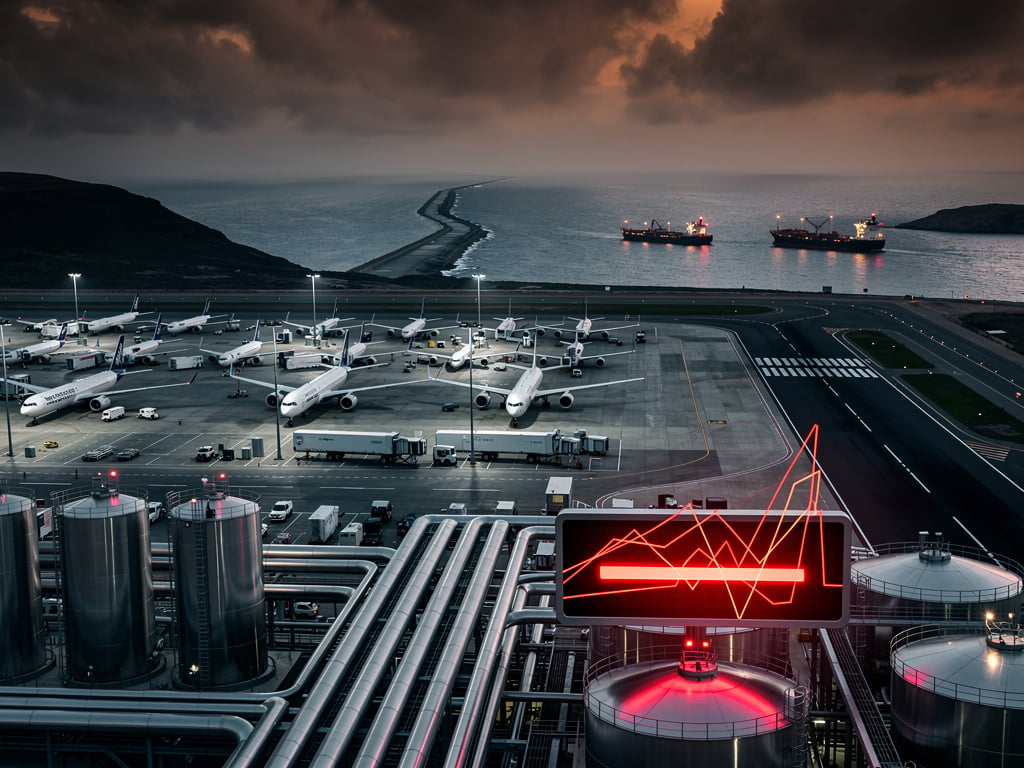
Jet fuel prices have more than doubled since late February. The trigger? The U.S.-Israeli conflict with Iran and the closure of the Strait of Hormuz. What began as a geopolitical flashpoint has become a brutal operating reality for carriers worldwide. Fuel now threatens to erase profits built over years of post-pandemic recovery.
Many airlines find themselves exposed. Some hedge. Others don’t. The difference shows in earnings warnings, route cancellations, and passenger costs. A Reuters report published Wednesday captured the industry’s pain. Daniel Chereau, IATA’s head of fuel, told an energy conference that price swings in the jet fuel market have hit many carriers hard. Some lack the tools to protect themselves. Crack spreads — the refining margin between crude and jet fuel — exploded to over $121 per barrel in March in Northwest Europe. That compared with roughly $30 before the war began.
The Middle East supplies a big share of global jet fuel. Attacks on energy sites and the Hormuz blockade slashed output and exports. Airports in some regions ran dry for short stretches. Airlines responded by canceling flights. That created demand destruction not from weak passenger interest but from reduced supply. Chereau warned the longer the conflict lasts, the more passengers themselves may pull back.
Numbers tell the story. Global capacity for summer has been trimmed sharply. Aviation analytics firm Cirium recorded 9.3 million fewer seats scheduled from June through September across major markets including the U.S., Europe, China, and Australia. Qatar Airways alone removed two million seats between June and October. Emirates and Etihad cut hundreds of thousands more. Lufthansa scrubbed 20,000 short-haul flights through October. The German group faces a 1.7 billion euro hit this year.
United Airlines offers one of the starkest examples. Its CEO Scott Kirby said ticket prices may need to rise 15% to 20% to offset the surge. The carrier instituted multiple fare increases in the first quarter, raised baggage fees, and slashed its full-year profit forecast. The lower end now points to a loss. United expects its jet fuel bill to jump more than $4 billion this year. Reuters detailed the moves across dozens of carriers.
American Airlines joined the retreat. It hiked first and second checked bag fees by $10 each and cut benefits on economy tickets. Its fuel expense forecast climbed by more than $4 billion. Delta Air Lines estimated an additional $2 billion hit in one quarter alone. The airline cut planned capacity growth, raised baggage fees, and signaled no growth in the second quarter. Southwest Airlines saw a billion-dollar headwind and pushed bag fees to $45 for the first checked bag.
European carriers felt it too. Air France-KLM projected a $2.4 billion increase in its annual fuel bill. The group lowered full-year capacity growth guidance and added roughly €50 to long-haul round-trip fares. EasyJet warned of a bigger first-half pretax loss that included £25 million in extra fuel costs. Ryanair’s Michael O’Leary signaled profit pressure if oil stays high. SAS canceled about 1,000 flights in April after hundreds in March.
Low-cost and smaller carriers suffered most. Spirit Airlines shut down operations entirely. Industry observers tied the collapse in part to unmanageable fuel costs. Frontier Airlines reviewed its forecast and sought government relief. Thai AirAsia cut seat capacity 30% in May and June. Akasa Air in India added fuel surcharges ranging from $2 to $14.
But not every airline sits helpless. Those with sophisticated hedging programs gained some breathing room. Chereau noted that elaborate strategies provided a cushion for a few. Most U.S. majors abandoned routine hedging years ago after it proved costly in periods of falling prices. European carriers often retain more protection. The split explains why some warnings sound louder than others.
Passengers see the fallout in higher fares, extra fees, and fewer choices. Baggage charges climbed across the board. First checked bags that once cost $35 now run $45 on major U.S. carriers. Some airlines added fuel surcharges that passengers pay at booking. Others quietly removed flights, forcing travelers onto crowded alternatives or different days. Summer schedules look thinner. The Guardian reported two million seats cut in the peak season amid the price surge. Its analysis highlighted Lufthansa’s aggressive short-haul reductions and warnings from former IAG boss Willie Walsh that jet fuel shortages could become inevitable and drive fares higher.
Industry groups project the global airline fuel bill could approach or exceed previous records. One estimate placed 2024 spending at $291 billion, already $100 billion above levels from five years earlier. Current prices push that figure higher still. Argus Media reported U.S. jet fuel spot prices near $3.46 per gallon in early June. IATA’s latest monitor showed a global average around $141.64 per barrel after a recent pullback, yet still far above pre-conflict norms.
Governments stepped in where they could. India approved a ₹10,000 crore interest-free advance to oil marketing companies to cap domestic jet fuel prices for scheduled airlines at about ₹75.6 per liter. The mechanism acts as a temporary buffer. It compensates refiners for selling below market rates and recovers funds when prices moderate. The fund revolves for up to 36 months. Such support aims to protect connectivity to smaller cities and shield jobs.
In Europe the EU moved to clarify that airlines could use Jet A fuel, the grade common in the U.S., to ease supply strains from the Hormuz disruption. Regulators also confirmed that ticket prices cannot be raised after a booking is made. These steps buy time. They do not solve the underlying problem of constrained Middle East supply and elevated crack spreads.
Analysts expect further adjustments. S&P Global Ratings flagged rising jet fuel prices as an emerging risk to U.S. airline credit profiles. Bloomberg noted that global capacity for May fell about 3 percentage points, with nearly all of the 20 largest carriers reducing flights. Lufthansa considered retiring older aircraft early and canceling unprofitable routes. Air New Zealand reported its largest pretax loss in four years and consolidated capacity multiple times.
The pain spreads unevenly. Carriers serving long-haul international routes burn more fuel per passenger mile and face stiffer competition on price. Short-haul operators can sometimes pass costs along more easily through frequent fare tweaks or surcharges. Budget airlines with thin margins and limited hedging feel the squeeze first. Full-service network carriers with stronger balance sheets absorb some of the blow but still warn investors.
Yet demand has not collapsed. Many carriers report that higher fares have not yet deterred travelers. United’s Kirby noted the airline recovered 40% to 50% of the fuel cost increase through pricing in the first quarter and aimed for 85% to 100% by year end. Passengers appear willing to pay. For now.
The situation remains fluid. Recent IATA data shows jet fuel prices eased slightly in the past week. Crack spreads have narrowed from their March peak. But any prolongation of the conflict or fresh disruption in energy shipping could reverse those gains quickly. Airports could face longer periods without fuel. More flights could disappear from schedules.
Airlines have few good options left. They cut capacity. They raise prices. They trim unprofitable routes. Some ground aircraft ahead of schedule. A few seek government aid. All watch their fuel bills with alarm. The industry that once celebrated record load factors and booming leisure travel now calculates how much pain it can pass to customers before demand finally cracks.
Chereau’s warning lingers. Demand destruction has already arrived through canceled flights. If the war drags on, passengers may add their own restraint. That would mark a deeper shift. For an industry still rebuilding balance sheets after the pandemic, this fuel crisis tests resilience in ways few expected just months ago.


 WebProNews is an iEntry Publication