
Jeff Bezos does not mince words. Software engineers facing an identity crisis over artificial intelligence should stop worrying. They should feel thrilled instead.
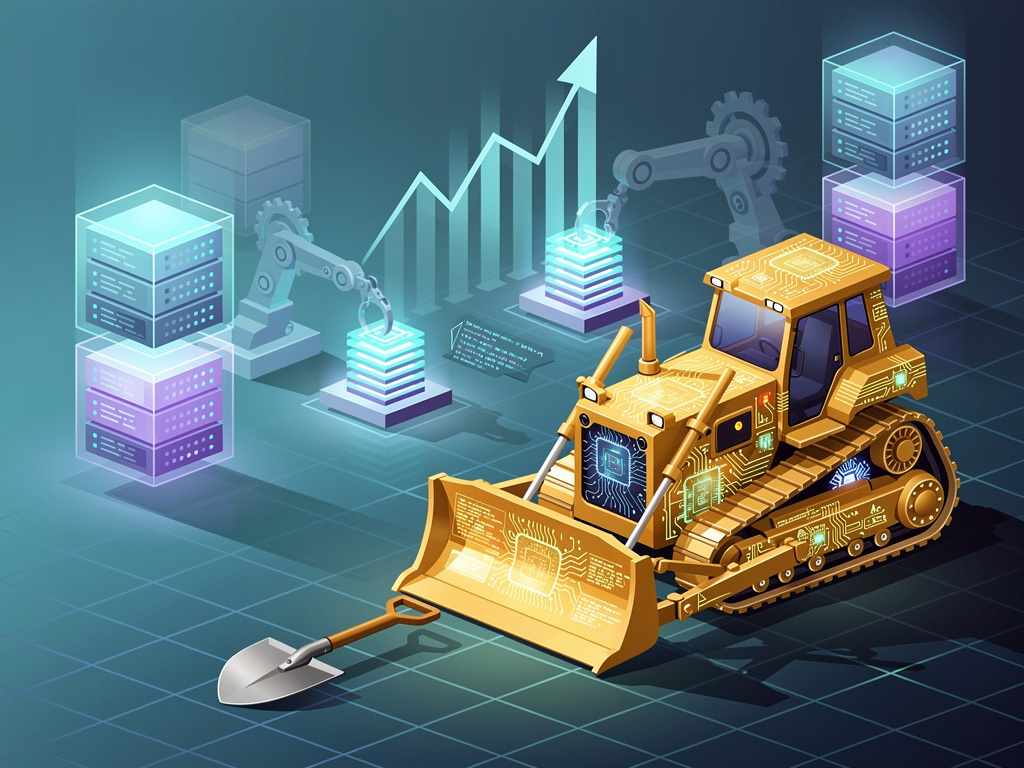
“If you’ve been digging out a basement for your house with a shovel and somebody is about to hand you a bulldozer, you should be so happy,” the Amazon founder told CNBC’s Andrew Ross Sorkin on May 20 from the floor of Blue Origin’s rocket factory in Florida. “It’s going to elevate all these people. We are going to have so much productivity in our economy.”
His message lands at a tense moment. Fears that AI will wipe out coding jobs have spread through Silicon Valley and beyond. Some prominent voices paint a darker picture. Yet Bezos dismisses those concerns as misplaced. Smart people have warned of massive displacement, he noted. But they get it wrong.
The comments, reported that same day by Business Insider, echo a fuller interview transcript released by CNBC. In it Bezos directly confronts predictions that AI will replace radiologists because it reads X-rays better or eliminate software engineers because it codes faster. “These people are wrong,” he said. The tool does not remove the need for skilled operators. It multiplies what they can achieve.
Data from the past year supports a more nuanced shift rather than outright collapse. Software developer job postings have risen. Tech roles jumped 30 percent so far in 2026 despite restructuring and budget moves toward AI projects. The Bureau of Labor Statistics still projects 15 percent growth for software developers by 2034. But entry-level positions have taken a hit. Employment for developers aged 22 to 25 fell nearly 20 percent from its 2022 peak, according to a Stanford Digital Economy Study.
That pattern reveals something important. AI handles routine coding and debugging with growing competence. Junior roles centered on straightforward tasks shrink. Experienced engineers who direct systems, weigh trade-offs, and tackle complex architecture see demand increase. They spend less time writing boilerplate. They spend more time orchestrating AI agents, reviewing output, and focusing on higher-order design. The job changes. It does not vanish.
Bezos knows this terrain. He now serves as co-CEO of Project Prometheus, an AI startup he helped launch in late 2025 with $6.2 billion in initial funding. The venture, reported first by The New York Times, targets AI systems that simulate physical behavior for engineering and manufacturing. Computers. Automobiles. Spacecraft. The goal sits far from chatbots. It aims at real-world automation where models learn from experimentation and data drawn from the physical environment.
Recent moves expand that bet. Bezos seeks to raise as much as $100 billion for a fund that would acquire manufacturing companies in semiconductors, defense, and aerospace, then apply Prometheus technology to accelerate automation. Coverage from March in the Los Angeles Times and other outlets described the plan as a manufacturing transformation vehicle. If successful, the effort could reshape how products are designed, tested, and built at scale. Digital simulation would replace many costly physical prototypes. Engineers gain speed. Yet the human judgment that defines requirements, interprets results, and makes final calls remains essential.
Industry surveys from 2026 capture the mixed experience on the ground. The Pragmatic Engineer newsletter found AI tools accelerate “shippers” who prioritize output but introduce technical debt when quality suffers. Builders focused on architecture and craft encounter more “AI slop” that requires cleanup. Roles blur. Product managers and designers now generate code. Engineers handle broader responsibilities. Engineering managers dive deeper into technical details. The distinction between individual contributor and manager narrows.
Still, overall hiring signals optimism. A Bank of America survey showed companies expanding software budgets and headcounts. Citadel Securities analysis found software engineer listings on Indeed up 11 percent year over year, outpacing broader job growth. TrueUp data placed open software engineering roles at their highest level in more than three years. Demand persists for those who can manage AI output, secure systems, and integrate new capabilities.
Bezos ties his confidence to broader economic effects. Unrestricted AI rollout could produce a land of plenty. Cheaper food. Cheaper housing. General deflation. Labor shortages in some areas as productivity surges. “We should be energized because this is a moment when the possibilities are so large,” he said. The alternative, he implies, is to hamstring the technology and miss the gains.
Contrast that view with other voices. Geoffrey Hinton, often called a godfather of AI, has expressed regret over the technology’s trajectory and warned of sharp job shrinkage in software engineering by 2026. Anthropic CEO Dario Amodei predicted AI could eliminate half of entry-level white-collar positions. Those statements fueled anxiety. Bezos acknowledges their intelligence but rejects their conclusions on replacement.
The distinction matters for how companies and workers respond. Panic leads to defensive retrenchment. Acceptance paired with adaptation drives progress. Engineers who treat AI as a junior collaborator learn to prompt effectively, validate results, and maintain system integrity. Those skills separate the elevated from the sidelined.
Project Prometheus itself illustrates the point. It has recruited nearly 100 researchers from OpenAI, DeepMind, and Meta. The talent pool flows toward physical AI challenges that demand deep domain knowledge in engineering and manufacturing. Software engineers who understand both code and the physical constraints of rockets, chips, or vehicles bring unique value. AI augments their expertise. It does not substitute for the contextual reasoning that turns simulation into reliable production.
Look at adjacent fields. Robotics and AI architects see rising demand. Cybersecurity specialists grow more critical as automated systems proliferate. Data engineers who prepare high-quality inputs for models remain indispensable. The pattern repeats. Tools change the mechanics of work. They expand the frontier of what teams can tackle.
Bezos’s own track record at Amazon offers precedent. The company invested heavily in automation and machine learning while scaling its workforce dramatically over two decades. Warehouse robots did not eliminate human roles. They changed them. Pickers worked alongside machines. Engineers built systems that coordinated thousands of robots. Productivity soared. Employment grew.
Similar dynamics could play out in software. AI coding assistants already generate functions, suggest refactors, and catch bugs. Yet production systems require architecture that scales, security that holds, and integration that fits business needs. Those tasks call for experienced judgment. The bulldozer moves more dirt. Someone still decides where to dig, how deep, and what to build on top.
Challenges remain. Technical debt from rushed AI-generated code can accumulate. Over-reliance on tools may erode fundamental skills in new graduates. Companies must invest in training that teaches orchestration of AI alongside core computer science principles. Education systems need to adjust curriculums toward higher-level problem solving rather than syntax mastery alone.
But the dominant trend points upward. McKinsey research shows high-performing teams using AI ship faster with fewer errors. Gartner estimates more than 80 percent of engineering organizations now incorporate AI-assisted workflows. The technology creates new specializations even as it compresses others.
Bezos ends on abundance. “This is the best time to be alive in America,” he remarked in the same interview, citing easy access to capital and the transformative power of innovation. His words carry weight. Few have built organizations that employed hundreds of thousands while deploying technology at global scale.
Software engineers listening to the warnings of displacement face a choice. They can fear the tool that arrives. Or they can seize the bulldozer, learn its controls, and move far more earth than a shovel ever allowed. The latter path aligns with history. It matches the optimism Bezos expresses. And it positions those who adapt at the center of the productivity surge he predicts.
The coming years will test that bet. If AI delivers the economic expansion Bezos envisions, demand for skilled technologists who direct it should expand too. The basement gets dug faster. The house that rises on that foundation stands taller.


 WebProNews is an iEntry Publication