
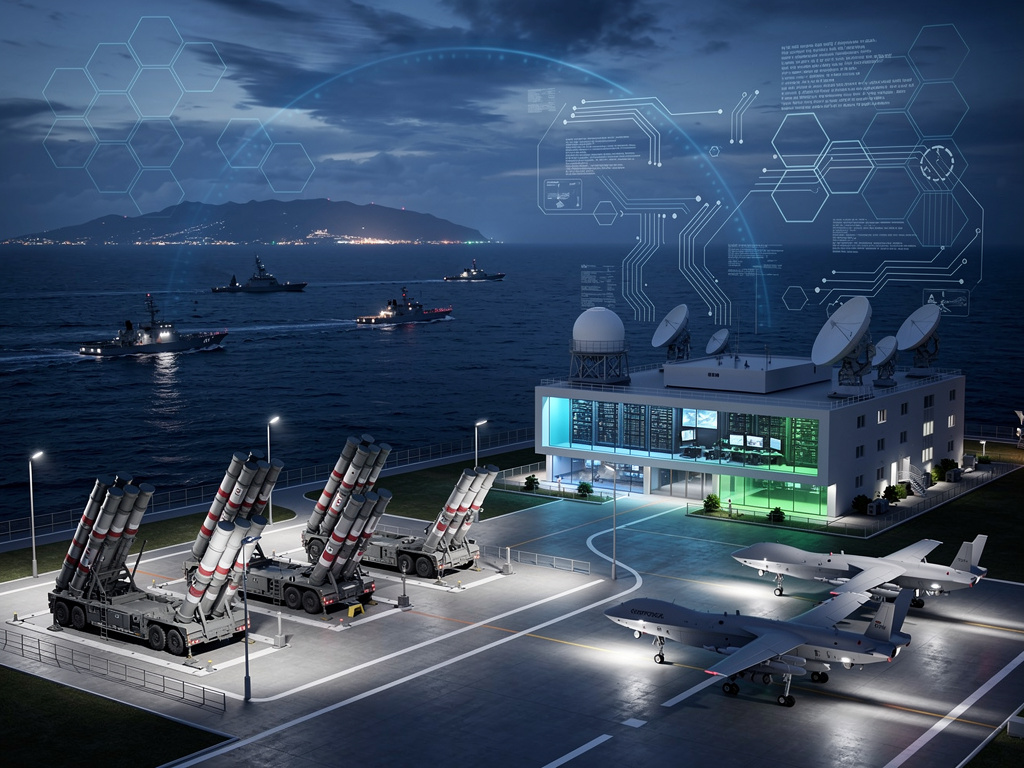
Japan’s Fortress in the East: Fortifying Defenses Against a Rising Rival
Japan’s government has taken a decisive step in reshaping its military posture, approving a record-breaking defense budget that signals a profound shift from its postwar pacifism. The cabinet’s decision, announced on December 26, 2025, allocates over 9 trillion yen—equivalent to about $58 billion—for the fiscal year starting in April. This move comes amid escalating tensions with China, particularly over territorial disputes in the East China Sea and Beijing’s assertive actions around Taiwan. Officials in Tokyo describe the current security environment as the most severe since World War II, prompting investments in advanced weaponry, drone technology, and strike capabilities.
The budget, which marks the 13th consecutive annual increase, underscores Japan’s commitment to bolstering its Self-Defense Forces (SDF). Key allocations include funds for long-range missiles, enhanced coastal defenses, and a “drone shield” aimed at protecting the southwestern islands, such as Yonaguni, which lies just 110 kilometers from Taiwan. This strategic pivot is part of a broader plan to double defense spending to 2% of gross domestic product by 2027, a target set in response to regional instability. Prime Minister Shigeru Ishiba emphasized that these enhancements are essential for deterring potential aggressors without provoking unnecessary conflict.
Drawing from recent reports, the Associated Press detailed how this budget exceeds previous records and focuses on counterstrike abilities, including the procurement of Tomahawk missiles from the United States. AP News highlighted that Japan’s defense ministry is prioritizing hypersonic weapons and satellite constellations to improve reconnaissance and targeting precision. This comes as China continues to expand its military footprint, with frequent incursions into Japanese airspace and waters, fueling Tokyo’s urgency to modernize.
Strategic Imperatives Driving the Surge
Beyond immediate hardware acquisitions, the budget reflects a holistic approach to national security. Investments in cyber defenses and space-based assets are prominent, addressing vulnerabilities exposed by recent global conflicts. For instance, the allocation includes 100 billion yen for drone technology, creating a layered defense system to monitor and intercept threats in real-time. This is particularly relevant for the Nansei Islands chain, where Chinese naval activities have intensified, raising alarms about potential blockades or invasions.
Industry insiders note that Japan’s defense industry will benefit significantly from this influx. Companies like Mitsubishi Heavy Industries and Kawasaki Heavy Industries are poised to ramp up production of indigenous systems, such as the Type 12 surface-to-ship missiles, which are being upgraded for longer ranges. The budget also supports joint development projects with allies, including the U.S. and Australia, fostering interoperability in the Indo-Pacific region. According to Al Jazeera, this collaborative effort is seen as a counterbalance to China’s growing influence, with Beijing accusing Tokyo of instigating a “space arms race.”
Public sentiment in Japan, traditionally wary of militarization due to constitutional constraints under Article 9, appears to be shifting. Polls indicate increasing support for stronger defenses amid perceptions of Chinese aggression. However, critics argue that the rapid buildup could strain fiscal resources, especially with Japan’s aging population and high public debt. The government counters that these expenditures are vital for maintaining peace through strength, echoing strategies employed by other nations facing similar threats.
Technological Edges and Alliances
Delving deeper into the specifics, the budget earmarks funds for advanced radar systems and unmanned aerial vehicles (UAVs) to enhance surveillance over vast maritime areas. This includes the deployment of sea-based drones for persistent monitoring of contested waters. Experts point out that such technologies are crucial for asymmetric warfare, allowing Japan to project power without large-scale troop deployments. The focus on strike-back capabilities represents a departure from purely defensive doctrines, enabling the SDF to target enemy bases if attacked.
International partnerships play a pivotal role in this strategy. Japan’s alignment with the Quadrilateral Security Dialogue (Quad)—comprising the U.S., India, and Australia—amplifies the impact of its spending. Joint exercises and technology sharing are expected to accelerate, with the budget supporting contributions to multilateral initiatives. The Guardian reported that Beijing has responded critically, viewing these developments as provocative, yet Tokyo maintains they are defensive in nature.
On the economic front, the defense surge is projected to stimulate innovation in dual-use technologies, benefiting sectors like aerospace and electronics. Analysts estimate that the increased spending could create thousands of jobs and spur research in artificial intelligence and quantum computing for military applications. However, challenges remain in supply chain dependencies, particularly for rare earth materials, where China’s dominance poses risks.
Regional Reactions and Broader Implications
China’s foreign ministry has lambasted the budget as an escalation that undermines regional stability. Spokespersons claim it fuels militarism, a charge that resonates with historical sensitivities in Asia. In contrast, allies like the United States have welcomed the move, with Pentagon officials praising Japan’s commitment to shared security burdens. This aligns with Washington’s push for partners to invest more in collective defense against authoritarian expansionism.
Social media platforms, particularly X (formerly Twitter), reflect a mix of global sentiments. Posts from defense analysts highlight Japan’s budget as a necessary response to China’s military expenditures, which dwarf Tokyo’s at around $245-267 billion for 2025. Users emphasize the disparity, with Japan’s allocation representing about 1.4% of GDP compared to China’s 1.7-1.8%. These discussions underscore a narrative of deterrence rather than aggression, with some posts drawing parallels to Germany’s recent defense hikes.
Domestically, the budget has sparked debates in the Diet, Japan’s parliament. Opposition parties question the transparency of spending and potential overreach, while supporters argue it’s indispensable given North Korea’s missile tests and Russia’s actions in Ukraine. The government has pledged oversight mechanisms to ensure accountability, including audits and public reporting.
Investments in Human Capital and Infrastructure
A less-discussed aspect is the emphasis on personnel. The budget includes provisions for recruiting and training more SDF members, addressing shortages in a competitive job market. Incentives such as higher pay and better living conditions aim to attract talent, particularly in specialized fields like cybersecurity. This human element is critical, as technology alone cannot secure borders; skilled operators are needed to maximize new systems’ potential.
Infrastructure upgrades form another cornerstone. Funds will modernize bases on remote islands, installing hardened shelters and communication networks resilient to electronic warfare. The Japan Times noted the inclusion of 100 billion yen for a drone shield in the southwest, designed to counter Chinese incursions. These enhancements not only bolster defenses but also serve as a signal of resolve to potential adversaries.
Looking ahead, Japan’s strategy integrates with global trends in military modernization. Comparisons to European nations ramping up spending post-Ukraine invasion reveal common themes: deterrence through capability and alliance strengthening. For Japan, this means navigating constitutional limits while adapting to a multipolar world order.
Economic Ramifications and Future Trajectories
The fiscal implications extend beyond defense. With Japan’s economy grappling with stagnation, the budget could inject stimulus, though at the cost of diverting funds from social programs. Economists project that defense-related R&D might yield civilian spin-offs, such as improved disaster response technologies, given Japan’s vulnerability to natural calamities.
Geopolitically, this budget positions Japan as a key player in Indo-Pacific security architecture. By enhancing strike capabilities, Tokyo aims to complicate any adversary’s calculus, promoting stability through balanced power dynamics. Newsweek emphasized the focus on distant-target striking, a capability that alters the regional balance.
Critics, however, warn of an arms race spiral. If China responds with further increases, it could heighten tensions, potentially leading to miscalculations. Advocates counter that unilateral restraint has not curbed Beijing’s ambitions, necessitating proactive measures.
Global Context and Long-Term Vision
In the wider arena, Japan’s actions mirror those of other democracies confronting authoritarian challenges. The budget supports participation in international forums, like the United Nations, where Tokyo pushes for reformed security norms. Collaborations with South Korea, despite historical frictions, are also on the rise, fostering trilateral ties with the U.S.
Social media buzz on X amplifies expert voices, with posts noting Japan’s 57% spending hike over five years, now rivaling Russia’s military budget. These insights portray a nation shedding pacifist constraints to safeguard its sovereignty.
Ultimately, this record budget encapsulates Japan’s evolving identity—from a nation defined by defeat to one asserting defensive prowess. As regional dynamics shift, Tokyo’s investments may redefine alliances and deterrence strategies for years to come.
Balancing Act: Risks and Rewards
Potential pitfalls include domestic backlash if economic pressures mount. Public debt, already over 250% of GDP, could strain under sustained high spending. The government mitigates this by framing defense as an investment in peace, with bipartisan support smoothing legislative paths.
Allied reactions reinforce Japan’s path. ABC News covered how the budget fortifies coastal defenses amid rising tensions, aligning with Australia’s own security concerns. Such endorsements bolster Tokyo’s confidence.
In essence, Japan’s defense surge is a calculated response to an assertive neighbor, blending technological innovation, strategic alliances, and domestic resolve to forge a more secure future.


 WebProNews is an iEntry Publication