
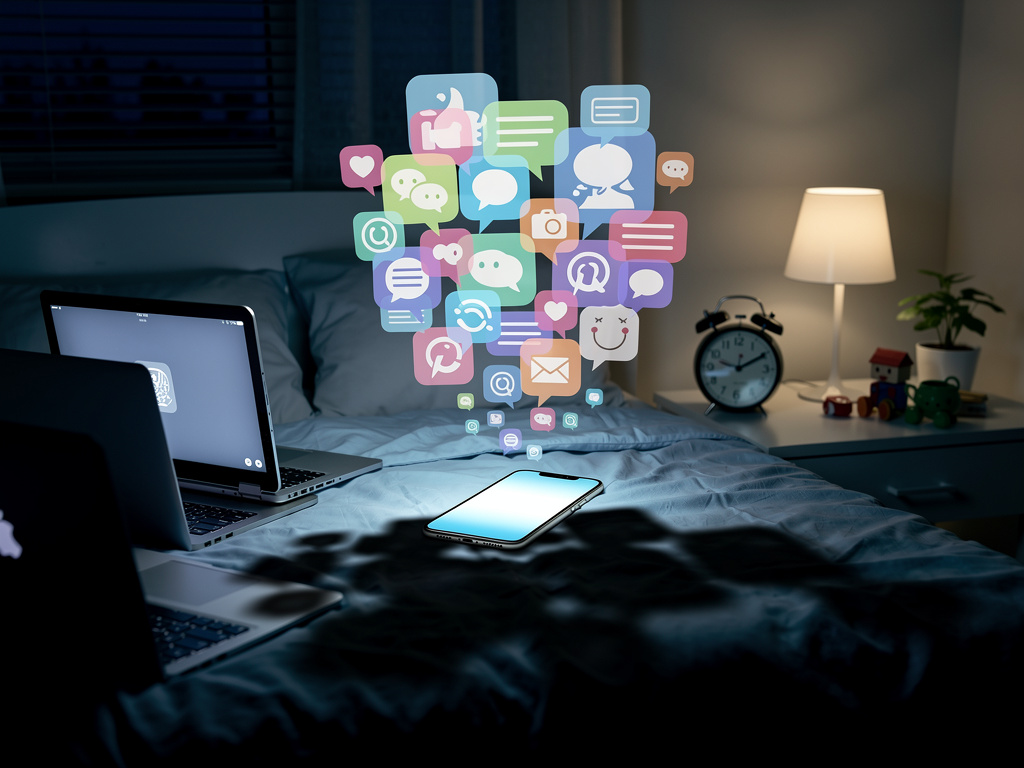
Scrolling Into the Abyss: Unraveling Social Media’s Grip on Adolescent Mental Health
In an era where smartphones are extensions of young hands, the interplay between social media and mental well-being has become a pressing concern for parents, educators, and health professionals alike. A recent study published in JAMA Network Open delves deep into this dynamic, examining how time spent on platforms like Instagram and TikTok correlates with depressive symptoms among early adolescents. The research, conducted over several years with a cohort of children aged 9 to 12, reveals a nuanced picture: increased social media engagement isn’t just a passive habit but a potential accelerator of emotional distress. Drawing from longitudinal data, the study highlights person-level associations, suggesting that for some youths, scrolling sessions could exacerbate feelings of sadness and hopelessness.
The findings build on a growing body of evidence that positions social media as a double-edged sword. While these platforms offer connectivity and self-expression, they also foster environments rife with comparison, cyberbullying, and unrealistic standards. Researchers tracked participants’ self-reported social media use alongside standardized assessments of depressive symptoms, uncovering that those who ramped up their daily screen time experienced sharper rises in mood disorders. This isn’t mere correlation; the study’s cohort design allows for insights into how habits evolve over time, painting a clearer causal pathway than cross-sectional surveys.
Beyond the raw data, the implications ripple into broader societal discussions. Public health experts are increasingly alarmed by the surge in adolescent mental health crises, with emergency room visits for anxiety and depression climbing steadily. The JAMA study aligns with advisories from figures like the U.S. Surgeon General, who in a 2023 report warned of social media’s role in youth mental health declines. Yet, this research stands out for its focus on early adolescence—a critical window when brains are highly plastic and vulnerable to external influences.
The Mechanisms Behind the Screen
Diving deeper, the study identifies specific mechanisms that link social media use to depressive outcomes. For instance, excessive exposure to curated content can trigger social comparison, where teens measure their lives against filtered highlights of peers. This phenomenon, often dubbed “FOMO” or fear of missing out, amplifies feelings of inadequacy. The research quantifies this by showing that adolescents logging more than three hours daily on social apps reported 20% higher depressive scores over the follow-up period compared to lighter users.
Compounding this, algorithmic feeds prioritize engaging—often sensational—content, which can skew perceptions of reality. Sleep disruption emerges as another key factor; late-night scrolling interferes with rest, a known contributor to mood instability. The JAMA analysis controls for variables like family income and parental education, isolating social media’s unique impact. It’s a methodological strength that sets this work apart from earlier, less rigorous investigations.
Echoing these points, a systematic review in PMC synthesizes global data, noting that while evidence is limited, the risks are particularly acute for vulnerable groups. That review, published in 2023, calls for practitioners to incorporate social media assessments into routine check-ups, a recommendation the new JAMA study reinforces with its longitudinal lens.
Broader Contexts and Emerging Risks
The conversation extends beyond individual habits to systemic issues. Peer influences play a pivotal role; the study observes that adolescents in high-usage social circles tend to mirror those behaviors, creating echo chambers of digital dependency. Adverse childhood experiences, such as family stress or trauma, amplify these effects, making some teens more susceptible to negative spirals.
Recent news underscores the urgency. A report from Medical Xpress highlights a study where young adults reducing social media by just one week saw marked improvements in anxiety and depression. This short-term intervention suggests reversibility, offering hope amid the gloom. Similarly, coverage in Wyoming News emphasizes benefits for those with severe symptoms, aligning with the JAMA findings on usage thresholds.
On platforms like X, discussions buzz with innovative angles. Posts from health tech influencers point to AI-driven tools for monitoring screen time, with one user envisioning blockchain-secured health records to track digital habits securely. Another thread explores AI as a “new site of care,” potentially offering personalized interventions to curb excessive use before it impacts mental health.
Positive Potentials and Balanced Views
Not all is dire; the JAMA study acknowledges social media’s upsides, such as fostering support networks for marginalized youth. For LGBTQ+ teens or those in remote areas, platforms can provide vital community and resources, potentially buffering against isolation-induced depression. This duality is explored in a 2024 umbrella review from ScienceDirect, which weighs risks against opportunities for well-being.
Innovations in health tech are stepping in to tip the scales positively. Recent X posts discuss AI-powered electronic health records that integrate social media data for proactive mental health alerts. One visionary post describes automated bloodwork paired with AI optimization, hinting at a future where digital habits are monitored alongside physical vitals for holistic care.
Clinicians are adapting too. Guidance from Adolescent Research Review outlines risk factors like poor self-regulation and personality traits that predispose youth to problematic use, urging targeted interventions. This dovetails with the JAMA data, which shows variability in impacts— not every teen is equally affected, emphasizing the need for personalized approaches.
Policy and Parental Strategies
As evidence mounts, calls for regulation grow louder. The U.S. Surgeon General’s 2023 advisory, detailed in a HHS report, advocates for age restrictions and content safeguards. States like New York have proposed bans on algorithmic feeds for minors, inspired by studies like this one.
Parents, meanwhile, are on the front lines. The JAMA research suggests monitoring usage patterns early, perhaps through family media plans. Tools like app limits and digital detoxes, as tested in the Medical Xpress study, can yield quick wins. Educators are incorporating media literacy into curricula to teach critical evaluation of online content, reducing the sting of comparison.
From X, sentiments reflect optimism in tech solutions. A post on voice-to-text transcription for health coaching proposes AI guides that offer personalized advice, potentially extending to social media hygiene. Another envisions a “patient-centric healthcare ecosystem” from a 2025 White House summit, integrating tech firms to enhance data sharing for mental health tracking.
Technological Horizons in Mitigation
Looking ahead, the fusion of health tech and social media oversight promises transformative shifts. A Journal of Adolescent Health piece from JAH Online investigates associations with psychological well-being, finding that moderated use can enhance self-esteem. This positive framing complements the JAMA warnings, advocating for balanced engagement.
Innovators on X discuss emotion AI and digital biomarkers that detect distress in real-time, intervening before symptoms escalate. One post highlights closed-loop systems delivering tailored support, a nod to precision medicine’s rise in mental health.
Yet, challenges persist. A JMIR Mental Health meta-analysis in JMIR links problematic use to heightened anxiety and stress, with correlations strengthening in youth. This reinforces the need for ongoing research, as the JAMA study calls for larger, more diverse cohorts to refine understandings.
Voices from the Field and Future Directions
Industry insiders emphasize interdisciplinary action. Psychologists advocate integrating social media history into therapy sessions, while tech developers push for ethical AI that prioritizes user well-being over engagement metrics.
Recent news from VPM reports on the mental health boosts from brief breaks, suggesting scalable public campaigns. On X, a thread on physician-owned hospitals envisions frontline control, potentially extending to digital health initiatives.
Ultimately, the JAMA study serves as a clarion call. By illuminating the ties between screen time and depressive trajectories, it equips stakeholders with data to foster healthier digital environments. As adolescents navigate this wired world, blending vigilance with innovation could illuminate paths to resilience.


 WebProNews is an iEntry Publication