
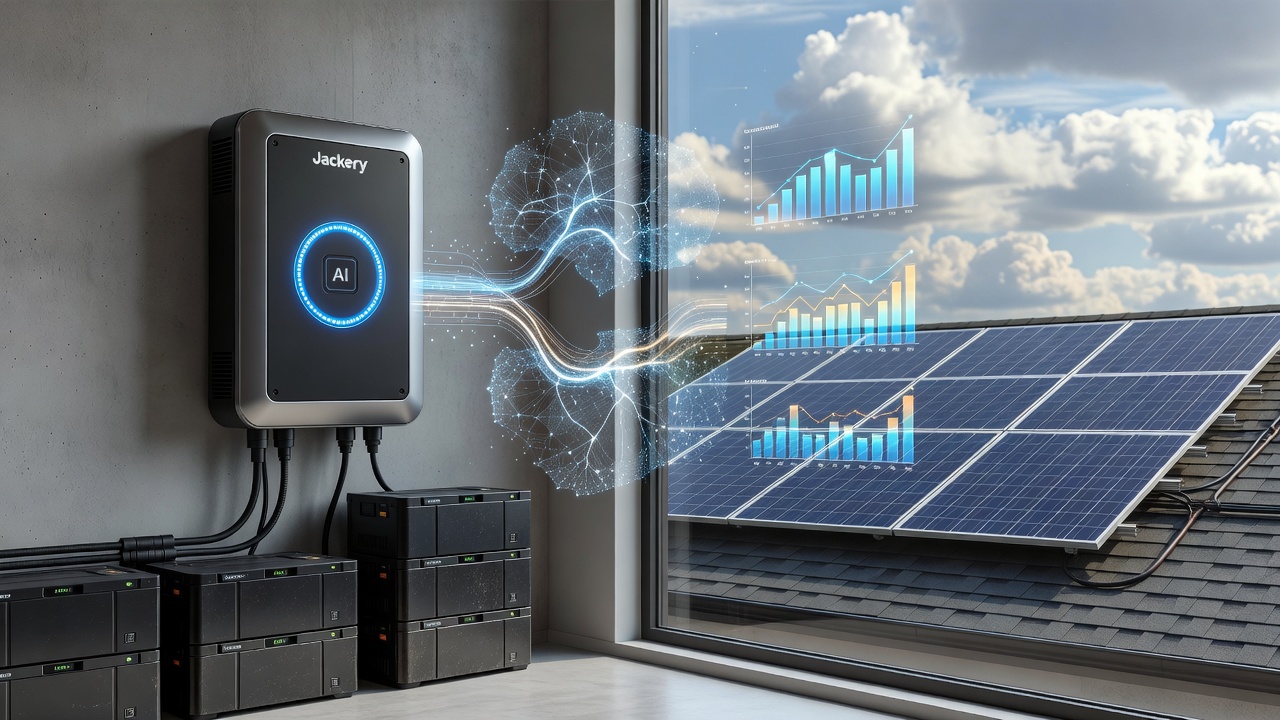
Jackery has announced plans to integrate artificial intelligence directly into the connection points between home solar panel systems and the broader electrical grid. The move, detailed in a recent Gizmodo report, signals a shift toward smarter energy management that could help households optimize power usage while reducing reliance on traditional utility companies during peak demand periods.
The company, known primarily for its portable power stations and solar generators aimed at outdoor enthusiasts, now appears ready to expand into fixed home installations. By embedding AI algorithms at the inverter level, Jackery intends to create systems that make real-time decisions about when to draw from solar arrays, when to pull from battery storage, and when to interact with the grid itself. This approach addresses one of the longstanding challenges in residential solar adoption: the unpredictable nature of both energy production and household consumption patterns.
Solar panels generate electricity based on sunlight availability, which fluctuates throughout the day and across seasons. Meanwhile, homes use power according to the habits of their occupants, creating mismatches that often force systems to export excess energy to the grid at low rates or import power at higher costs. Jackery’s proposed AI layer would analyze weather forecasts, historical usage data, utility rate structures, and even local grid conditions to adjust operations continuously. For instance, the system might hold back stored energy during anticipated evening price spikes or prioritize solar production to charge batteries ahead of cloudy periods predicted by meteorological models.
Industry observers suggest this development reflects growing sophistication in the solar sector. Traditional inverters simply convert direct current from panels into alternating current suitable for home use. Modern hybrid inverters add battery integration capabilities. Jackery wants to push further by adding predictive intelligence that anticipates needs rather than merely reacting to them. The company has not released full technical specifications yet, but early indications point to machine learning models trained on vast datasets of energy patterns from thousands of installations.
One clear benefit involves time-of-use billing structures that many utilities now employ. These plans charge significantly more for electricity during afternoon and evening hours when demand across the region peaks. An AI-managed solar and battery system could shift consumption automatically, perhaps running high-draw appliances like air conditioners or electric vehicle chargers during midday when solar production reaches its maximum. The technology might also coordinate with smart home devices to stagger loads intelligently throughout the day.
Grid stability represents another area where such systems could contribute positively. As more homes adopt solar, utilities face challenges managing distributed energy resources that can suddenly reduce output when clouds pass overhead. AI-equipped inverters might communicate with one another or with utility control centers to smooth these variations. Some experts envision networks of solar homes acting collectively as virtual power plants, capable of providing services like frequency regulation or demand response when called upon.
Jackery’s background in portable power gives the company particular experience with battery management systems. Their existing products already incorporate sophisticated charging algorithms that maximize cell longevity while delivering consistent performance. Applying similar principles at household scale could yield batteries that last longer and operate more efficiently than competing solutions. The firm reportedly plans to offer modular designs that allow homeowners to start small and expand capacity over time as needs and budgets permit.
Integration with existing solar installations presents both opportunities and obstacles. Many homeowners already have panels and inverters from various manufacturers. Jackery will need to develop compatible hardware or software gateways that can overlay AI capabilities onto legacy equipment. The company has hinted at retrofit kits alongside complete new systems, potentially broadening the addressable market considerably.
Data privacy and security concerns naturally arise with any AI system that monitors household energy patterns. Detailed consumption information can reveal when people are home, when they wake up, what appliances they use, and even infer occupancy patterns that might interest marketers or, worse, criminals. Jackery will need to implement strong encryption, local processing where possible, and transparent data handling policies to gain consumer trust. The Gizmodo article mentions that company representatives emphasized edge computing approaches that keep sensitive information within the home rather than constantly transmitting it to cloud servers.
Cost remains a significant factor in solar adoption. While panel prices have fallen dramatically over the past decade, the combination of batteries, advanced inverters, and now AI capabilities can still push total installation expenses into the tens of thousands of dollars. Jackery has not disclosed pricing for its upcoming systems, but executives suggest that improved efficiency and grid independence could deliver payback periods competitive with current offerings. Federal tax credits and various state incentives continue to improve the financial equation for many households.
The competitive environment features several players moving in similar directions. Companies like Tesla with its Powerwall and virtual power plant programs have already demonstrated AI-driven energy optimization at scale. Sonnen, Enphase, and Generac also offer intelligent battery systems with varying degrees of predictive capability. Jackery’s entry could intensify pressure on all participants to deliver more sophisticated features while potentially driving down prices through increased innovation.
Beyond individual homes, wider deployment of AI-managed solar systems might influence utility planning and operations. If enough households can reliably shift loads and provide grid services, utilities might defer expensive infrastructure upgrades like new peaker plants or transmission lines. Some forward-thinking utility companies have begun experimenting with programs that compensate customers for allowing their systems to participate in automated demand response. Jackery’s technology could make such participation more attractive by handling the complexity automatically.
Technical challenges still need resolution. Training AI models requires high-quality data, and regional differences in climate, building stock, and consumption habits mean models might need customization for different areas. Communication protocols between inverters, batteries, solar arrays, home automation systems, and utility networks must be standardized or at least made interoperable. Regulatory frameworks governing grid interconnection, data sharing, and compensation mechanisms continue to evolve unevenly across different states and countries.
Despite these hurdles, the direction seems clear. Energy systems are becoming more intelligent, more interconnected, and more capable of autonomous decision-making. Jackery’s announcement fits into this broader movement toward distributed, responsive power infrastructure that reduces waste and environmental impact while giving consumers greater control over their energy costs.
The company plans to begin pilot programs in select markets before wider release, gathering real-world performance data to refine their algorithms. Early adopters will likely include tech-savvy homeowners already familiar with solar technology and interested in maximizing their returns. Over time, as the systems prove reliable, the addressable market could expand to include less technically inclined consumers who simply want lower electricity bills and reduced carbon footprints.
Weather integration represents a particularly promising aspect of the technology. By combining hyperlocal forecasts with satellite imagery and ground-based sensors, AI systems can predict solar production with increasing accuracy. This allows proactive management of battery states of charge. Rather than keeping batteries topped off constantly, which can accelerate degradation, the system might discharge slightly during periods of reliable sunshine, knowing that replenishment remains likely. Such optimizations could extend battery lifespan by years while maintaining performance.
Homeowners might also gain access to intuitive interfaces that explain system decisions in plain language. Instead of cryptic technical readouts, users could see notifications like “Holding two hours of backup power in reserve because thunderstorms are forecast for this afternoon” or “Charging electric vehicle now because electricity rates are currently at their lowest.” This transparency helps build confidence in automated systems and allows users to override decisions when necessary.
As electric vehicles proliferate and home electrification accelerates with heat pumps and induction stoves, the importance of intelligent energy management will only grow. A typical modern household might eventually consume twice as much electricity as current averages, making optimization essential for both affordability and grid stability. Jackery’s AI initiative positions the company to address these emerging demands directly.
The technology also opens possibilities for community-level coordination. Neighborhoods with multiple AI-equipped solar homes might share resources during emergencies or high-price events, creating microgrids that can island from the main grid when beneficial. While full implementation of such capabilities lies years away, the foundational elements are developing now.
Jackery has built its reputation on reliable, user-friendly portable power solutions. Translating that approach to permanent home systems with sophisticated AI represents a logical but ambitious evolution. Success will depend on delivering promised performance without adding excessive complexity for installers or end users. The coming months will reveal more details about timelines, pricing, and specific technical approaches as the company moves from concept toward commercial availability.
For homeowners considering solar investments, these developments suggest waiting might be worthwhile if current systems lack advanced optimization features. Those with existing installations should monitor compatibility announcements from Jackery and competitors. The goal remains straightforward: generate clean power, store it efficiently, and use it wisely according to both household needs and grid conditions. Artificial intelligence offers a practical tool for achieving that balance more effectively than ever before.


 WebProNews is an iEntry Publication