
From Persistent Peril to Provisional Peace: Russia’s ISS Leak Saga Ends
In the vast expanse of low Earth orbit, where international cooperation meets the unforgiving vacuum of space, a longstanding issue has finally reached a resolution. For nearly five years, a series of microscopic cracks in the Russian segment of the International Space Station (ISS) caused persistent air leaks, raising alarms among space agencies worldwide. Recent reports indicate that these leaks have ceased, marking a significant milestone for Russia’s beleaguered space program. This development comes at a critical juncture as the ISS approaches the end of its operational life, with plans for deorbiting looming on the horizon.
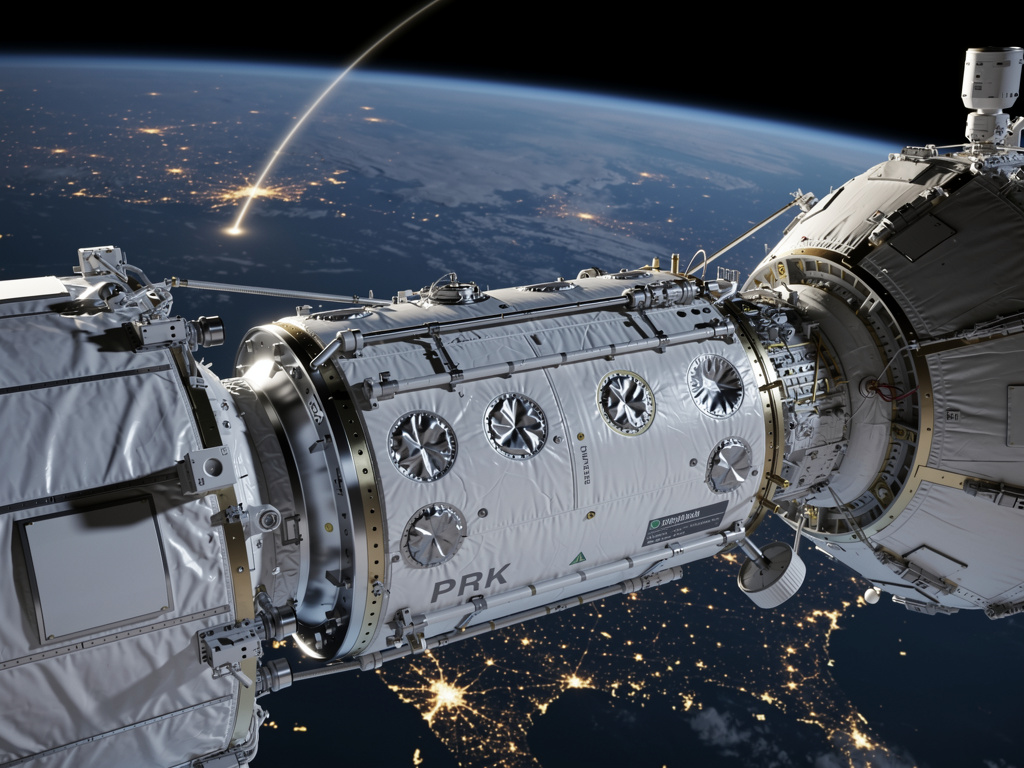
The leaks originated in the PrK module, a small transfer tunnel connecting the Progress spacecraft airlock to the Zvezda service module. First detected in 2019, the issue escalated over time, with the leak rate doubling in 2024 to over two pounds of air per day. This prompted NASA to classify it as a high-likelihood, high-consequence risk, leading to operational adjustments including the indefinite delay of private astronaut missions like Axiom 4 in mid-2025. Crew members on the station, a collaborative effort involving NASA, Roscosmos, and other partners, had to isolate sections and conduct meticulous inspections to manage the problem.
Efforts to seal the cracks involved a combination of patches, sealants, and even drilling to halt crack propagation. Cosmonauts aboard the ISS performed these repairs under challenging conditions, with support from ground teams in both the U.S. and Russia. Despite initial disagreements between NASA and Roscosmos on the severity and best fixes—highlighted in reports from CNN and Space.com—collaborative troubleshooting persisted, underscoring the delicate balance of international space diplomacy.
Tracing the Cracks: A History of Orbital Troubles
The PrK module’s woes are part of a broader pattern of challenges facing Russia’s contributions to the ISS. The Zvezda module, launched in 2000, has endured over two decades of exposure to space’s harsh environment, including radiation, micrometeoroids, and thermal cycling that can fatigue metal structures. Leaks were first pinpointed in the module’s working compartment, as announced by Roscosmos in a 2020 social media update, leading to a series of mitigation strategies.
By 2021, NASA specialists assisted in locating and repairing these fissures, employing advanced techniques like ultrasonic leak detectors and even temporary seals. Posts on X from space enthusiasts and experts, such as those from Anatoly Zak of RussianSpaceNews, detailed the ongoing efforts, including drilling operations to prevent crack spread. These accounts painted a picture of incremental progress amid uncertainty, with the leak rate fluctuating but never fully abating until recently.
The situation worsened with additional incidents, including coolant leaks from Russian vehicles like the Soyuz and Progress spacecraft in 2022 and 2023. A notable event in October 2023, reported by Spaceflight Now, involved an exterior coolant release from the Nauka laboratory module, echoing earlier troubles and fueling concerns about systemic issues in Russian hardware manufacturing or maintenance.
Over the years, the leaks forced operational changes, such as closing hatches to isolate affected areas and adjusting crew schedules for monitoring. NASA’s internal assessments, as referenced in various updates, highlighted the risks to crew safety and mission objectives. The doubling of the leak rate in 2024 intensified scrutiny, with some experts speculating on underlying causes like material fatigue or welding defects from the module’s construction in the 1990s.
Unveiling the Fix: Technical Triumphs and Lingering Questions
The breakthrough came in late 2025, following intensified sealing activities and inspections. According to a recent article in Ars Technica, NASA confirmed that the pressure in the PrK module has stabilized, with no detectable air loss for several weeks. This confirmation followed joint monitoring by NASA and Roscosmos teams, who continue to investigate the root causes of the cracks.
Repair methods evolved from initial patches to more robust solutions, including the application of advanced sealants and structural reinforcements. Insights from X posts, including those from users like ChrisO_wiki, described the engineering challenges, such as accessing tight spaces and ensuring seals withstand vacuum pressures. These grassroots discussions complemented official reports, offering a glimpse into the real-time problem-solving on orbit.
Despite the halt in leaks, questions remain about the long-term integrity of the Russian segment. Roscosmos has floated ideas of repurposing ISS modules for a future Russian Orbital Station (ROS), as discussed in a Gizmodo piece from December 2025. This plan raises concerns about inheriting aged hardware prone to failures, especially given the leaks’ history.
The resolution also coincides with other positive developments for Russia, such as the anticipated repair of the Baikonur Cosmodrome’s Site 31 launch pad, damaged in a November 2025 Soyuz launch. NASA’s updated schedules suggest a return to flight by March 2026, potentially easing logistical strains on ISS resupply missions.
Broader Implications for Global Space Collaboration
This leak cessation is more than a technical fix; it’s a testament to the resilience of the ISS partnership amid geopolitical tensions. The station, orbiting at about 250 miles above Earth, symbolizes post-Cold War cooperation, yet strains have emerged, particularly following Russia’s 2022 invasion of Ukraine. Despite threats to withdraw, Roscosmos committed to ISS operations through 2028, aligning with NASA’s deorbiting timeline around 2030.
Industry insiders note that the leak saga highlights vulnerabilities in aging infrastructure. With the ISS’s retirement approaching, attention shifts to successors like NASA’s Artemis program and commercial stations from companies such as Axiom Space and Blue Origin. Russia’s plans for an independent station face hurdles, including funding shortages and technological gaps, as evidenced by delays in module development.
The incident has spurred advancements in leak detection and repair technologies, potentially benefiting future habitats on the Moon or Mars. Collaborative efforts, despite differing risk assessments—as seen in the 2024 CNN report—demonstrate that shared goals can overcome discord, ensuring crew safety in the high-stakes arena of space exploration.
Looking ahead, ongoing monitoring will be crucial. NASA sources indicate continued vigilance for any resurgence of leaks, with regular pressure checks and structural analyses. The PrK module’s stabilization allows crews to refocus on scientific research, from microgravity experiments to Earth observation, maximizing the ISS’s remaining years.
Navigating Future Orbits: Challenges and Opportunities Ahead
As Russia celebrates this victory, broader challenges loom for its space sector. Recent news, including Iran’s satellite launches from Russian facilities reported by The Moscow Times, signal diversification efforts amid sanctions. However, domestic issues like the Baikonur pad outage underscore infrastructure vulnerabilities.
For the global space community, the leak’s end reinforces the need for redundant systems and international backups. NASA’s Crew-12 mission, slated for February 2026 per the agency’s news releases, will proceed with heightened awareness of Russian segment reliability.
Experts predict that lessons from this episode will inform designs for next-generation stations, emphasizing modular, repairable architectures. As one X post humorously noted, referencing commercial sealants, innovative solutions—whether high-tech or improvised—remain key to orbital survival.
In the end, this resolution not only secures the ISS’s immediate future but also paves the way for sustained human presence in space, bridging current collaborations to tomorrow’s explorations. With cracks sealed and pressures equalized, the station stands as a beacon of what persistent ingenuity can achieve against the void.


 WebProNews is an iEntry Publication