
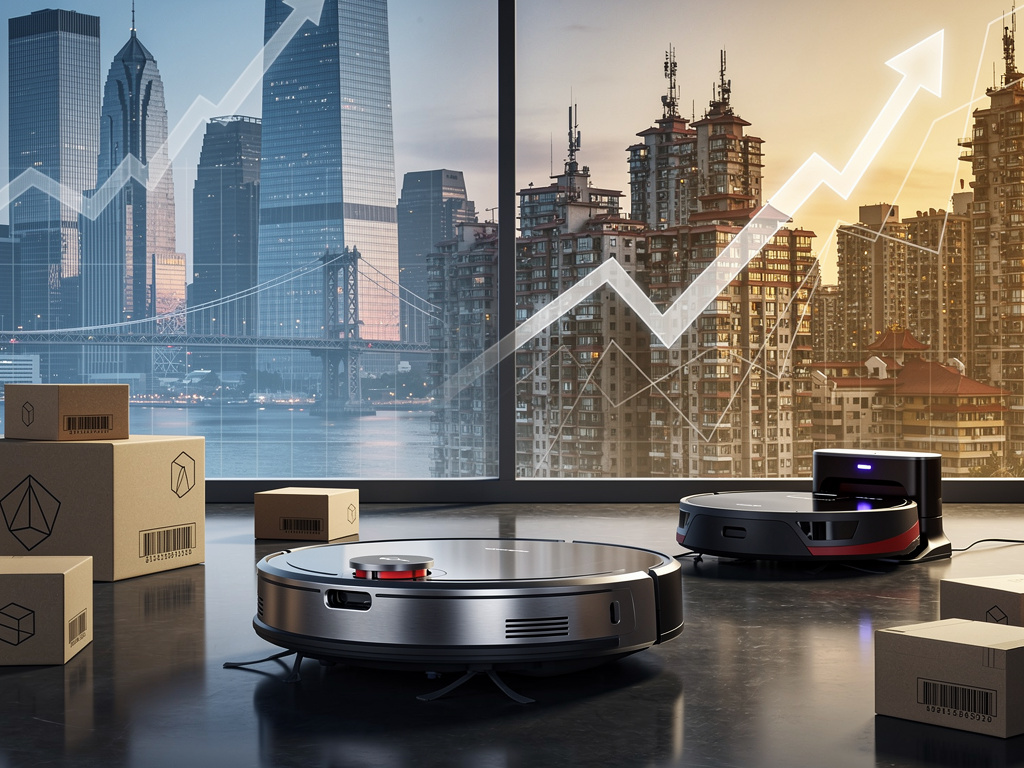
The Fall of a Robotics Pioneer: iRobot’s Bankruptcy and the Rise of China’s Vacuum Empire
In the annals of consumer technology, few stories capture the brutal realities of global competition quite like the downfall of iRobot Corp., the Massachusetts-based company that revolutionized home cleaning with its Roomba vacuum robots. Founded in 1990 by a trio of MIT engineers, iRobot once stood as a beacon of American innovation, transforming mundane household chores into automated marvels. But by late 2025, the company filed for Chapter 11 bankruptcy, marking a stunning reversal for a firm that had dominated the robotic vacuum sector for over two decades. The catalyst? An onslaught from Chinese manufacturers dubbed “fast followers” by iRobot’s own founder, who swiftly replicated and undercut the pioneer’s technology.
Colin Angle, iRobot’s co-founder and former CEO, didn’t mince words in a recent interview. Reflecting on the bankruptcy, he pointed to these Chinese rivals as a new breed of competitor that proved insurmountable. “It was hard to overcome competitors in China,” Angle told Business Insider, describing how these firms rapidly copied iRobot’s innovations while slashing prices through efficient supply chains and government-backed scaling. This narrative isn’t just a post-mortem; it’s a cautionary tale for the entire tech industry, where intellectual property and first-mover advantages can evaporate in the face of aggressive imitation.
The bankruptcy filing on December 15, 2025, wasn’t entirely unexpected. iRobot had been grappling with financial woes since Amazon abandoned its $1.4 billion acquisition attempt in 2024, thwarted by antitrust concerns from U.S. and European regulators. Without that lifeline, iRobot’s debts mounted, exacerbated by new U.S. tariffs on imported goods and a market flooded with cheaper alternatives. As part of the restructuring, iRobot agreed to be acquired by Picea Robotics, its primary Chinese manufacturer, in a deal that wipes out shareholders and turns the company private.
Regulatory Roadblocks and Missed Opportunities
The Amazon deal’s collapse looms large in iRobot’s saga. Regulators, particularly the Federal Trade Commission under Chair Lina Khan, feared the merger would stifle competition in the smart home device arena. Critics, however, argue this decision backfired spectacularly. “Excellent job Lina Khan, you successfully destroyed iRobot,” quipped one prominent X user in a post that garnered over a million views, highlighting sentiment that regulatory overreach handed the market to foreign players. Indeed, posts on X from industry observers echo this frustration, portraying the FTC’s stance as shortsighted amid rising Chinese dominance.
Without Amazon’s resources, iRobot couldn’t keep pace with the innovation treadmill. Chinese companies like Roborock, Ecovacs, and Dreame surged ahead, capturing market share with feature-rich vacuums at fractions of the price. According to data referenced in X discussions, Roborock now leads globally, followed closely by its compatriots, relegating iRobot to fifth place. These “fast followers” didn’t invent the robotic vacuum—iRobot did that with the Roomba in 2002—but they perfected mass production and rapid iteration, turning China’s domestic market into a proving ground for cutthroat efficiency.
Angle’s commentary underscores this dynamic. In his IEEE Spectrum interview, the ex-CEO lamented how regulatory hurdles blocked not just the Amazon deal but also iRobot’s ability to innovate freely. The bankruptcy, he suggested, exposes valuable robotics technology and user data to Chinese firms, potentially accelerating their lead in areas like AI-driven mapping and home automation.
The Mechanics of ‘Fast Following’ in Action
What exactly makes these Chinese competitors so formidable? It’s a blend of speed, scale, and strategic adaptation. As one X post from a China tech analyst noted, the country’s market acts as an “evolutionary accelerator,” forcing companies to hone extreme cost efficiency, rapid product cycles, and technological leaps simultaneously. Roborock, for instance, derives half its sales from China and Western Europe, leveraging government subsidies and a vast supplier network to undercut prices.
iRobot’s struggles highlight broader industry shifts. Founded on military robotics contracts before pivoting to consumer products, the company invested heavily in R&D, patenting technologies like dirt detection and room mapping. Yet, as Reuters reported, fierce competition and declining profits since the pandemic eroded its position. Picea Robotics, already iRobot’s key supplier, steps in as buyer, promising continuity but raising eyebrows about data privacy and national security.
Concerns over connected devices aren’t unfounded. An X post from a tech policy expert flagged potential cyber risks from Chinese-owned vacuums collecting household data, such as floor plans that could reveal sensitive information. This echoes warnings in The New York Times, which detailed how iRobot’s restructuring hands control to its largest creditor, potentially shifting innovation hubs eastward.
Leadership Perspectives and Internal Turmoil
Current iRobot CEO Gary Cohen offers a more optimistic spin, framing the bankruptcy as a “reboot” rather than a requiem. In an interview with The Verge, Cohen argued that the Picea acquisition will infuse capital and manufacturing prowess, allowing iRobot to “grow” under new ownership. “This is good news for us,” he told TechRadar, emphasizing streamlined operations and access to advanced supply chains.
Yet, former executives like Angle paint a starker picture. Calling the bankruptcy a “tragedy for consumers” in CNBC, Angle blamed not just competition but also internal missteps, such as overreliance on premium pricing in a commoditizing market. X sentiment amplifies this, with users decrying how American firms like iRobot falter while Chinese brands thrive, often citing Dyson’s revenue dips as a parallel victim of this rivalry.
The human element adds depth. iRobot’s workforce, once numbering in the thousands, faced layoffs as revenues missed estimates—a trend dating back to 2022, as noted in older X posts from financial outlets like ZeroHedge. The bankruptcy deal, while preserving some jobs, signals a pivot from U.S.-centric innovation to integrated global operations, potentially diluting the brand’s identity.
Geopolitical Tensions and Market Ramifications
Broader geopolitical currents swirl around iRobot’s fate. New U.S. tariffs on Chinese imports, intended to protect domestic industries, ironically hastened iRobot’s decline by inflating costs for its outsourced manufacturing. As The Guardian outlined, these pressures, combined with post-pandemic profit slumps, left iRobot vulnerable.
Industry groups like the Computer & Communications Industry Association have seized on the story, arguing in X posts that blocking the Amazon merger “handed over” the robotic vacuum sector to Chinese companies. This view resonates in recent web analyses, such as those from WebProNews, which blame FTC antitrust actions for crippling iRobot amid foreign competition.
Looking ahead, the acquisition by Picea could reshape consumer robotics. Will Roomba retain its premium cachet, or morph into another budget-friendly option? X discussions speculate on innovation slowdowns, with one analyst warning that “first mover problems” like iRobot’s—pioneering without sustained defenses—doom Western firms against agile Eastern challengers.
Innovation’s New Frontiers Amid Uncertainty
Despite the gloom, glimmers of resilience emerge. Cohen’s vision includes leveraging Picea’s expertise for next-gen products, potentially integrating advanced AI and sustainability features. Yet, as BizToc summarized Angle’s insights, the “Chinese fast follower” model represents a paradigm shift, where speed trumps originality.
For consumers, the bankruptcy means potential disruptions, though iRobot assures continued support for existing devices. X users have voiced fears of feature losses, referencing November posts about dwindling reserves signaling imminent collapse.
The iRobot story transcends one company’s woes, illuminating vulnerabilities in global tech rivalries. As Chinese firms like Roborock expand—fueled by domestic markets that demand constant evolution—American innovators must adapt or risk obsolescence. Angle’s reflections in Business Insider serve as a stark reminder: in robotics, as in vacuums, the dust never truly settles.
Echoes of Broader Industry Shifts
Delving deeper, iRobot’s trajectory mirrors challenges in adjacent sectors. Take home service robots, where X analysts point to Dyson’s struggles against Dreame as a harbinger. Revenue erosion from relentless competition underscores how Chinese manufacturers, unburdened by heavy R&D legacies, focus on iterative improvements.
Regulatory echoes abound. The FTC’s intervention, detailed in IEEE Spectrum, not only scuttled Amazon’s bid but also spotlighted data privacy in connected homes—ironic now that a Chinese entity gains access.
Ultimately, iRobot’s pivot to Picea might stabilize operations, but it raises questions about technological sovereignty. As one X post from a mergers expert noted, this bankruptcy warns small tech firms that big rescues aren’t guaranteed, especially under antitrust scrutiny.
Pathways Forward in a Competitive Arena
What lies ahead for iRobot under Chinese ownership? Cohen’s optimism, shared in The Verge, hinges on synergies: Picea’s manufacturing might lower costs, enabling competitive pricing without sacrificing quality.
Yet, skeptics on X argue this cedes strategic ground, potentially funneling U.S.-developed IP eastward. The New York Times report on the deal emphasizes this transfer, noting iRobot’s MIT roots now entwine with foreign control.
In the end, iRobot’s bankruptcy encapsulates the high stakes of global tech races. From Roomba’s humble beginnings to this humbling chapter, it reminds us that innovation alone isn’t enough—resilience against fast followers demands agility, alliances, and perhaps a reevaluation of protective policies. As the dust clears, the robotic vacuum market’s future may well be written in Mandarin.


 WebProNews is an iEntry Publication