
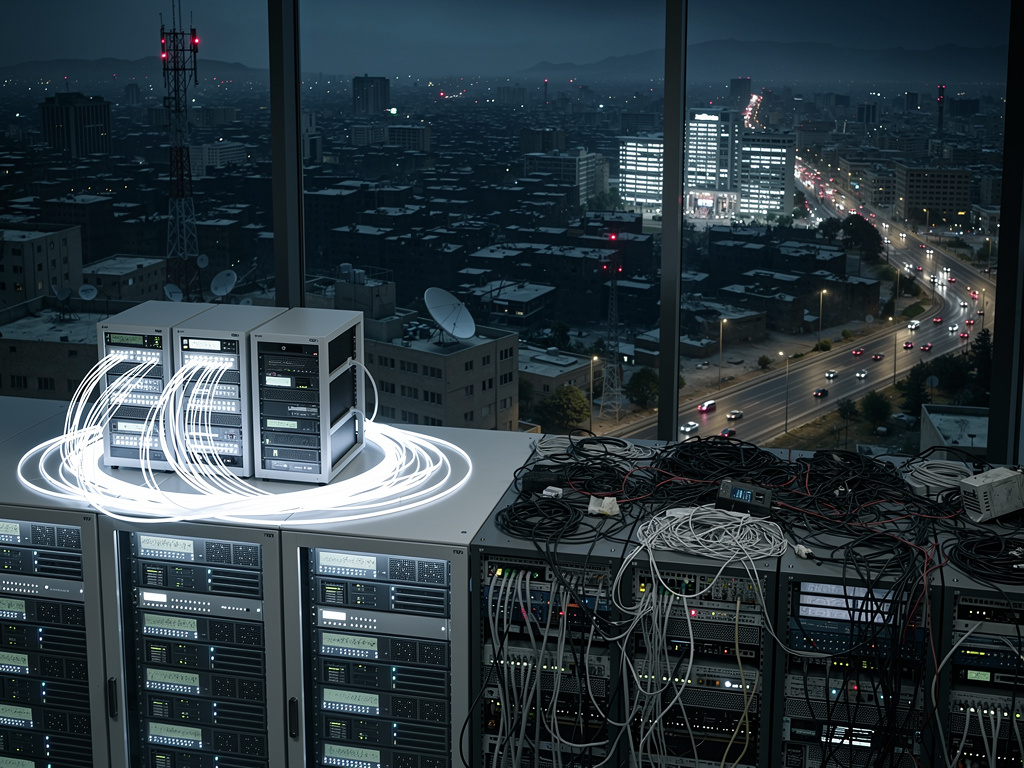
TEHRAN—As Iran’s nationwide internet blackout stretches into its third week, the Islamic Republic’s regime is not merely silencing dissent but forging a permanent divide in digital access. What began as a crackdown on protests erupting in late December has evolved into a live test for “Barracks Internet,” a whitelist-based system granting global web privileges solely to security-vetted elites while confining 85 million citizens to a sealed national intranet. Government spokesperson Fatemeh Mohajerani confirmed international access won’t resume until at least late March, adding it will “never return to its previous form.” (Rest of World)
The blackout, initiated on January 8, 2026, at 8:30 p.m. local time, severed Iran’s National Information Network, dropping connectivity to 3%—likely reserved for state operations, per Georgia Tech’s Internet Intelligence Lab, which deemed it “the most sophisticated and most severe in Iran’s history.” NetBlocks tracked the plunge, noting false traffic spikes to feign normalcy. Protests, fueled by economic woes and calls for regime change, prompted the SNSC and MICT to deploy deep packet inspection upgrades from contractors like Yaftar, targeting VPNs and Starlink signals. (Wikipedia; Filterwatch)
“State media and government spokespersons have already signaled that this is a permanent shift, warning that unrestricted access will not return after 2026,” Filterwatch reported, citing confidential plans for “Absolute Digital Isolation.” Amir Rashidi, Filterwatch director, described a tiered model where global access requires vetting, with infrastructure long prepared. (The Guardian)
Roots of Privilege: White SIM Cards Exposed
Elite access traces to “white SIM cards,” issued since 2013 to about 16,000 vetted individuals—regime loyalists, IRGC members, and officials—for unfiltered browsing. A November 2025 X location feature update spotlighted this hypocrisy, revealing Iranian-origin posts from blocked accounts, including the communications minister’s. President Masoud Pezeshkian ordered their deactivation amid outrage, but the blackout now scales this to national policy. (BBC)
Filterwatch detailed how these cards enable whitelist bypass, contrasting with mass filtering. During the shutdown, Irancell CEO Alireza Rafiei was fired for noncompliance, per Fars News, accelerating foreign telecom exits under escort—likely supplanted by Revolutionary Guard’s Khatam al-Anbia or Huawei. Mahsa Alimardani of Witness called it a regime terror of “Iranians being heard telling their own truth.” (Rest of World)
Historical precedents abound: 2009 post-election blocks birthed the partitioned intranet; 2019 and 2022 protests saw near-totals. Yet 2026’s sophistication—timed disruptions from 4-10 p.m. protest hours, P2P messenger curbs—signals permanence, blending China’s Great Firewall with Russia’s kill switch, per Prof. Alan Woodward. (BBC)
Economic Freefall Amid Isolation Push
Daily losses hit $37 million, per NetBlocks, dwarfing the deputy communications minister’s $4.3 million estimate. E-commerce giant Tipax plummeted from 320,000 to hundreds of shipments daily, idling thousands of workers. Over 10 million Iranians rely on digital platforms; banks, hospitals, pharmacies falter without transactions. Kaveh Ranjbar, ex-RIPE NCC CTO, dubbed it a “digital airlock” unfit for modern economies lacking China’s WeChat equivalents. (Rest of World; Filterwatch)
Foreign partners’ flight exacerbates woes, with Starlink smuggling—50,000 terminals since 2022, fees waived by SpaceX—now jammed via Russian Krasukha-4, yielding 30-80% packet loss. Firmware updates help, but signals remain vulnerable. Hackers pierced state TV on January 19, airing Reza Pahlavi support, underscoring blackout limits. (Wikipedia)
Amnesty International decried the cutoff as cover for violations, with 3,117-5,000+ deaths unverified amid 24,000 arrests. Access Now warned it endangers lives, emboldening impunity. (Amnesty International)
Technical Fortress and Resistance Cracks
Barracks Internet enforces layered infrastructure: enterprise-only messengers block P2P; roaming exports censorship abroad. DPI fingerprints Starlink VPNs; satellite dish seizures prevent overlaps. Project Ainita researchers, anonymous for safety, credit Chinese middleboxes for bidirectional traffic control. (The Guardian; Filterwatch)
Yet resilience persists: 1% connectivity flickers via LEO satellites, mesh relays. Shanaka Perera noted on X that jammers optimized for Netflix failed revolution’s low-bandwidth needs—1.3 kilobits for coordination. Brief January 18 restoration teased filtered intranet tests. (X (Shanaka Perera))
Chatham House analysis warns of repression strategy, with Nayana Prakash highlighting isolation’s unsustainability. International calls mount: activists lobby Trump for direct-to-cell satellites; UN rapporteur Mai Sato tallies casualties. (Chatham House)
Global Echoes and Regime Reckoning
Iran diverges from North Korea’s from-scratch intranet or China’s gradual firewall-plus-apps build. Lacking domestic giants, its rush risks collapse. Doug Madory noted selective elite access, like Ayatollah Khamenei’s X posts amid blackout. A U.S. ex-official called permanent break “plausible and terrifying,” foreseeing economic ruin. (The Guardian)
Rashidi expects political will to dictate rollout: “The authorities are moving towards a tiered system… subject to approval.” Alimardani urges revolutionizing access beyond sovereignty norms. As protests simmer in 185 cities, the digital chasm tests regime survival—elites connected, masses severed, truth throttled but unextinguished. (BBC; Rest of World)


 WebProNews is an iEntry Publication