
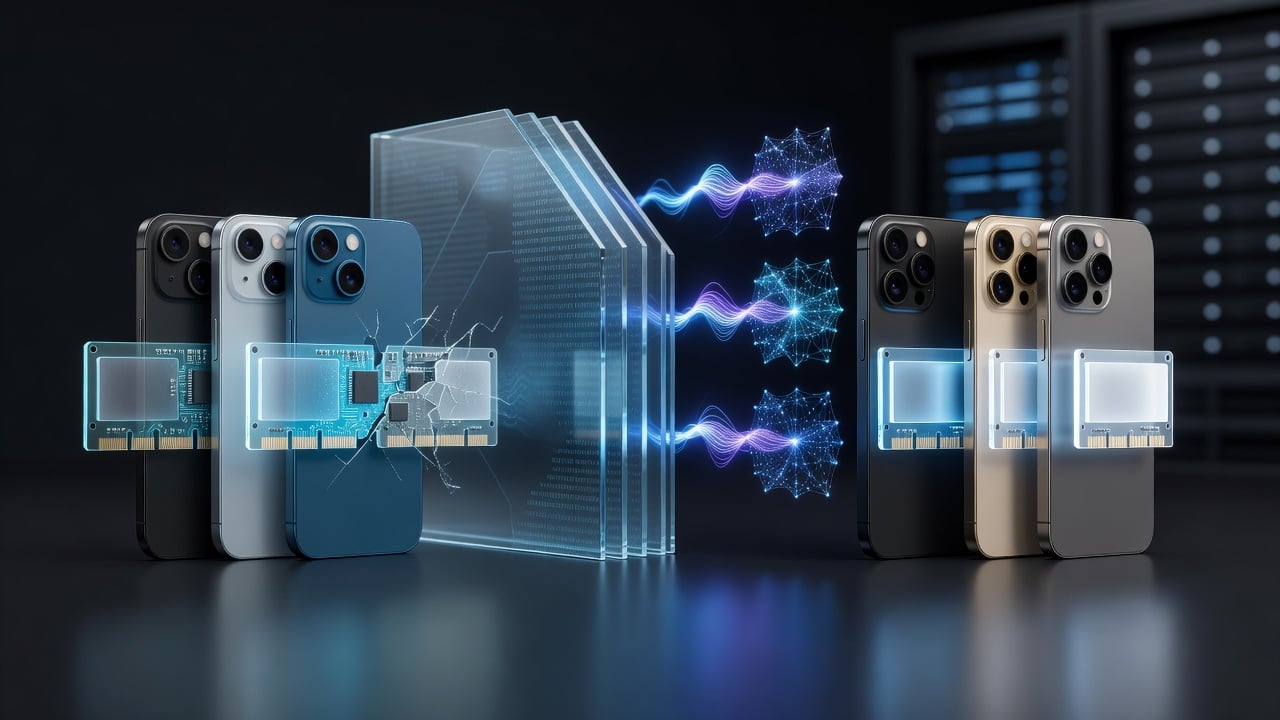
Apple’s next base iPhone faces a familiar constraint. Memory. Reports indicate the standard iPhone 18 and iPhone 18e will ship with 9GB of RAM. That’s an increase from the 8GB in current non-Pro models. But it falls short of the 12GB needed for two key Siri enhancements arriving in iOS 27.
Those features? More expressive Siri voices that let users adjust tone, pace and emotional range. Plus advanced dictation that delivers major gains in accuracy, punctuation and capitalization across the system. Both rely on Apple’s most powerful on-device AI model. Only devices with sufficient unified memory get them.
Ming-Chi Kuo broke the details in a recent post on X. The analyst from TFI Securities wrote, “My latest industry checks suggest Apple’s lower-end 1H27 iPhones, powered by the A20 chip, will move to 9GB DRAM (1.5GB × 6 dies), up from 8GB (2GB × 4 dies) in the current A19 models, to keep the system running smoothly under AI workloads.” He added that the three new high-end models in late 2026 — the two iPhone 18 Pro variants and a foldable — stay at 12GB.
The news lands just days after similar discussions around the iPhone 17. That device left its base version without the same capabilities. MacRumors reported in June that the iPhone 17’s 8GB limit costs it expressive voices and the dictation accuracy boost. Everything else in the Siri AI package — personal context, onscreen awareness, web answers — works fine on lower memory. These two stand apart.
Apple first detailed the restrictions at WWDC 2026. The company tied the advanced model to its top hardware at the time: iPhone 17 Pro, Pro Max and the slim iPhone Air. Owners of older devices or base models got partial access. The pattern repeats. But the iPhone 18’s staggered launch adds a twist. Pro models arrive in fall 2026. Standard versions follow in spring 2027. By then buyers may expect full parity.
Supply chain realities shape these choices.
Apple balances cost, availability and performance. DRAM prices fluctuate. Suppliers like Samsung, SK Hynix and Micron face demand from AI servers and phones alike. Giving every iPhone 12GB could raise prices or squeeze margins. The 9GB configuration for base models reflects that pressure. It still supports most Apple Intelligence tasks. Just not the most demanding local processing for voice nuance and transcription precision.
Earlier optimism clashed with these figures. In mid-June, 9to5Mac cited a KB Securities note suggesting the entire iPhone 18 lineup would get 12GB. Analysts at the firm argued Apple wanted broader adoption of its AI features. “The company will do this, analysts say, to increase adoption of Siri AI and encourage customers to buy new iPhones,” the report said. Those who hesitate at Pro prices might accept a modest bump for the regular model. That view no longer holds.
Kuo’s update carries weight. His supply chain contacts have proven accurate on component decisions for years. The shift to 1.5GB dies stacked six high represents a technical compromise. It delivers more capacity than before without the full jump to 12GB. Yet the advanced model demands the latter. On-device inference at that scale needs the headroom.
But these two features form a small slice of the overall package. Most users will still see smarter Siri. The assistant gains a chatbot-like interface, better context from personal data, visual intelligence for camera-based queries and web-sourced answers. All run on devices with Apple Intelligence support. The expressive voices and dictation improvements feel like polish. They make interactions feel more human. They reduce friction in voice input. Missing them won’t break the experience. It may disappoint those who upgraded expecting the full set.
Recent coverage reinforces the divide. Forbes examined Kuo’s claims hours after they surfaced. David Phelan noted the upgrade in RAM is welcome. “But it seems likely that this increase won’t be enough for the most advanced features such as expressive voices on Siri and enhanced dictation.” The article highlights how the Pro models retain 12GB unchanged. Base iPhone 18 buyers get more than last year. They just don’t clear the new bar.
Industry watchers debate the strategy. Some see it as deliberate segmentation. Premium devices showcase the best AI. Others view it as a temporary limit driven by component costs. Memory prices could ease by 2027. Apple might adjust. Or the company could accept the split to protect profits while it scales its own silicon.
And the conversation continues on social platforms. Recent posts on X highlight user frustration. One analyst summary noted the base models get the bump but still miss the dictation and voice features. Another pointed out that 9GB may suffice for most daily AI tasks. The split could push more buyers toward Pro variants. Or it could highlight that on-device AI progress depends on hardware that advances faster than some expect.
Apple has not commented publicly on the RAM configuration for next year’s lineup. The company rarely does before official announcements. Yet the pattern from iPhone 17 suggests these limits are set early in the design cycle. Developers already work within the constraints when building for iOS 27.
Consumers face a clearer choice now. Want the complete Siri AI toolkit? Look to the Pro models or wait to see if any last-minute changes emerge. The standard iPhone 18 will deliver capable performance, strong battery life and the core Apple Intelligence experience. It simply won’t voice Siri with quite the same flair or transcribe speech with the highest possible fidelity on device.
That distinction matters for power users. It may not sway the majority. Still, as AI features grow more sophisticated, hardware requirements tighten. The iPhone 18 episode shows how memory becomes the new differentiator. Not just screen size or camera count. Memory determines which intelligence level you actually get.
Further reports could shift the picture. Supply negotiations sometimes yield surprises. For now the data points one direction. Base iPhone 18 owners will miss two notable upgrades. The gap between tiers widens once again.


 WebProNews is an iEntry Publication