
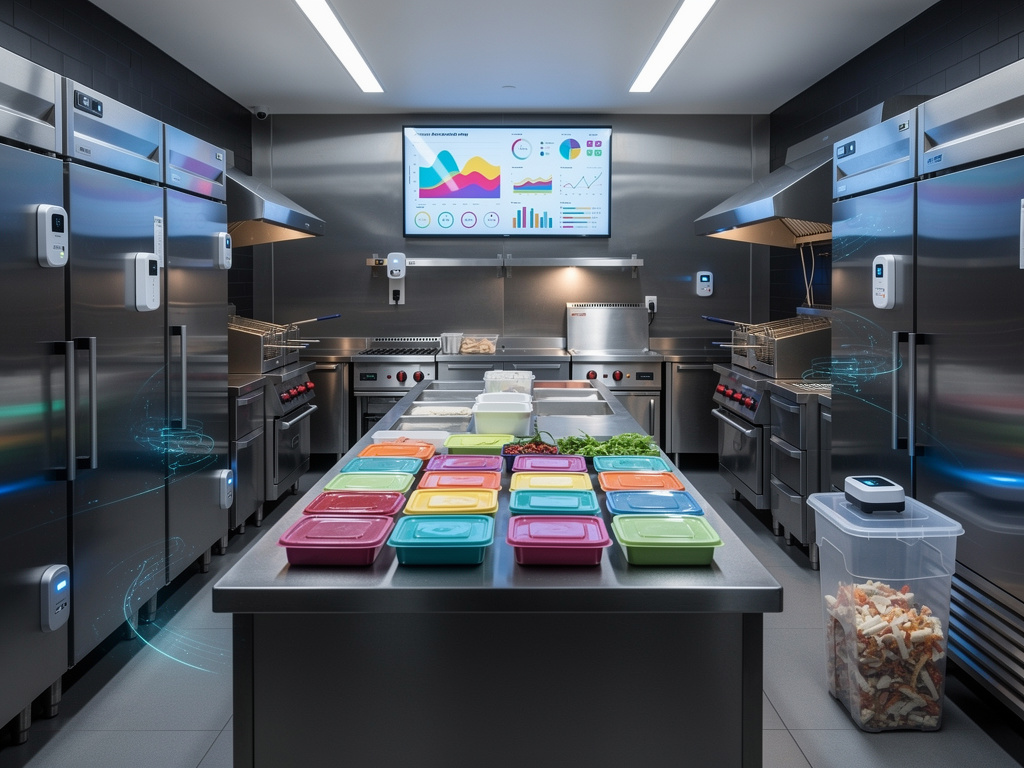
Quick-service and fast-casual restaurants, squeezed by soaring labor and food costs, are turning to Internet of Things technology to safeguard food safety and slash operational waste. A new report from MachineQ, a Comcast company, reveals nearly half of U.S. restaurant leaders—49%—suffered revenue losses from equipment failures last year, with 24% estimating $1,001 to $5,000 per hour in disruptions. “Restaurants today are operating in one of the toughest cost environments we’ve seen with the average annual spend for labor and perishable food per restaurant location alone exceeding one million,” said Tom Woodbury, Restaurant Technology Lead at MachineQ.
The 2026 Restaurant Readiness: Ops Meets Tech Report, based on a Censuswide survey of over 400 U.S. quick-service and fast-casual operators, underscores IoT’s rising appeal. More than 86% plan to invest in or already use IoT systems within two years for monitoring, compliance, and multi-site management. Back-of-house automation emerges as key to front-of-house success, addressing food safety, supply chain issues, and waste reduction.
Operators with 50 or more locations show even stronger enthusiasm, at nearly 70%, for tech-driven gains. Predictive maintenance via IoT sensors on refrigerators and fryers detects anomalies early, preventing spoilage of $10,000 average inventories per fridge. MachineQ estimates such tools could save $275,000 yearly across 100 stores by averting failures every three years.
Equipment Failures Hit Profits Hard
Equipment downtime plagues the sector, where restaurants consume five to seven times more energy per square foot than typical commercial buildings. MachineQ’s solutions extract data from legacy gear like ovens and dishwashers, sending real-time alerts on irregularities to curb disruptions. “Back-of-house automation is proving to be a critical lever—not just to help operators prevent costly downtime, but to help improve food safety, reduce waste, and give staff more time to focus on customers,” Woodbury added in the report.
FSMA 2026 rules amplify urgency, demanding electronic records of critical tracking events like temperature control to trace spoilage risks. Manual logging, prone to errors and eating 30 minutes daily per employee, gives way to IoT sensors that log data automatically. FoodSafetyTech notes operators must prove products stayed optimal during handoffs, impossible manually across dozens of sites.
Chipotle’s past outbreaks sickened over 1,100 from 2015-2018, with 37% of diners eating there less due to safety fears, per surveys cited by MachineQ. IoT averts such crises by enabling remote oversight of fridge and freezer conditions across chains.
Temperature Sensors Transform Compliance
IoT temperature monitors, using LoRaWAN for penetration through dense materials, ensure cold storage stays safe, preempting bacterial growth. Unlike paper logs that divert staff from guests, these systems centralize data, cutting human error and freeing time for service. MachineQ highlights scalability: one infrastructure supports leak detection, pest control, and people counting.
Energy monitoring via CT clamps flags inefficient usage, optimizing HVAC and equipment schedules. Operators save on utilities while sustaining comfort. Across 1,000 stores, waste reductions alone could hit $3.3 million annually, per MachineQ analyses on foodservice ROI.
63% of surveyed leaders see real-time energy visibility curbing costs and aiding sustainability. With 46% hiking tech budgets ahead of staffing or menus, IoT leads investment priorities amid inflation and shortages.
Scalable Networks Power Multi-Site Gains
MachineQ’s LoRaWAN networks handle vast device volumes, vital for chains. Flexible mounting withstands kitchen rigors—frequent door slams, cleaning—while FDA-grade plastics suit food zones. Predictive analytics spot wear, like fridge compressor spikes, before breakdowns spoil inventory.
Broader trends align: AI-IoT fusion grows the food safety market from $2.7 billion in 2024 to $13.7 billion by 2029, per BCC Research. Sensors track humidity, pH, even pathogens via biosensors, per MDPI studies on smart kitchens.
Restaurantware emphasizes IoT’s predictive maintenance, alerting to failures pre-downtime. In high-stakes quick-service, where digital sales hit 54% by 2025 per Lavu, seamless back-end tech ensures front-end speed.
Regulatory Pressures Accelerate Adoption
January 20, 2026, FSMA deadline looms, mandating traceability plans and CTE records. FoodSafetyTech warns manual methods fail at scale; IoT provides verifiable data. ComplianceMate predicts IoT aggregation across transport and storage will dominate.
QSR Magazine forecasts 2026 investments in IoT for “smart kitchens,” monitoring portions, dwell times, energy. MachineQ’s power systems track at receptacle or breaker levels, suiting energy-hungry restaurants.
58% overall spot automation upsides, per the report. As tariffs and stagflation loom, per Bank of America, efficient operators gain edges. Today’s Restaurant details IoT aiding handwashing compliance, where CDC finds only 25% of workers wash post-raw handling.
ROI Unlocks Broader Deployments
Initial temperature pilots expand easily, lowering TCO versus siloed solutions. MachineQ stresses self-install kits or pro services for swift rollout. Waste cuts of 15% via AI-inventory tie-ins, per Supy, amplify gains.
IFT.org notes 2025’s digital surge, with FSMA driving pathogen tech. GlobeNewswire projects food automation booming as labor costs rose 68% in 2024, per Food Engineering.
86% IoT commitment signals tipping point. Chains automating back-of-house will outpace rivals, turning sensors into profit engines amid tight margins.


 WebProNews is an iEntry Publication