
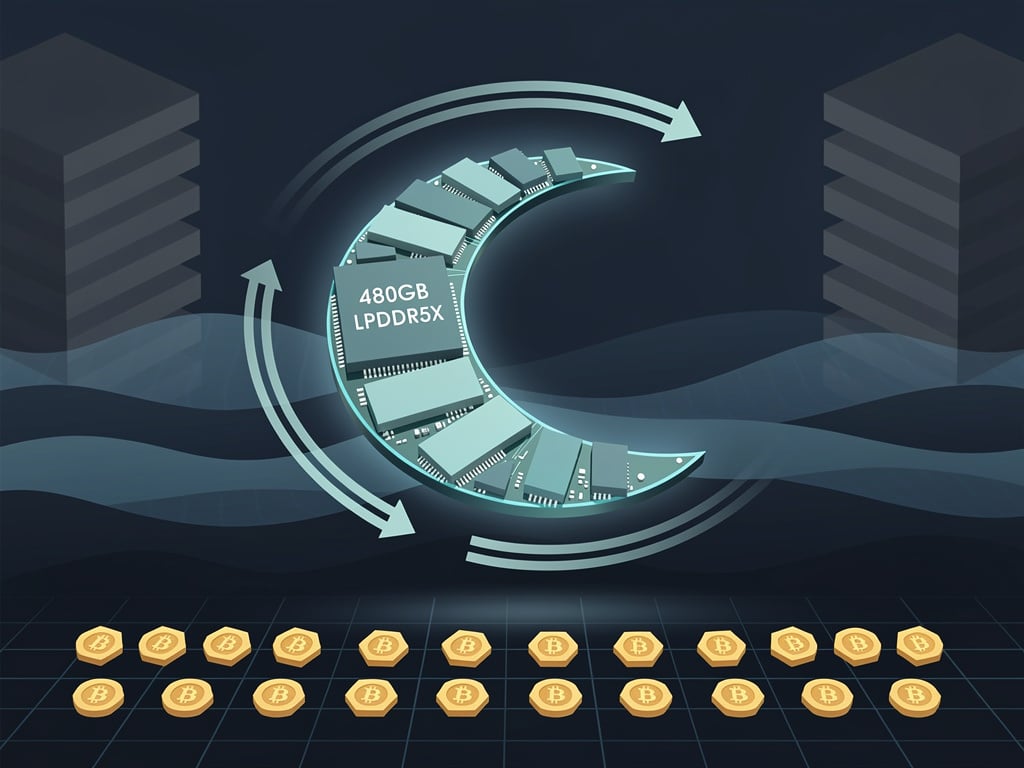
Intel intends to ship a new artificial intelligence accelerator by the end of 2026. The chip, known as Crescent Island, relies on far less expensive memory and simpler cooling than the high-end offerings from Nvidia and AMD. Executives at the company describe the move as a pragmatic reset after years of missteps in the AI hardware race.
Kevork Kechichian leads Intel’s data center group. He joined from Arm last year. In comments to the Financial Times, Kechichian said the company is “starting with the basics” to rebuild its position. Past efforts faltered. The Gaudi series of AI chips posted weak sales. Its planned successor, Falcon Shores, was canceled. So Intel shifted focus. Crescent Island targets inference. That is the phase where trained models answer user queries. Training large models remains Nvidia’s stronghold.
And the design choices reflect hard lessons. Nvidia’s Blackwell chips and AMD’s competing accelerators depend on high-bandwidth memory, or HBM. That memory commands premium prices and requires complex liquid cooling systems in data centers. Crescent Island sidesteps both. It uses LPDDR5X memory. The chip supports up to 480GB of it. The approach keeps costs down and allows air cooling in standard server racks. Power draw stays lower. Operators avoid the expense and complexity of liquid infrastructure. Simpler. Cheaper. Deployable at scale.
Customer sampling begins in the second half of 2026. Limited shipments follow by year end. The entire project took 18 months. That speed signals urgency under new leadership. Chief Executive Lip-Bu Tan assumed the role last year after Pat Gelsinger’s exit. Tan has cut costs and refocused spending. Intel shares have surged more than 200 percent since the start of the year. The broader semiconductor rally helped. Yet the stock move also reflects hope that Intel can carve out a viable share of the AI infrastructure boom. CNBC reported in May that Wall Street was shifting attention from Nvidia toward Intel, AMD and memory suppliers as AI demand moves from chatbots toward agentic systems and inference workloads.
But can cost and efficiency overcome Nvidia’s software moat? The question hangs over every challenger. Nvidia’s CUDA platform dominates developer mindshare. AMD has narrowed the gap with its own software stack. Intel’s oneAPI and OpenVINO tools have improved. Still, adoption lags. Kechichian acknowledged the history. “We decided to start rebuilding our muscles in AI… [but] we are not particularly aiming for [the training market] based on past experience,” he told the Financial Times.
The memory decision matters. HBM remains in tight supply. Prices stay elevated. LPDDR5X, used widely in consumer devices, scales more easily and costs less per gigabyte. Up to 480GB per chip gives Crescent Island ample capacity for many inference tasks. Models do not always need the absolute highest bandwidth. They benefit from large capacity at reasonable cost. Data center operators facing power constraints notice the difference. Air-cooled racks consume less energy than liquid-cooled setups. Total cost of ownership drops. Bitcoin miners have begun to pivot. Terawulf, for one, has locked in billions in AI compute contracts. Bitcoin.com News highlighted how such lower-cost designs appeal to these firms expanding beyond cryptocurrency.
Intel also plans to manufacture the chip in its own factories. The company has spent years and tens of billions rebuilding U.S. wafer fabs under the CHIPS Act. Kechichian said the intent is clear. “For all data center products we are moving aggressively into our own foundry. That’s the intent in general.” Building internally trims reliance on TSMC. It potentially lowers unit costs over time. The U.S. government has taken a 10 percent stake in Intel to support domestic production. Export rules add another layer. Washington restricts advanced AI chips to China. Kechichian noted that certain tiers of Crescent Island might comply. “There are tiers of [the chip] that might be OK there… and we’ll confirm that over time: clearly there is demand for that particular price point in that particular market.”
Recent coverage reinforces the stakes. The Financial Times first broke details of the year-end target and the cheaper memory and cooling approach. PANews and Gate.com echoed the claims within hours on June 1, underscoring how quickly the story spread across industry wires. Meanwhile, Nvidia continues to expand. The company announced its own Arm-based AI chip for Windows laptops on the same day, directly challenging Intel and AMD in client devices, Bloomberg reported. AMD pushes rack-scale liquid-cooled systems like Helios. The contrast could not be sharper. Intel bets on accessible, power-efficient inference at lower upfront cost. Rivals double down on maximum performance regardless of infrastructure demands.
Success is far from assured. Intel’s data center GPU revenue still trails far behind Nvidia’s tens of billions. Gaudi 3 generated far less than the $500 million once hoped. Software maturity will decide whether enterprises actually deploy Crescent Island at volume. Yet the design philosophy resonates. Hyperscalers and enterprises hunt for ways to control AI spending. Power grids strain under data center growth. If Crescent Island delivers competitive tokens per dollar while running in ordinary air-cooled racks, it could gain traction where raw FLOPS matter less than economics.
So Intel has drawn a line. No longer chasing Nvidia’s training crown. Instead it offers an alternative for the exploding inference market. The chip runs cooler. It costs less to deploy. And it arrives at a moment when buyers question whether every workload needs the most expensive accelerator on the shelf. The coming months of sampling will reveal whether customers agree. But the message is clear. Intel refuses to concede the AI silicon market. It simply intends to win a different slice. With its own fabs, cheaper components, and a narrowed focus on inference, the company has constructed a credible opening bid.


 WebProNews is an iEntry Publication