
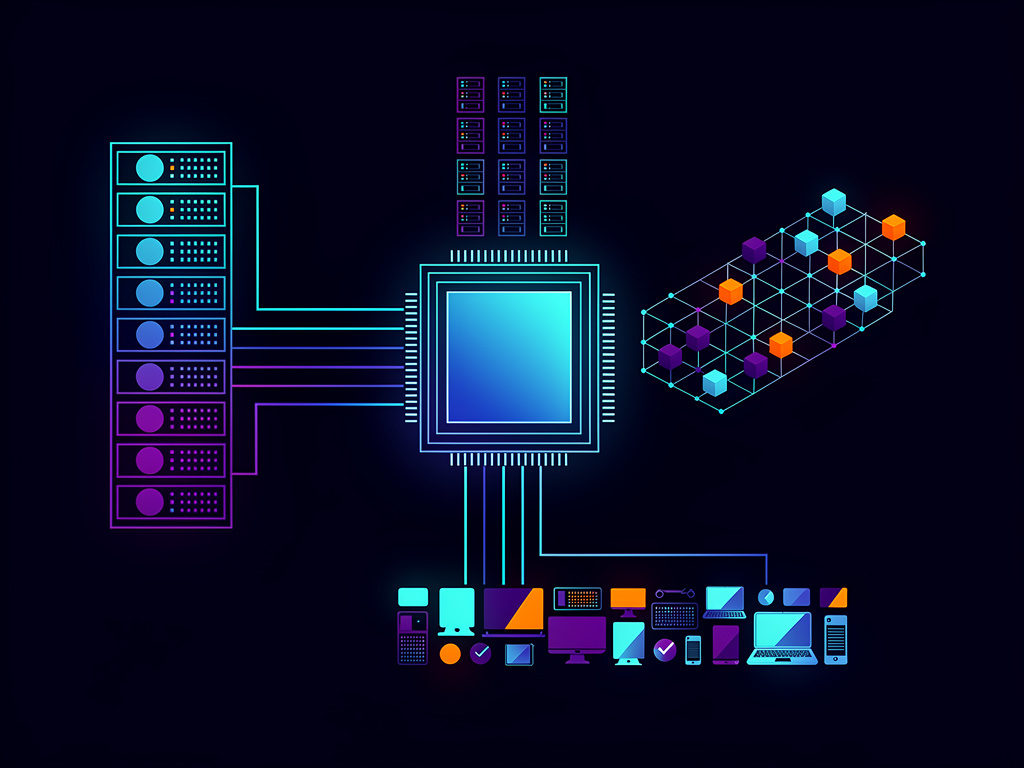
Intel Corp. rolled out a slate of AI-focused hardware and systems at Computex 2026. The moves stretch from dense data-center processors to disaggregated inference clouds and client platforms. They arrive as the company fights to regain ground lost to rivals in both servers and personal computers.
Executives positioned the announcements as proof that Intel’s long-troubled manufacturing bet is beginning to pay off. At the center sits the Intel 18A process node. It now powers the first server silicon to reach customers and underpins next-generation client chips already shipping.
The Yahoo Finance article from June 9, 2026 captured the breadth. Intel detailed rack-scale AI infrastructure, an agentic cloud offering, vertical industry solutions, Xeon 6+ processors, and continued momentum in PCs, gaming handhelds and physical AI systems.
But the real story lies in the silicon. Xeon 6+, formerly known as Clearwater Forest, marks the first data-center product built on 18A. It packs up to 288 efficiency cores. Early benchmarks shared by the company claim a 30 percent per-thread performance gain over a 192-core AMD EPYC 9965 chip while sipping less power. Those numbers matter. They represent Intel’s first credible shot at high-core-count cloud workloads in years.
Production realities have shifted. Intel originally targeted earlier availability for Clearwater Forest. Manufacturing yields on the new node forced a slip into the first half of 2026. Yet the company now says the chips have reached customers. That marks tangible progress after multiple process delays that once threatened its foundry ambitions.
Tom’s Hardware reported on May 31, 2026 that the flagship Xeon 6990E+ delivers up to 576 MB of L3 cache and supports dual-socket configurations that double core counts. The design uses a multi-tile approach. Compute tiles sit on 18A. Base tiles, built on the older Intel 3 node, hold massive amounts of cache. The split lets Intel scale cache independently of core counts.
ServeTheHome noted on June 1, 2026 that Clearwater Forest targets cloud-native workloads where Arm-based alternatives have gained share. Intel designed the all-E-core part to counter cheaper, lower-power chips from competitors. Higher per-core performance and larger caches aim to keep those workloads on x86.
HotHardware added context from an earlier MWC 2026 disclosure. The processor supports 96 PCIe 5.0 lanes and 12 channels of DDR5-8000 memory. Power targets sit around 450 watts for the highest core SKUs. That represents a step forward from prior generations on efficiency.
Yet the server launch forms only one piece. At Computex, Intel also unveiled rack-scale AI infrastructure built around Xeon processors paired with SambaNova SN-50 reconfigurable dataflow units. The setup targets customers scaling inference and agentic workloads. It promises easier expansion than bolting together discrete servers.
A new venture called Vector Core Compute stepped forward with an agentic cloud offering. Backed by Vista Equity Partners and Cambium Capital, the company demonstrated fully disaggregated inference. The system mixes Intel Xeon processors, SambaNova RDUs and NVIDIA Blackwell GPUs. The mix lets each workload run on the most suitable accelerator.
Intel’s official release on June 2, 2026 listed additional partnerships. Foxconn, Siemens, Hitachi, Echo Neurotechnologies and Greenstone Biosciences all signed on for vertical solutions. These span industrial automation, healthcare and scientific computing. Each collaboration pairs Intel silicon with domain-specific software or hardware.
Client-side efforts received equal billing. The Core Ultra Series 3 family, the first built on 18A, began shipping after its CES 2026 debut. Intel claims class-leading battery life, stronger graphics and faster AI performance. Laptop makers including Dell, HP and Lenovo have shown systems based on the chips.
Gaming handhelds gained attention too. New processors aimed at portable devices promise better frame rates and longer play times. Physical AI systems, a category that covers robotics and edge inference, also showed forward momentum. Intel highlighted reference designs and early customer wins.
But questions linger. AMD continues to press advantages in traditional server markets. NVIDIA dominates accelerator sales. Intel’s foundry business has yet to land major external customers at scale. Chief Executive Lip-Bu Tan, who took the helm in late 2024, has focused on execution and cost control. Progress on 18A represents his most visible win so far.
TechCrunch covered the Panther Lake announcement in October 2025. That client processor family shares the 18A node with Clearwater Forest. Early samples showed 50 percent faster CPU performance and similar graphics gains versus prior generations. Those improvements carried forward into the Series 3 products now in market.
Intel has also pushed software. Its SuperClaw hybrid agentic AI tool, detailed in a May 2026 Yahoo Finance report, cuts cloud token usage by 70 percent on compatible PCs. The development signals that Intel sees client AI as more than just local inference. It wants to reshape how enterprises split work between device and cloud.
Analysts remain cautious. Intel stock has rebounded from 2024 lows but still trades well below peaks. The company must convert these hardware announcements into design wins and revenue. Rack-scale systems and vertical solutions could help. They move Intel beyond selling chips toward selling complete AI infrastructure.
Disaggregated inference represents one bet on that future. Traditional servers couple CPU, memory and accelerators tightly. The new cloud model separates them. Customers pay only for needed resources. Vector Core Compute’s demonstration suggests the approach can work at enterprise scale when different vendors’ silicon cooperate.
Intel supplied the Xeon hosts. SambaNova contributed dataflow units tuned for certain inference patterns. NVIDIA provided GPUs for training and high-throughput tasks. The collaboration shows a pragmatic streak. Intel no longer insists on owning every accelerator in the rack.
That shift matters for its foundry story. If 18A delivers competitive yields and performance, external customers may finally arrive. Clearwater Forest serves as the first high-volume test case. Success here could open doors for future custom chips or co-packaged optics.
Challenges remain on the process side. PowerVia and RibbonFET transistors bring complexity. Early 18A yields reportedly lagged expectations, forcing schedule slips. Intel now claims those issues sit behind it. Only volume production over the next quarters will prove the point.
Meanwhile, the PC business stabilizes. Series 3 chips bring meaningful battery and performance gains. AI features built into the silicon let Windows Copilot and third-party applications run locally. That reduces latency and cloud costs. OEMs have responded with refreshed lineups across consumer, creator and commercial segments.
Gaming handhelds add a niche but growing category. Intel’s latest chips compete with AMD APUs and custom Arm designs. Longer battery life could prove decisive in a market where users expect all-day play.
Physical AI systems point toward robotics and autonomous machines. Intel supplies both the compute and some of the sensor fusion technology. Partnerships with industrial players aim to speed adoption.
Taken together, the Computex announcements paint a company in transition. Manufacturing technology has advanced. Product portfolios span from cloud racks to pocket-sized devices. Execution gaps that once defined Intel have narrowed.
Whether that proves enough depends on customers. Server buyers want clear performance and efficiency advantages. PC makers need consistent supply and competitive pricing. Foundry prospects seek proven nodes and open tooling.
Intel has delivered the silicon. Now comes the harder part: turning demonstrations into design wins that stick. The next few quarters will reveal whether 18A becomes the foundation for a sustained comeback or merely another promising but incomplete step.


 WebProNews is an iEntry Publication