
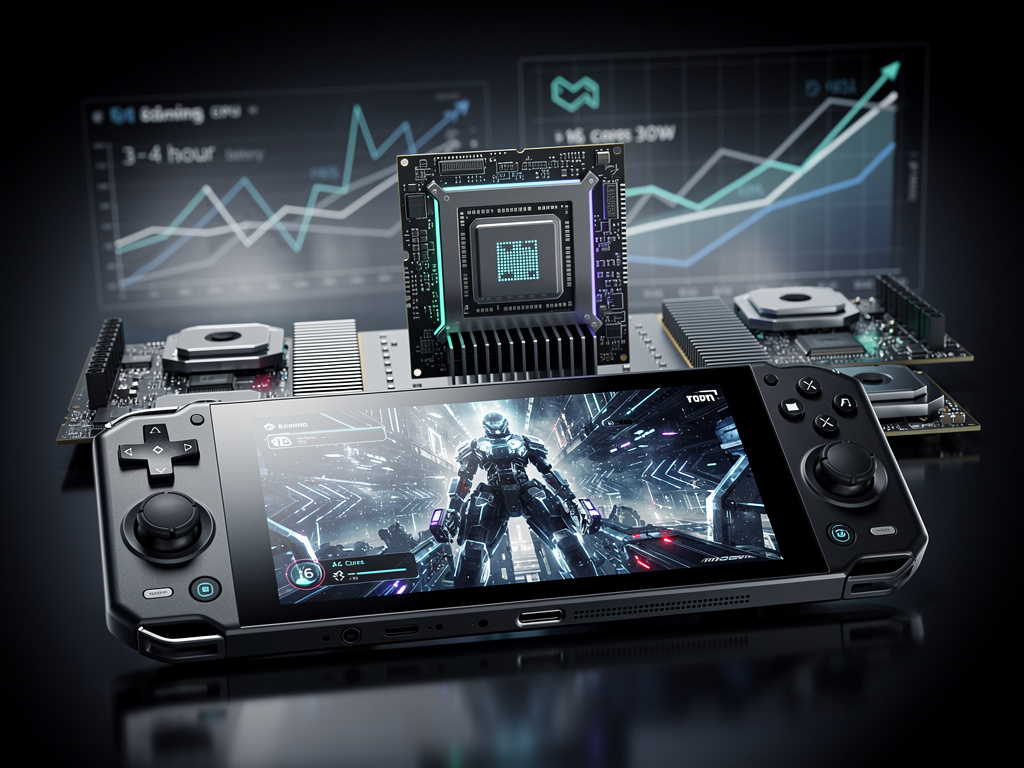
Intel has thrown a notable curveball into the handheld gaming market with the announcement of its Arc G3 Extreme graphics solution. This development, covered extensively by Digital Trends, positions the company to challenge both AMD and Nvidia in a segment that has seen explosive growth since the launch of devices like the Steam Deck and ASUS ROG Ally.
The Arc G3 Extreme represents Intel’s most ambitious move yet into discrete graphics for portable systems. Unlike previous Arc efforts that focused primarily on laptops and desktop cards, this new chip targets the specific thermal and power constraints of handheld consoles. Sources indicate the GPU will feature up to 16 Xe cores, a significant step up from the integrated graphics found in most current handhelds. This configuration could deliver performance levels approaching those of a mid-range desktop GPU from just a few years ago, all while operating within a power envelope that stays under 30 watts during typical gameplay.
Battery life has always presented the biggest obstacle for handheld gaming PCs. Current devices often struggle to maintain high frame rates without draining their batteries in under two hours. The Arc G3 Extreme addresses this through several architectural improvements. Intel has optimized the Xe cores for lower voltage operation, allowing the chip to scale its clocks more efficiently based on the demands of different games. Early projections suggest devices equipped with this GPU might achieve three to four hours of playtime at 1080p with medium settings in demanding titles, a meaningful improvement over existing options.
Memory bandwidth receives special attention in this design. The Arc G3 Extreme supports LPDDR5X memory running at speeds up to 8533 MT/s. This high-speed memory interface helps compensate for the relatively narrow bus width inherent in compact devices. Combined with intelligent data prefetching algorithms, the setup should reduce stuttering in open-world games where texture streaming demands can overwhelm lesser solutions. Developers working with early samples have reported smoother performance in titles like Cyberpunk 2077 and Alan Wake 2 compared to current handheld hardware.
Intel has also focused on software optimization, an area where the company has faced criticism in previous Arc generations. The latest drivers include specific profiles for popular handheld form factors, automatically adjusting settings like power limits and fan curves based on the device’s thermal characteristics. This approach differs from simply repackaging desktop drivers, instead creating a dedicated software branch that accounts for the unique input methods and display requirements of portable systems.
Competition in the handheld space has intensified over the past year. AMD’s Ryzen Z1 Extreme has powered several successful devices, offering solid integrated graphics performance within a 15 to 30 watt range. Nvidia’s rumored next-generation handheld solutions are expected to build upon the success of the Switch while incorporating DLSS technology for improved image quality at lower resolutions. Intel’s entry adds another strong contender, potentially driving all three companies to accelerate their development cycles.
The manufacturing process for the Arc G3 Extreme relies on TSMC’s 4nm node, providing a density advantage that allows more computational units within the limited silicon area available for handheld designs. This process choice also contributes to better power efficiency compared to previous Intel graphics chips built on older nodes. Thermal output remains manageable, with the entire package designed to work with simple vapor chamber cooling solutions that fit within the slim chassis preferred by manufacturers.
One particularly interesting aspect involves Intel’s approach to ray tracing. The Arc G3 Extreme includes dedicated acceleration hardware that has been refined since the first generation cards. While full path tracing remains beyond the capabilities of any current handheld, the improved ray tracing units allow for selective effects like improved reflections and shadows without devastating the frame rate. This capability could help Intel differentiate its platform in games that support these features, offering visual advantages that might sway consumers deciding between competing devices.
Display technology plays a central role in how these graphics capabilities translate to the user experience. Most handhelds target 1080p resolution on 7 to 8 inch screens, where the Arc G3 Extreme should excel. The chip supports variable refresh rates up to 144Hz, enabling tear-free gameplay when paired with appropriate displays. Some manufacturers are reportedly considering 1200p panels to take fuller advantage of the GPU’s capabilities while maintaining reasonable battery consumption.
Software compatibility has been a historical weak point for Intel graphics, but recent improvements suggest better prospects. The company has worked closely with Valve to ensure Proton compatibility for Steam Deck-like experiences. DirectX 12 Ultimate features receive full support, including mesh shaders and sampler feedback streaming that can improve performance in modern game engines. This comprehensive API coverage should minimize the number of titles that fail to run properly on Arc-based handhelds.
Pricing remains a key factor that will determine market success. While Intel has not officially announced costs, analysts project that devices featuring the Arc G3 Extreme could start around $599 for base models, positioning them competitively against high-end Steam Deck OLED variants and ROG Ally configurations. The value proposition strengthens if Intel can deliver consistent performance across a wide range of games without requiring users to constantly tweak settings.
Manufacturing partners have already begun designing systems around this new GPU. Multiple Chinese manufacturers known for their work with previous Intel projects have prototype devices in testing, featuring various control layouts and screen technologies. Some designs incorporate hall effect joysticks to address drift issues that have plagued earlier handhelds, while others focus on improved ergonomics for longer play sessions.
The timing of this announcement aligns with growing consumer fatigue regarding current handheld limitations. Many users have expressed desires for better performance in newer games without sacrificing portability. Intel appears to have listened to these concerns, creating a solution that balances capability with practical constraints. Early benchmarks shared by developers show the Arc G3 Extreme achieving frame rates that often exceed current handhelds by 40 to 60 percent in CPU-bound scenarios, suggesting the integrated CPU architecture also received meaningful upgrades.
Power delivery systems have been redesigned to support the higher performance targets. The Arc G3 Extreme can draw up to 45 watts during brief bursts when connected to power, allowing for desktop-like performance during docked play. This flexibility makes the platform attractive for users who want both portable and stationary gaming experiences from a single device. Docking stations with additional cooling could potentially unlock even higher sustained clocks for those seeking maximum performance.
Intel’s history with discrete graphics has included both successes and setbacks. The original Arc desktop cards faced driver issues and inconsistent performance that limited their market impact. Learning from those experiences, the company has invested heavily in software development for this handheld-focused product. Dedicated teams now focus exclusively on gaming optimization, working directly with studios to implement specific features that enhance gameplay on Intel hardware.
Thermal management strategies extend beyond the GPU itself. The entire platform includes sophisticated power management that coordinates between the processor, graphics, memory, and display subsystems. This holistic approach prevents any single component from becoming a bottleneck while maximizing battery longevity. Users can expect more consistent performance throughout a gaming session rather than seeing frame rates drop as the battery depletes.
Game developers have shown increasing interest in optimizing for handheld platforms. The success of the Steam Deck demonstrated a viable market for PC-style gaming on the go. With Intel now offering more powerful hardware options, studios may begin targeting these devices more deliberately during development. This could lead to better default settings and fewer technical issues for players using Arc-based systems.
The potential impact extends beyond pure gaming performance. Content creators who use handhelds for light video editing or streaming might find the Arc G3 Extreme’s capabilities particularly appealing. The GPU includes Quick Sync encoding hardware that has been updated for improved efficiency with modern codecs. This allows for high-quality streaming with minimal impact on gaming performance, opening new use cases for the platform.
Looking at the broader market context, handheld gaming continues to expand as consumers seek alternatives to traditional consoles and high-end PCs. The flexibility of running a full PC operating system on a portable device appeals to many users who want access to their entire game libraries without being tethered to a desk. Intel’s entry strengthens this category by providing another performance tier that manufacturers can choose from when designing new products.
Compatibility with existing game stores and launchers should be straightforward. The Arc G3 Extreme runs standard Windows or Linux distributions, ensuring users can access Steam, Epic Games Store, and other platforms without modification. This universal compatibility represents a significant advantage over closed systems that limit users to specific storefronts.
As development continues, Intel will likely release more detailed specifications and official performance numbers. The current information suggests a product that could genuinely alter the competitive balance in handheld gaming. Manufacturers now have a third major GPU option to consider, which should ultimately benefit consumers through increased innovation and more choices in the market.
The Arc G3 Extreme demonstrates Intel’s commitment to the portable gaming segment. By addressing the specific challenges of power consumption, thermal constraints, and software optimization, the company has created a solution that feels purpose-built rather than adapted from other product lines. This focused approach may prove decisive as the handheld market matures and consumers become more discerning about performance and battery life tradeoffs.
Early indications point to a strong reception from both developers and hardware partners. If Intel can maintain the momentum and deliver on its performance promises, the Arc G3 Extreme could establish the company as a serious contender in a market that was previously dominated by just two players. The coming months will reveal how this new graphics solution performs in real-world conditions and whether it lives up to the substantial expectations it has generated.


 WebProNews is an iEntry Publication