
Intel’s Panther Lake Gambit: Custom Silicon Aims to Reshape Portable Gaming Power
In the fast-evolving realm of portable computing, Intel is making a strategic push to challenge the dominance of rivals in the handheld gaming sector. At the recent CES 2026 event, the chip giant unveiled plans for a custom variant of its Panther Lake CPU, specifically tailored for handheld gaming PCs. This move comes as Intel seeks to capitalize on the growing demand for high-performance, battery-efficient devices that can deliver console-like experiences on the go. Drawing from announcements and insider insights, this development signals Intel’s intent to not just compete but potentially redefine standards in integrated graphics and power management for compact form factors.
The Panther Lake architecture, part of Intel’s Core Ultra Series 3 lineup, represents a significant milestone as the first chips built on the company’s advanced 18A process node. This manufacturing breakthrough promises enhanced efficiency and performance, crucial for devices where space and thermal constraints are paramount. According to details shared during Intel’s CES keynote, the custom Panther Lake variant is designed to optimize GPU performance, addressing past shortcomings in Intel-based handhelds like the initial MSI Claw, which struggled with battery life and graphical prowess compared to AMD-powered competitors such as the Steam Deck or Asus ROG Ally.
Sources indicate that this custom CPU, potentially branded as Intel Core G3, will feature variants of the Panther Lake die engineered explicitly for handheld applications. This specialization allows Intel to prioritize GPU resources, potentially surpassing the capabilities of the standard Arc B390 integrated graphics unit. Industry observers note that such customization could bridge the gap between integrated and discrete graphics performance, making Intel a more viable option for gamers seeking portable power without compromises.
Unveiling the Technical Edge
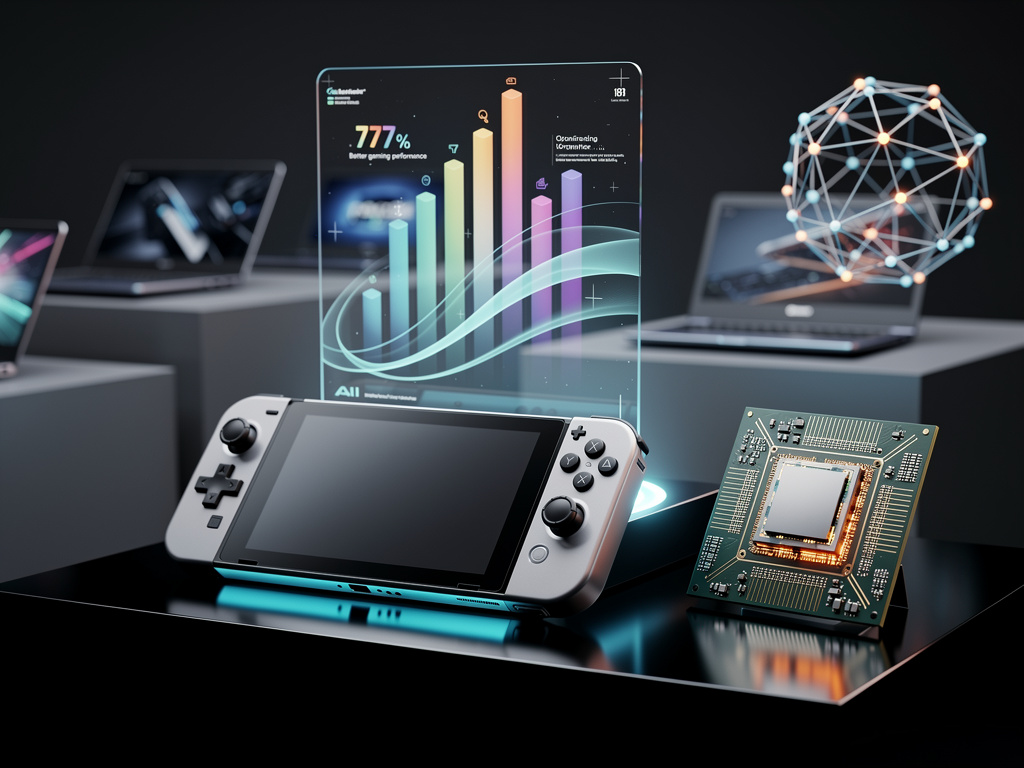
Intel’s announcement at CES 2026, as reported by Intel Newsroom, highlights the Core Ultra Series 3’s debut with exceptional performance metrics, including up to 77% better gaming performance compared to its Lunar Lake predecessor at similar power levels. For handhelds, this translates to a platform that Intel claims can rival or exceed AMD’s offerings in key areas like frame rates and energy efficiency. The company has teased partnerships with manufacturers like Acer and MSI, suggesting a wave of new devices that could incorporate this technology, possibly even supporting alternative operating systems like SteamOS for broader appeal.
Benchmark claims from Intel paint an optimistic picture: the new X-series chips within Panther Lake are said to match the performance of a discrete Nvidia RTX 4050 GPU in certain scenarios, a bold assertion that could disrupt the market if validated through independent testing. Tom’s Hardware detailed these claims, noting up to 12 Xe3 cores in the integrated GPU, which could provide a 76% uplift in gaming speeds over previous generations. This is particularly relevant for handhelds, where integrated graphics must handle demanding titles without the luxury of external cooling or power supplies.
Beyond raw performance, Intel’s focus on AI acceleration adds another layer of intrigue. The Panther Lake chips boast up to 180 TOPS (tera operations per second) for AI tasks, enabling features like real-time upscaling and frame generation that enhance gaming experiences on lower-power hardware. This integration could make handheld devices more versatile, serving not only gamers but also creators and professionals who need on-device AI processing without cloud dependency.
Market Dynamics and Competitive Pressures
The handheld gaming market has seen explosive growth, driven by successes like Valve’s Steam Deck and Nintendo’s Switch, which have popularized the concept of high-quality gaming in portable formats. Intel’s entry with a custom Panther Lake aims to erode AMD’s stronghold, where processors like the Ryzen AI 9 HX 370 have set benchmarks for efficiency and graphics in devices from Asus and Lenovo. Posts on X from tech enthusiasts, including claims of 73% faster performance than AMD counterparts, reflect growing excitement and skepticism in equal measure, underscoring the need for real-world validations.
Intel’s strategy extends to ecosystem building, with announcements of a “Handheld Ecosystem” initiative that encourages hardware partners to innovate around the Panther Lake platform. This could lead to diverse product offerings, from budget-friendly entry points to premium models with advanced displays and ergonomics. IGN reported exclusively on Intel’s plans for hardware-specific variants, suggesting that these chips will be “custom-built for handhelds,” optimizing for factors like thermal envelopes and battery longevity that are critical in portable designs.
However, challenges remain. Past Intel handhelds have faced criticism for suboptimal driver support and power inefficiencies, issues that the company must address to gain traction. Analysts point out that while Panther Lake’s 18A process offers theoretical advantages, manufacturing yields and scalability will be key to delivering on promises. The broader semiconductor industry watches closely, as Intel’s success here could validate its foundry ambitions against giants like TSMC.
From Arizona Fabs to Global Impact
Panther Lake’s production in Intel’s Arizona Fab 52 marks a pivotal step in the company’s “IDM 2.0” strategy, aiming for U.S.-based manufacturing leadership. This not only mitigates supply chain risks but also aligns with geopolitical shifts favoring domestic chip production. Reuters covered the launch, emphasizing how this chip reassures investors about Intel’s 18A process, which is set for high-volume production later this year.
For gamers, the implications are profound. A custom Panther Lake could enable handhelds with longer play sessions, higher resolutions, and smoother gameplay, potentially matching or exceeding the capabilities of current leaders. Early benchmarks spotted on platforms like Geekbench, as shared in X posts from sources like Wall St Engine, show promising graphics uplifts, with scores indicating a 25% improvement over prior architectures. This data, while preliminary, fuels speculation about devices that could handle AAA titles at 60 frames per second or more in compact packages.
Moreover, Intel’s emphasis on multi-chiplet designs provides flexibility for partners, allowing for varied configurations that cater to different price points and use cases. This modularity could accelerate adoption, as manufacturers experiment with form factors beyond traditional clamshells, perhaps venturing into hybrid tablet-gaming devices or even augmented reality integrations.
Engineering Innovations Under the Hood
Diving deeper into the architecture, Panther Lake employs a disaggregated design with separate compute, graphics, and I/O tiles, optimized for the 18A node’s density and power efficiency. This allows for targeted scaling of GPU resources, essential for gaming workloads where visual fidelity often trumps raw CPU compute. PCMag outlined the launch lineup, noting availability starting this month across midrange to high-end laptops, with handheld variants expected to follow suit.
The Arc B390 integrated GPU, a cornerstone of this platform, promises advancements in ray tracing and machine learning-based enhancements, drawing from Intel’s discrete graphics learnings. Comparisons to AMD’s Strix Halo suggest competitive parity at equivalent power draws, though AMD’s scaling advantages in higher TDP scenarios remain a point of contention. Intel’s claims of 76% faster gaming underscore a doubling down on graphics, a shift from its historical CPU-centric focus.
Industry insiders speculate that this custom approach could extend to software optimizations, with Intel collaborating on driver stacks tailored for handheld OS environments. This might include better integration with Windows for Arm-like efficiency or Linux-based systems popular in gaming communities, broadening the appeal beyond Windows-centric ecosystems.
Strategic Implications for the Industry
As Intel rolls out Panther Lake, the ripple effects could influence supply chains and partnerships. Manufacturers like MSI, which faced setbacks with earlier Intel-based Claws, now have an opportunity for redemption with chips that promise better thermals and performance. PC Gamer is tracking CES developments, highlighting how these announcements cater to PC gamers seeking cutting-edge hardware.
Competition from Qualcomm’s Snapdragon X series, with its Arm-based efficiency, adds pressure, but Intel’s x86 compatibility maintains an edge for legacy gaming libraries. The custom Panther Lake could thus serve as a bridge, combining familiar instruction sets with modern power profiles.
Looking ahead, Intel’s investments in AI and graphics position it well for future iterations, potentially incorporating even more advanced nodes like 14A. This trajectory suggests a sustained commitment to the handheld space, where user demands for immersion and portability continue to escalate.
Ecosystem Expansion and Future Horizons
Partnerships announced at CES point to a collaborative future, with Intel handing off handheld platform details to allies for rapid prototyping. This ecosystem approach could foster innovation in areas like haptic feedback, variable refresh rate screens, and modular accessories, enhancing the overall user experience.
Sentiment on X reflects a mix of optimism and caution, with users praising the potential for Intel to challenge AMD’s monopoly while questioning execution based on past performances. Such discussions underscore the high stakes, as success here could revitalize Intel’s consumer computing division.
Ultimately, the custom Panther Lake represents more than a chip—it’s a statement of intent. By tailoring silicon for handheld gaming, Intel is betting on a market segment poised for growth, where performance per watt dictates winners. As devices hit shelves, the true test will be in delivering on these promises, potentially ushering in a new era of portable prowess that benefits gamers worldwide.


 WebProNews is an iEntry Publication