
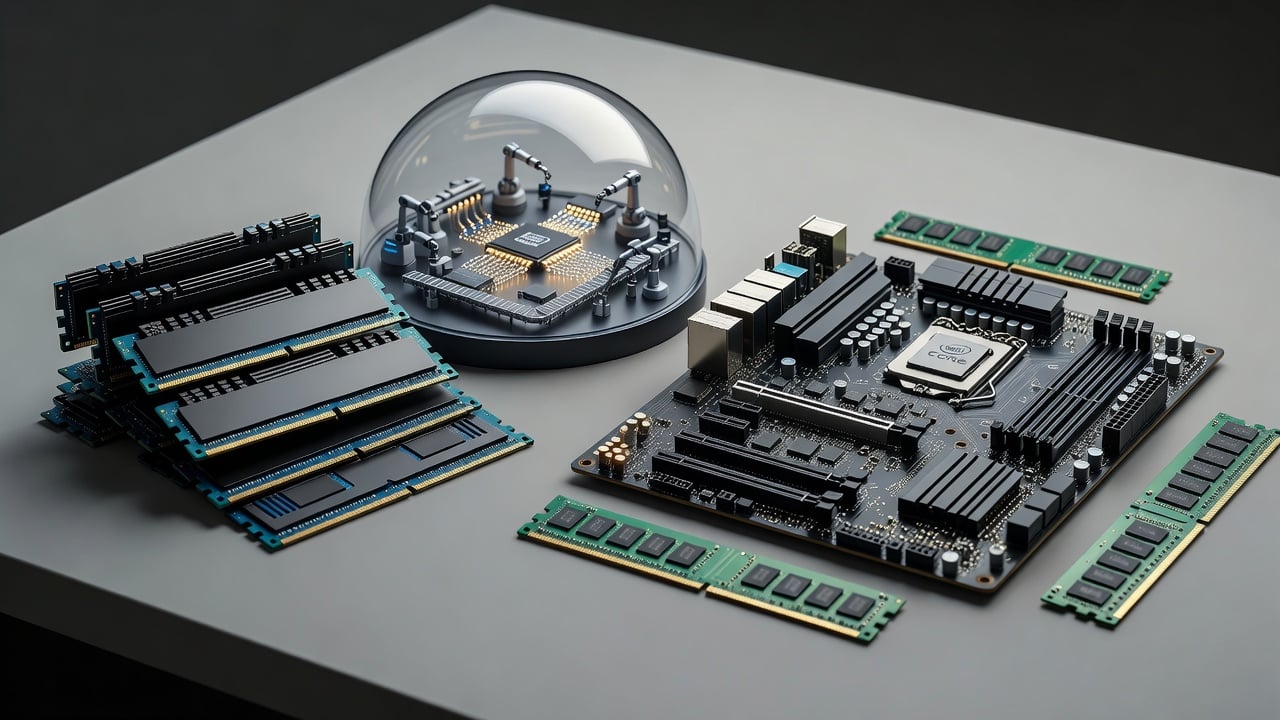
Intel faces mounting pressure from high memory prices that could force the company to extend the lifespan of older desktop processor platforms. Recent reports suggest the chipmaker may revive select previous-generation CPUs to offer consumers more affordable options as DDR5 memory costs remain stubbornly elevated.
The situation stems from multiple factors affecting the PC component market. DDR5 prices have not declined as quickly as analysts once predicted, partly due to production constraints and sustained corporate demand for servers and high-end systems. This leaves system builders and everyday users paying premiums for new memory kits that often exceed the cost of the processor itself in budget configurations. According to reporting from Digital Trends, Intel executives have discussed re-releasing certain 12th and 13th generation Core processors that support DDR4 memory as a direct response to these market conditions.
This potential move represents a pragmatic acknowledgment of current economic realities. Many consumers and small businesses continue to prioritize overall system affordability over the absolute latest specifications. DDR4 memory modules remain significantly cheaper and more widely available than their DDR5 counterparts, creating a natural market for platforms that can still use the older standard. Intel originally planned to phase out DDR4 support with the launch of its 14th generation Core processors, but persistent memory pricing issues appear to have prompted a reassessment of that strategy.
The technical foundation for this approach already exists. Intel’s 600 and 700 series motherboards include variants that accommodate both DDR4 and DDR5 memory depending on the specific chipset and board design. This flexibility was built into the LGA 1700 socket platform from the beginning, allowing manufacturers to offer more budget-oriented options alongside premium DDR5-capable boards. By reintroducing older processors that officially support DDR4, Intel could enable motherboard partners to produce complete systems that avoid the DDR5 price penalty entirely.
Market analysts have observed this trend developing for several months. DDR5 adoption has lagged behind initial projections, with many PC builders opting to stick with proven DDR4 setups for mainstream and entry-level machines. The price differential between comparable DDR4 and DDR5 kits can reach 50 percent or more in some capacity configurations, creating a substantial barrier for cost-conscious buyers. This gap becomes particularly noticeable in systems where the memory represents a larger percentage of the total build cost, such as mid-range gaming rigs or home office workstations.
Intel’s potential decision carries implications for the broader semiconductor industry. AMD has already committed to supporting DDR5 across its current Ryzen 7000 and 9000 series desktop processors while maintaining some backward compatibility through specific motherboard choices. However, the company also offers AM4 platform refreshes that continue to serve budget segments with DDR4 memory. This dual-track approach from both major CPU manufacturers suggests that the transition to newer memory standards will take longer than initially anticipated.
The economics of memory production play a central role in these developments. Manufacturing DDR5 requires more advanced processes and materials, which translates to higher costs that have not yet been fully offset by economies of scale. Industry observers point to strong demand from data centers and artificial intelligence applications as factors keeping DDR5 prices elevated. Server operators often purchase memory in bulk and show less price sensitivity than individual consumers, creating a market dynamic that disadvantages typical desktop users.
Consumer behavior further complicates the picture. Many potential PC buyers have delayed upgrades due to the combined cost of new processors, motherboards, and memory. This hesitation has contributed to softer demand for the latest generation components, prompting manufacturers to explore ways to stimulate sales. Re-releasing proven CPU models with established supply chains offers one method to address this challenge without requiring entirely new product development.
Technical considerations also favor extending the life of older platforms. Intel’s 12th generation Alder Lake processors introduced a hybrid architecture combining performance and efficiency cores, a design that subsequent generations have refined rather than replaced. The fundamental capabilities of these chips remain relevant for most computing tasks, particularly when paired with adequate memory and storage. By allowing these processors to continue serving the DDR4 market, Intel can extract additional value from existing designs while addressing real customer needs.
Motherboard manufacturers stand to benefit from this strategy as well. Companies like ASUS, MSI, and Gigabyte have already produced hundreds of LGA 1700 board variants, and continued CPU availability would help them move remaining inventory. The ecosystem surrounding these platforms includes extensive BIOS support, driver compatibility, and user familiarity that would be difficult to replicate with an entirely new socket design.
Industry experts suggest Intel might focus on specific models for re-release rather than bringing back the entire product stack. Mid-range chips like the Core i5-12400 or i5-13400 could prove particularly attractive, offering strong performance for gaming and productivity applications while maintaining compatibility with affordable DDR4 memory. These processors have demonstrated excellent longevity in real-world testing, often matching or exceeding newer budget options when memory speeds are equalized.
The move could also influence pricing strategies across the PC component market. Increased availability of DDR4-compatible systems might exert downward pressure on DDR5 prices as manufacturers compete for the same customers. Alternatively, it could segment the market more clearly, with premium builds adopting DDR5 while mainstream and value systems remain on DDR4 for the foreseeable future.
Supply chain considerations add another dimension to Intel’s thinking. The company maintains substantial production capacity for older processor nodes that could be repurposed to meet renewed demand. This approach would avoid the need to allocate limited advanced manufacturing resources to chips that might not command premium prices in the current environment. From a business perspective, extending the life of mature products can improve overall profitability while satisfying customer requirements.
Competitive dynamics with AMD will likely shape how Intel executes this plan. AMD’s Ryzen processors have gained significant ground in both performance and value segments, forcing Intel to respond with aggressive pricing and feature adjustments. By maintaining viable DDR4 platforms, Intel can continue competing in price-sensitive markets where AMD has historically performed well. The strategy also buys time for DDR5 prices to normalize before committing fully to the newer memory standard across all product lines.
Longer term, this situation highlights the challenges involved in memory technology transitions. Previous shifts from DDR3 to DDR4 and from DDR2 to DDR3 followed somewhat smoother trajectories, though each generation brought initial price premiums and compatibility questions. The current DDR4 to DDR5 transition has proven more difficult due to greater complexity in the new standard, including on-die termination, different signaling voltages, and substantially altered module designs.
PC enthusiasts and system integrators have expressed mixed reactions to the possibility of revived older CPUs. Some welcome the continued availability of familiar platforms that offer excellent performance per dollar, while others worry about potential market confusion or delayed adoption of newer technologies. However, the practical reality of memory pricing likely takes precedence over theoretical concerns about platform longevity.
Intel has not officially confirmed plans to re-release specific models, but the signals from supply chain sources and industry analysts suggest active consideration of the approach. The company has demonstrated flexibility in similar situations previously, such as extending the life of certain Skylake and Kaby Lake processors well beyond their original roadmaps. This history indicates a willingness to adapt product strategies based on market feedback and economic conditions.
The broader implications extend to software and peripheral compatibility as well. Operating systems and applications have been optimized for the hybrid core designs introduced in 12th generation processors, and these optimizations continue to improve over time. By keeping these architectures available, Intel ensures that software developers maintain focus on maximizing their potential rather than shifting entirely to newer designs.
Memory manufacturers may eventually need to adjust production mixes in response to sustained demand for DDR4. While DDR5 represents the future, the present market clearly demonstrates that older standards retain significant commercial value. This reality could influence investment decisions and capacity planning across the semiconductor industry.
For consumers, the potential return of older Intel processors means more choices when building or buying new systems. Budget-conscious buyers could assemble capable machines without paying DDR5 premiums, while those requiring maximum performance would still have access to the latest platforms. This segmentation allows the market to serve different needs effectively rather than forcing everyone toward the newest and most expensive options.
The situation also reflects changing priorities in the PC industry. Where once the focus remained almost exclusively on achieving higher clock speeds and core counts, attention has shifted toward overall system value and efficiency. Memory pricing has become a more prominent factor in purchasing decisions, particularly as other component costs have stabilized or declined.
Intel’s consideration of this strategy demonstrates attention to customer requirements and market signals. Rather than pushing exclusively toward newer technologies, the company appears prepared to meet users where they are. This customer-focused approach could help maintain market share while the industry works through current memory pricing challenges.
As the situation develops, PC builders and technology enthusiasts will watch closely for official announcements from Intel. The decision could influence purchasing patterns for months or even years to come, particularly if DDR5 prices fail to decline substantially in the near term. For now, the possibility of revived older desktop CPUs offers a practical solution to a persistent market problem, potentially benefiting both Intel and its customers through extended platform viability and more affordable computing options.


 WebProNews is an iEntry Publication