
Intel’s Leap in GPU Efficiency: Unlocking Huge Pages for Xe Driver’s Shared Memory Revolution
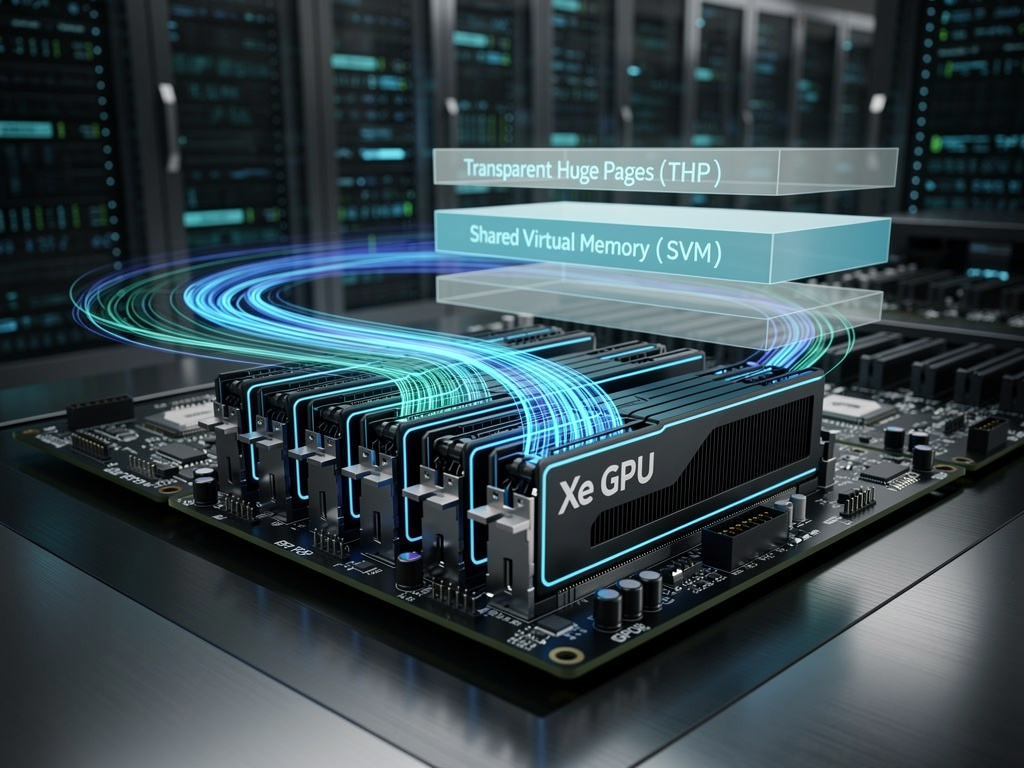
In the fast-evolving world of computing hardware, Intel is pushing boundaries with its latest advancements in graphics drivers, particularly for the Xe architecture. A recent development has caught the eye of engineers and developers alike: the integration of Transparent Huge Pages (THP) support into the Intel Xe kernel driver, aimed at boosting Shared Virtual Memory (SVM) performance. This move, detailed in a patch series from Intel engineer Francois Dugast, promises significant gains in how GPUs handle memory, especially in demanding AI and data-intensive tasks. As reported by Phoronix, the patches focus on enabling THP within the drm_pagemap code, a critical component for managing memory in Linux-based systems.
THP, a Linux kernel feature, allows the system to use larger 2MB pages instead of the standard 4KB ones, reducing overhead in memory management and improving translation lookaside buffer (TLB) efficiency. For Intel’s Xe driver, this translates to faster SVM operations, where CPU and GPU share memory seamlessly without constant data copying. Dugast’s work highlights “significant” performance uplifts, particularly in scenarios involving large datasets, which are common in machine learning and high-performance computing. This isn’t just incremental; it’s a step toward making Intel’s open-source drivers more competitive against proprietary alternatives from rivals like Nvidia.
The timing is noteworthy, coming on the heels of other Xe enhancements. Just weeks prior, Intel rolled out multi-device SVM support in Linux kernel 7.0, enabling memory sharing across up to eight GPUs. This builds a foundation for scalable AI workloads, positioning Intel as a serious contender in data centers and edge computing. Developers have been quick to note the implications, with posts on X emphasizing how these updates streamline development and reduce latency in complex setups.
Advancing Multi-GPU Capabilities and AI Workloads
Intel’s strategy here is multifaceted. By incorporating THP into the Xe driver, the company addresses a key bottleneck in SVM: the inefficiency of handling fragmented memory. Traditional 4KB pages lead to more TLB misses, slowing down processes that rely on rapid memory access. With THP, the Xe driver can map larger contiguous blocks, cutting down on these misses and accelerating data throughput. According to the Phoronix coverage, early benchmarks suggest double-digit percentage improvements in SVM-heavy applications, though exact figures will depend on final kernel integration.
This development dovetails with Intel’s broader push into AI and high-performance computing. A report from WebProNews details how multi-GPU SVM in kernel 7.0 simplifies programming for AI models, allowing seamless data sharing without custom code for each device. It’s an open-source boon, contrasting with closed ecosystems, and aims to erode Nvidia’s dominance in training large language models. Intel’s engineers have been vocal about these efforts, with patch series dating back to 2024 laying the groundwork.
On social platforms like X, industry watchers are buzzing. Posts from tech accounts highlight how these updates could reshape GPU computing, drawing parallels to AMD’s advancements in memory mapping. One thread notes the potential for non-contiguous CPU memory to be treated as contiguous on the GPU side, mirroring efficiencies seen in rival drivers. This sentiment underscores a growing optimism around Intel’s open-source commitments.
From Patches to Production: The Road Ahead for Xe
The patch series isn’t isolated; it’s part of a continuum. Earlier in 2025, Intel posted updates for GPU SVM with the Xe driver, as covered in another Phoronix article from August 2024. Those RFC patches focused on enabling the Xe DRM as the default for newer hardware like Lunar Lake and Battlemage. Now, with THP integration, the driver is poised for even greater efficiency, especially in virtualized environments where memory sharing is paramount.
Intel’s approach also includes innovations like mapping DMA-BUFs via IOV interconnects, detailed in a October 2025 Phoronix piece. This allows for better data transfer between devices, complementing THP by ensuring that huge pages can be leveraged across interconnected GPUs. For industry insiders, this means more robust support for workloads in cloud computing and scientific simulations, where memory bandwidth is often the limiting factor.
Moreover, Intel has been enhancing system memory allocation for integrated GPUs. A update from TopCPU.net discusses the “Shared GPU Memory Override” feature, which lets users allocate up to 87% of system RAM to the iGPU. While primarily for Arc-integrated graphics in Core Ultra chips, it ties into the SVM narrative by optimizing shared resources, potentially benefiting discrete Xe cards in hybrid setups.
Competitive Pressures and Open-Source Dynamics
Rivals aren’t standing still. Nvidia’s CUDA ecosystem has long dominated with proprietary SVM-like features, but Intel’s open-source push could democratize access. AMD, too, is advancing with its Radeon drivers, as seen in recent kernel updates that handle scattered memory efficiently. X posts from developers point to AMD’s batch userptr API as a comparable innovation, suggesting Intel’s THP work is a direct response to maintain parity.
In the data center arena, Intel’s Xe3P GPU, unveiled with up to 160GB LPDDR5x memory, represents another front. A Guru3D report from October 2025 outlines how this architecture supports massive memory pools, ideal for AI inference. Pairing it with THP-enhanced SVM could yield compounding benefits, reducing latency in multi-node clusters.
Intel’s software ecosystem is evolving in tandem. The release of XeSS 2, an AI-based upscaling technology, borrows from Nvidia’s DLSS but extends to other vendors’ GPUs. As per a TechRadar article from December 2024, it includes frame generation and super resolution, now supported via an updated SDK. This interoperability hints at Intel’s broader vision for inclusive tech stacks.
Engineering Challenges and Performance Metrics
Implementing THP isn’t without hurdles. The drm_pagemap code must handle fallbacks to smaller pages when huge ones aren’t available, ensuring compatibility across diverse hardware. Dugast’s patches address this by integrating THP awareness into the driver’s memory mapping logic, but kernel reviewers will scrutinize for stability, especially in multi-user environments.
Performance metrics from initial tests, as shared in Phoronix forums, show promising results. Users report reduced overhead in SVM tasks, with one discussion thread echoing the August 2024 patches’ focus on experimental support for older hardware like Tiger Lake. This backward compatibility is crucial for adoption, allowing developers to test on existing setups before upgrading.
Looking at broader implications, Intel’s driver updates align with Linux kernel advancements. The multi-device SVM readiness for kernel 7.0, as announced in a December 2025 Phoronix post, caps a year of intense development. X updates from accounts like Phoronix itself celebrate this as a “bang” ending to 2025, with THP support kicking off 2026 strongly.
Strategic Implications for Developers and Enterprises
For software developers, these enhancements lower barriers to entry in GPU-accelerated computing. By simplifying memory management, Intel enables more focus on application logic rather than low-level optimizations. This is particularly relevant for AI frameworks like TensorFlow or PyTorch, where SVM can accelerate data pipelines.
Enterprises stand to gain from cost efficiencies. In cloud environments, better SVM means denser VM packing and reduced energy use, as GPUs handle more workloads without excessive data shuffling. A post on X from Intel Software highlights XeSS 2’s cross-vendor support, extending these benefits beyond Intel hardware.
Furthermore, Intel’s persistent memory technologies, such as Optane integrations from years past, complement this. While Optane has waned, the ethos of efficient memory hierarchies persists, informing current Xe strategies.
Future Horizons in GPU Memory Innovation
As we peer ahead, Intel’s THP integration could influence upcoming architectures. Rumors on X suggest evolutions in RibbonFET and advanced packaging from Intel’s 18A process, promising density and performance leaps. These hardware strides will amplify software gains like THP-SVM.
Comparisons to historical shifts are apt. Just as AMD’s Smart Access Memory boosted CPU-GPU synergy, Intel’s work fosters similar uplifts across ecosystems. A 2020 X post from GamersNexus recalls early efforts in resizable BAR, a precursor to today’s shared memory tech.
Ultimately, these developments signal Intel’s commitment to an open, performant future. By crediting sources like WebProNews for multi-GPU insights and Guru3D for hardware unveils, it’s clear the ecosystem is collaborative. For insiders, watching kernel merges will be key, as THP’s full potential unfolds in production kernels.
Ecosystem Integration and Broader Impacts
Integration with other tools is accelerating. Intel’s graphics driver version 32.0.101.7082, available for 11th-14th gen processors as per Guru3D, includes enhancements that could pair with THP for integrated setups. Community forums like Intel’s own discuss VRAM allocation with Iris Xe, where shared memory overrides echo SVM principles.
On the competitive front, Nvidia’s explicit memory controls, as mused in an X post, highlight ongoing innovations. Yet Intel’s open-source model invites broader participation, potentially outpacing closed systems in adaptability.
In automotive and infotainment, similar memory sharing appears in Tesla’s units, per a 2023 X thread, showing real-world applications beyond data centers. This cross-pollination underscores SVM’s versatility.
Pushing Boundaries in High-Performance Computing
High-performance computing clusters will benefit immensely. With multi-device SVM and THP, Intel enables scaling to eight GPUs seamlessly, as WebProNews noted. This is vital for simulations in climate modeling or drug discovery, where memory efficiency dictates feasibility.
Developer feedback on platforms like Phoronix forums praises the patches’ thoroughness, with one user linking back to the 2024 RFCs for context. Such iterative progress builds trust in Intel’s Linux commitments.
As 2026 unfolds, expect more patches refining these features. X buzz from Phoronix on January 5, 2026, lauds the THP prep as a strong start, signaling sustained momentum.
Refining the Edge in Virtualized Environments
Virtualization adds another layer. SR-IOV support in Xe drivers, mentioned in late 2025 updates, pairs with THP for efficient guest OS memory handling. This is crucial for cloud providers virtualizing GPU resources.
Enterprises eyeing cost savings will appreciate reduced TLB overhead, translating to faster response times in virtual desktops or containerized apps.
Intel’s Diamond Rapids Xeon CPUs, with separate core and I/O tiles as per a January 2026 X post from Hassan Mujtaba, could integrate these memory advancements, creating synergistic platforms.
Sustaining Momentum Through Collaboration
Collaboration remains key. Intel’s involvement in Linux kernel development fosters a vibrant community, with patches like Dugast’s inviting feedback.
Posts on X from Intel News recall foundational tech like Optane, evolving into today’s SVM focus.
For industry players, this means staying agile, leveraging these tools for competitive edges in AI-driven markets.


 WebProNews is an iEntry Publication