
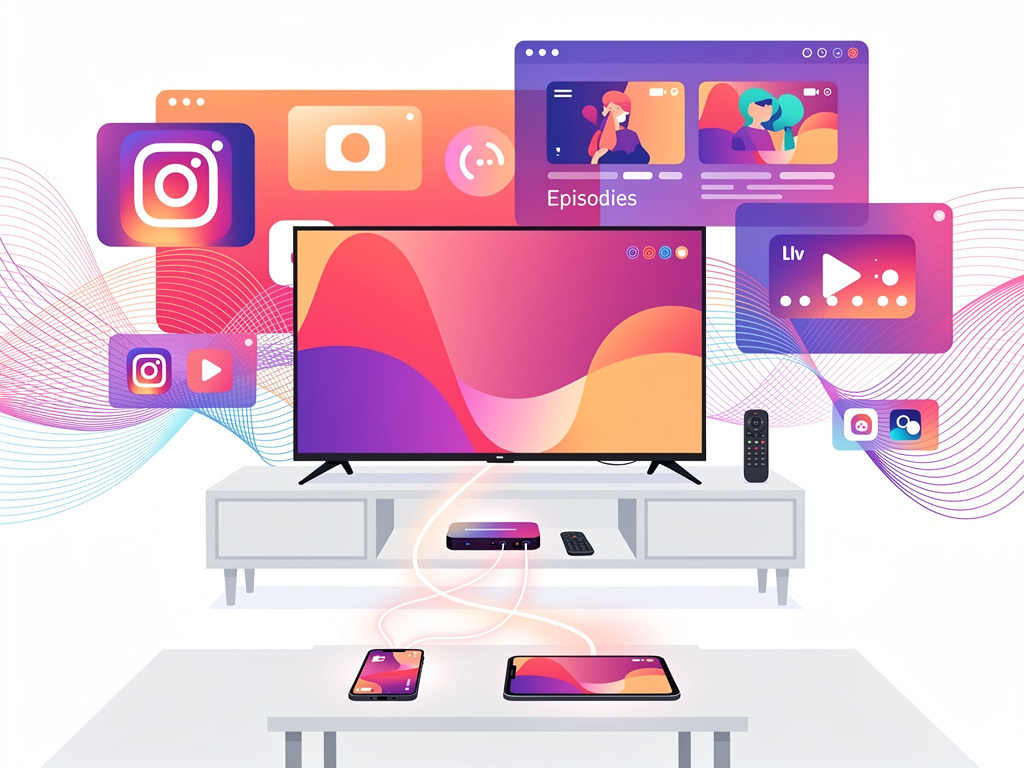
Instagram wants more of your living room time. The Meta-owned platform, already dominant on phones with its short bursts of video, now eyes the big screen with ambitions that stretch far beyond Reels. On Monday it began testing horizontal video playback in its TV app. Longer videos, stories told across multiple episodes, and live creator sessions sit at the center of these experiments.
The moves arrive one year after the company first brought Reels to televisions. Back then the focus stayed narrow. Users could scroll vertical clips on Amazon Fire TV devices. Now the app reaches Samsung smart TVs too. It already works on Google TV. Channels organized by creator or topic greet viewers when they open the experience. Comedy. Sports. Favorite personalities. The layout aims to make group viewing simple.
But the real shift runs deeper. Tessa Lyons, Instagram’s vice president of product, told industry gatherings earlier this year that creators already produce long-form work. They share it elsewhere and tease it on Instagram. The platform noticed. So it decided to respond. The Hollywood Reporter captured the thinking in detail. Lyons explained that creators move fluidly between formats. Short clips. Hour-long podcasts. Serialized dramas. Instagram intends to support all of them.
And the company isn’t stopping at passive viewing. Live experiences tailored for television sets form another pillar. Creators could host events that feel native to the couch instead of a phone screen. Casting from mobile devices just got easier. Users can fling Reels or saved content straight to the TV. Stories appear in the app for the first time. Horizontal video support marks the clearest signal yet that Instagram sees the living room as more than an afterthought.
This push carries echoes of past attempts. Remember IGTV? Launched in 2018 with hopes of challenging YouTube, the standalone app never gained traction. Meta shut it down four years later. Lessons from that failure seem to shape the current effort. Instead of forcing users into a separate product, Instagram builds on the TV app already in millions of homes. It layers new capabilities gradually.
Meta also tested a “Series” feature for Reels this month. The tool lets creators bundle related videos into collections that viewers can follow episode by episode. TechCrunch first reported the TV expansion and connected it directly to that test. The timing feels deliberate. One hand feeds the other. Mobile users get tools for serialized storytelling. Television users receive the payoff on a larger display.
Competition looms large. YouTube already owns much of the connected TV space. Nielsen data has shown it surpassing traditional cable networks in certain viewing hours. Netflix and Amazon Prime Video command attention with polished episodic series. Instagram’s advantage lies in its creator base. Millions already know how to build audiences. Now they might build shows.
Adam Mosseri, Instagram’s head, spoke last year about following consumer behavior to the TV. If people watch more video on big screens, the platform must follow. His comments to Bloomberg underscored a simple logic. Consumption patterns changed. Platforms that ignore them lose ground.
Recent coverage reinforces the stakes. The Hollywood Reporter quoted Netflix co-CEO Ted Sarandos warning that “Instagram is coming next” during a regulatory discussion. He grouped the social app with YouTube, Apple, and Amazon as rising forces in entertainment. The message was clear. Traditional streamers feel the pressure.
Yet questions remain. Will audiences trained on 15-second clips commit to 30-minute episodes on Instagram? Early tests with horizontal video will provide clues. The dedicated section for such content represents more than a technical tweak. It signals a bet that users want different experiences depending on the device in front of them.
Creators stand to benefit if the strategy works. Many already produce long-form material for YouTube or TikTok. A unified discovery system across mobile and TV could reduce fragmentation. Fans might follow a series from short teaser Reels on their phones to full episodes on the family television. Shared accounts on the TV app support this vision. Multiple family members can log in and see personalized recommendations.
But success depends on execution. Past social video experiments on television produced mixed results. TikTok launched its own TV app years ago with limited fanfare. YouTube refined its interface over more than a decade. Instagram enters a crowded field with strong incumbents.
Still, the company brings scale. Its advertising business around Reels already generates billions. Longer viewing sessions could lift those numbers further. Advertisers crave attention on the biggest screen in the house. Episodic formats create natural breaks for commercials. Live programming opens new sponsorship opportunities.
Meta’s broader video strategy ties these pieces together. The company invests in podcasts, live audio, and short dramas. All feed the same goal. Keep users inside its family of apps for more minutes each day. Television represents the final frontier for that effort.
Industry observers watch closely. Some see a return to traditional television formats dressed in modern creator clothing. Others view it as evolution. Short-form trained a generation to expect constant novelty. Longer series might satisfy the desire for deeper stories once that novelty wears off.
The coming months will test these assumptions. Instagram plans to expand the experiments based on creator and viewer feedback. If horizontal video gains traction, expect more tools for producers. Editing interfaces. Better discovery within channels. Analytics tailored to TV audiences.
For now the focus stays practical. Make the app useful. Give people reasons to open it on purpose rather than as an extension of their phone. Channels help. Casting simplifies the handoff. Horizontal support respects the physics of a television set.
One thing feels certain. The days when Instagram meant only square photos and 15-second clips have ended. The platform chases time spent. It chases attention. And right now that attention increasingly sits in front of large displays in living rooms across the country.
Whether this latest effort succeeds where IGTV stumbled will depend on many factors. Creator adoption. Technical polish. Competitive response. Viewer habits. Yet the direction is set. Instagram no longer contents itself with the small screen. It wants the whole room.


 WebProNews is an iEntry Publication