
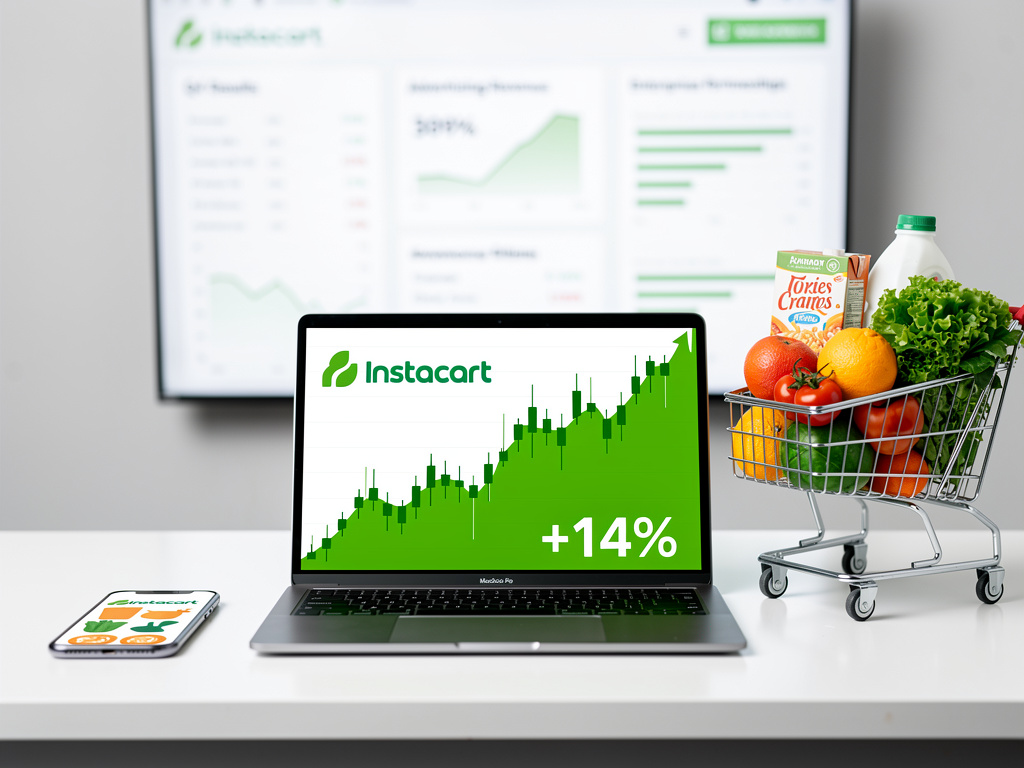
Instacart, the grocery delivery platform that went public in a much-watched 2023 IPO, delivered a resounding earnings beat this week that sent its shares soaring 14% and reignited investor enthusiasm for the online grocery sector. The company, which trades under the ticker CART, posted fourth-quarter results that exceeded Wall Street expectations on nearly every metric, underscoring the durability of its business model even as competition in the grocery delivery arena intensifies from well-capitalized rivals.
The results, reported on February 13, 2026, showed that Instacart has not only weathered a post-pandemic normalization in online grocery demand but has emerged with a more profitable, more diversified business than many analysts had anticipated. As CNBC reported, the stock’s sharp move higher reflected growing confidence that the company’s advertising business, expanding retail partnerships, and technology licensing initiatives are creating multiple vectors for sustainable growth.
A Quarter That Silenced the Skeptics
Instacart’s fourth-quarter earnings report featured robust revenue growth, margin expansion, and forward guidance that came in above consensus estimates. The company’s gross transaction value — the total dollar amount of goods sold through its platform — grew at a healthy clip, suggesting that consumer adoption of online grocery ordering continues to deepen even years after the initial COVID-era surge. Importantly, the company demonstrated that it can grow the top line while simultaneously improving profitability, a combination that has eluded many of its peers in the broader delivery economy.
CEO Fidji Simo, who took the helm from co-founder Apoorva Mehta, has been credited with steering the company toward a more disciplined financial posture while aggressively expanding its suite of enterprise products. Under her leadership, Instacart has evolved from a pure-play grocery delivery app into something more akin to a technology infrastructure provider for the grocery industry at large. The earnings call reinforced this narrative, with management highlighting the growing contribution of its advertising platform and its Instacart Platform — a white-label technology solution that allows traditional grocers to power their own e-commerce operations using Instacart’s backend systems.
The Advertising Engine Driving Margins Higher
One of the most closely watched elements of Instacart’s business is its advertising segment, which allows consumer packaged goods (CPG) brands to promote their products directly to shoppers at the point of purchase. This high-margin revenue stream has become a critical differentiator for the company, drawing comparisons to Amazon’s wildly successful retail media network. According to the CNBC report, advertising revenue continued to grow at a pace that outstripped overall order volume growth, indicating that brands are allocating an increasing share of their digital marketing budgets to Instacart’s platform.
The economics are compelling: advertising revenue carries gross margins that dwarf those of the core delivery business, where the company must pay shoppers, manage logistics, and absorb the costs associated with perishable goods. As the advertising flywheel accelerates, it provides Instacart with a powerful lever to improve overall profitability without needing to raise delivery fees or reduce shopper compensation — a balancing act that has historically been one of the company’s most delicate challenges.
Grocery Giants and Upstarts Alike Are Circling
Instacart’s strong quarter arrives at a moment when the competitive dynamics of online grocery are shifting rapidly. Amazon, which operates both its Amazon Fresh delivery service and the Whole Foods chain, remains the dominant force in e-commerce grocery. Walmart, leveraging its unmatched physical store footprint, has invested billions in curbside pickup and last-mile delivery capabilities, making it a formidable competitor particularly in suburban and rural markets where Instacart’s penetration has historically been thinner.
Meanwhile, rapid-delivery startups that once threatened to disrupt the grocery delivery model have largely retreated or consolidated. Companies like Gopuff have scaled back their ambitions, and several international ultra-fast delivery players have exited the U.S. market entirely. This winnowing of the competitive field has, paradoxically, strengthened Instacart’s position by reducing the number of well-funded rivals vying for the same consumer dollars. DoorDash, which has been steadily expanding its grocery delivery offerings, remains a significant competitor, but its grocery business is still a fraction of its restaurant delivery core.
The Enterprise Play: Turning Grocers Into Clients
Perhaps the most strategically significant element of Instacart’s evolution is its push to become the technology backbone for traditional grocery retailers. Through its Instacart Platform offering, the company licenses its ordering, fulfillment, and logistics technology to grocers who want to offer their own branded e-commerce experiences without building the infrastructure from scratch. This business-to-business model transforms potential competitors into paying customers — a dynamic that has drawn favorable comparisons to Shopify’s relationship with independent retailers.
Major grocery chains including Kroger, Albertsons, Costco, and regional players have deepened their partnerships with Instacart in recent quarters. For these retailers, the calculus is straightforward: building a proprietary e-commerce platform capable of competing with Amazon is prohibitively expensive and time-consuming, while licensing Instacart’s proven technology allows them to go to market quickly and at a fraction of the cost. The enterprise segment also provides Instacart with a recurring revenue stream that is less sensitive to the cyclical fluctuations that can affect consumer-facing delivery volumes.
Wall Street Recalibrates Its Outlook
The 14% stock jump following the earnings release represented one of Instacart’s strongest single-day moves since its September 2023 initial public offering, which itself was one of the most anticipated tech IPOs of that year. The stock had endured a rocky post-IPO period, falling below its listing price as investors grappled with questions about the company’s growth trajectory in a post-pandemic world. The latest results appear to have answered many of those questions definitively.
Several Wall Street analysts upgraded their price targets on the stock in the wake of the report. The bullish thesis centers on the idea that Instacart is in the early innings of monetizing its position as the connective tissue between grocery retailers, CPG brands, and consumers. Bears, meanwhile, point to the company’s dependence on a relatively small number of large retail partners and the ever-present risk that Amazon or Walmart could use their scale advantages to squeeze Instacart’s margins over time.
Consumer Behavior and the Stickiness Factor
Underlying Instacart’s financial performance is a secular shift in how Americans buy groceries. While online grocery penetration in the United States still lags behind categories like electronics and apparel, it has been steadily climbing and now accounts for a meaningful share of total grocery spending. Industry analysts estimate that online grocery penetration in the U.S. is approaching 14-15% of total grocery sales, up from roughly 3-4% before the pandemic. This structural tailwind provides a long runway for growth, even if the pace of adoption moderates from the frenetic levels seen during lockdowns.
Instacart has also invested heavily in features designed to increase customer retention and order frequency. Its Instacart+ membership program, analogous to Amazon Prime, offers free delivery and reduced service fees for a monthly or annual subscription. The company reported continued growth in its membership base during the quarter, a positive signal that consumers are embedding Instacart into their regular shopping routines rather than treating it as an occasional convenience.
What Comes Next for the Grocery Delivery Pioneer
Looking ahead, Instacart faces both significant opportunities and persistent risks. On the opportunity side, the company is exploring new verticals beyond traditional grocery, including alcohol delivery, pharmacy, and convenience store partnerships. Its technology platform could also be extended to serve retailers in adjacent categories, potentially expanding its total addressable market considerably.
On the risk side, regulatory scrutiny of gig economy labor practices remains an ongoing concern. Instacart relies on a vast network of independent contractor shoppers, and any legislative changes that reclassify these workers as employees could materially impact the company’s cost structure. Additionally, the grocery industry operates on notoriously thin margins, meaning that even modest changes in competitive dynamics or consumer spending patterns can have outsized effects on profitability.
For now, however, the market’s verdict is clear: Instacart’s latest quarter demonstrated that the company has matured from a pandemic beneficiary into a durable technology platform with multiple avenues for growth. As traditional grocers continue their digital transformation and CPG brands pour more money into retail media, Instacart appears well-positioned to capture a disproportionate share of the value being created. The 14% stock surge is not just a reaction to a single quarter’s results — it is a recalibration of expectations for a company that is increasingly proving it belongs at the center of America’s grocery future.


 WebProNews is an iEntry Publication