
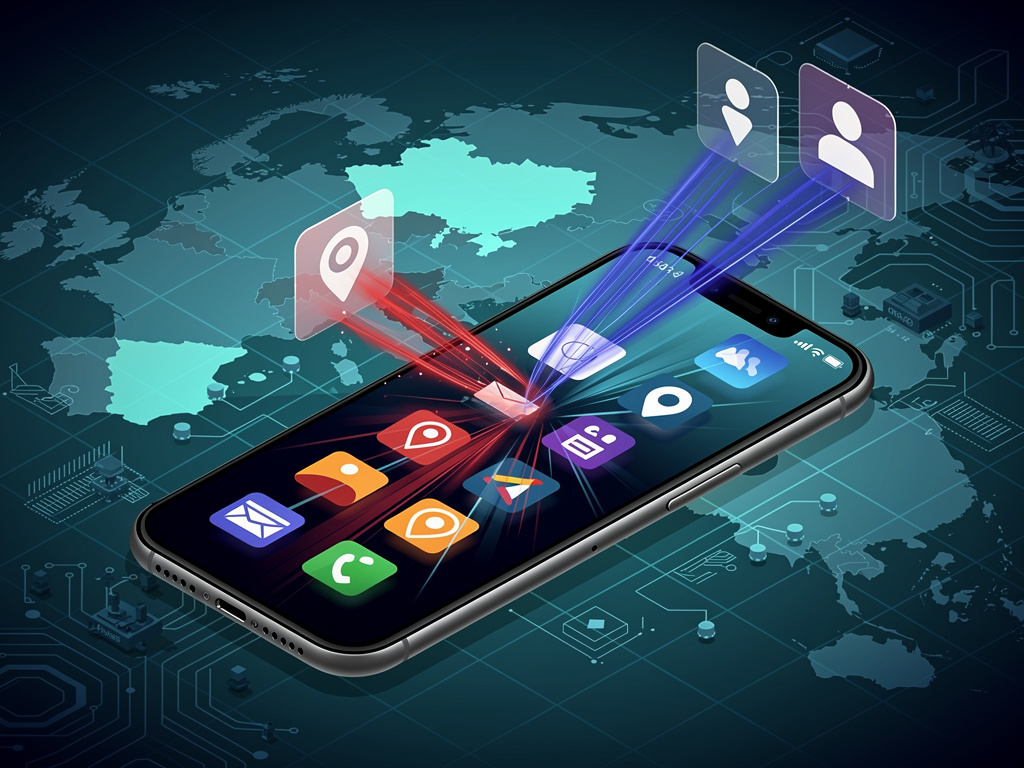
Russian intelligence operatives have been caught deploying previously unknown iPhone vulnerabilities to steal personal data from Ukrainian targets — a campaign that represents one of the most technically sophisticated mobile espionage operations documented since the full-scale invasion began in February 2022.
The operation, first reported by TechCrunch, involved advanced zero-day exploits — flaws in Apple’s iOS that were unknown to the company and therefore unpatched at the time of exploitation. The attackers used these tools to silently compromise iPhones belonging to Ukrainian military personnel, government officials, and civil society figures, extracting contact lists, messages, geolocation data, and photographs without the victims ever realizing their devices had been breached.
This wasn’t a blunt instrument. It was a scalpel.
The technical sophistication of the attack chain suggests state-level resources were behind it, according to researchers who analyzed the malware. The exploits required no interaction from the target — no malicious link to click, no suspicious attachment to open. A so-called “zero-click” attack, delivered through iMessage, allowed the payload to execute silently and establish persistence on the device. The malware then exfiltrated data to command-and-control servers that researchers traced back to infrastructure previously associated with Russian intelligence services.
Zero-click iPhone exploits are among the most valuable and expensive tools in the offensive cyber arsenal. On the commercial market, a full zero-click iOS chain can fetch upwards of $2 million, according to published price lists from exploit brokers like Zerodium. The fact that Russian operators burned such a high-value capability on intelligence collection in Ukraine underscores how central the digital front has become to Moscow’s war effort.
Apple declined to comment on the specific exploits but pointed to its ongoing work to harden iOS security. The company has invested heavily in features like Lockdown Mode, introduced in 2022, which dramatically reduces the iPhone’s attack surface by disabling certain functionalities that are commonly abused in sophisticated attacks. But Lockdown Mode remains an opt-in feature, and adoption among potential targets in conflict zones is uneven at best.
The campaign’s targeting was precise. Rather than casting a wide net, the operators focused on individuals whose personal data would yield operational intelligence — troop movements inferred from geolocation histories, command structures mapped through contact networks, and operational plans discussed in encrypted messaging apps. The malware was designed to extract data from Signal and Telegram in addition to native iOS applications, suggesting the attackers understood exactly which communication platforms their targets relied on.
This matters enormously for the battlefield.
Ukraine’s military has become one of the most digitally connected fighting forces in history. Soldiers coordinate through encrypted messaging apps, share real-time intelligence via mobile devices, and use commercial smartphones for everything from drone operations to casualty reporting. That dependence creates opportunities. And Russian intelligence has clearly invested in exploiting them.
The discovery was made by a coalition of cybersecurity researchers working with Ukraine’s Computer Emergency Response Team (CERT-UA), which has become one of the most active national cyber defense organizations in the world since 2022. CERT-UA has documented hundreds of cyber operations targeting Ukrainian infrastructure, but officials involved in the investigation told TechCrunch that this particular campaign stood out for its technical maturity and the resources clearly invested in its development.
The exploit chain involved at least three separate vulnerabilities chained together — one to achieve initial code execution through iMessage processing, a second to escape the iOS application sandbox, and a third to gain kernel-level access that allowed the malware to operate with full privileges on the device. Each of these vulnerabilities would have required significant reverse engineering of iOS internals, a process that demands both deep expertise and considerable time.
Security researchers familiar with the investigation drew comparisons to Operation Triangulation, the iOS espionage campaign disclosed by Kaspersky in 2023 that targeted the Russian cybersecurity firm’s own employees. That operation, which Kaspersky attributed to a Western intelligence agency, also used a zero-click iMessage exploit chain and demonstrated a similar level of technical ambition. The parallels suggest a kind of arms race in mobile exploitation, with state actors on multiple sides investing in capabilities to compromise what is arguably the most secure consumer device on the planet.
But there’s a critical difference. Operation Triangulation targeted a cybersecurity company. This campaign targeted people in an active war zone, where compromised data can directly translate into kinetic military action. A stolen geolocation history doesn’t just violate someone’s privacy — it can guide an artillery strike.
The broader context is troubling. Russia’s cyber operations against Ukraine have intensified and evolved since the early days of the full-scale invasion. Initial attacks focused on destructive malware aimed at critical infrastructure — the Viasat hack that knocked out satellite communications on the first day of the invasion, the wiper malware campaigns targeting government networks, the attacks on energy infrastructure timed to coincide with missile barrages. Over time, the emphasis has shifted toward intelligence collection, reflecting a war that has settled into a grinding attritional phase where information advantages matter as much as ammunition supplies.
Western intelligence agencies have taken notice. The U.S. Cybersecurity and Infrastructure Security Agency (CISA) and the UK’s National Cyber Security Centre (NCSC) have both issued advisories in recent months warning of increased Russian targeting of mobile devices, particularly in contexts related to the Ukraine conflict. NATO allies providing military assistance to Ukraine have also been targeted, with Russian-linked groups attempting to compromise the phones of defense officials and diplomatic personnel involved in arms transfers and strategic planning.
The personal data angle is particularly insidious. Unlike traditional signals intelligence, which intercepts communications in transit, this kind of on-device exploitation gives attackers access to everything stored locally — including messages from end-to-end encrypted applications that would otherwise be unreadable to an eavesdropper monitoring network traffic. It also provides historical data. Not just what the target is saying now, but what they said last month. Not just where they are, but where they’ve been.
For Ukrainian forces, the implications are immediate and practical. Units that suspect compromise must assume their positions, movements, and communications have been exposed. That can force costly operational changes — relocating command posts, altering patrol routes, changing communication protocols. Even the suspicion of compromise imposes a tax on operational efficiency.
Apple has patched the vulnerabilities exploited in this campaign, according to the TechCrunch report, though the company has not publicly confirmed which specific CVEs correspond to the exploits used. The patches were included in a recent iOS update, and security researchers are urging all users in high-risk environments to update immediately. But the reality is that patching after discovery only addresses the known threat. The resources that produced this exploit chain can produce another.
And they almost certainly will.
The market for zero-day exploits has grown dramatically over the past decade, driven by demand from intelligence agencies, law enforcement, and — increasingly — military organizations. Companies like NSO Group, Intellexa, and a constellation of smaller firms have built businesses selling offensive mobile capabilities to government clients. But the major intelligence services — American, Chinese, Russian, Israeli — also maintain internal development programs that produce bespoke tools never offered on the commercial market. The campaign against Ukrainian targets appears to fall into this latter category, with no known commercial spyware vendor linked to the operation.
The technical details that have been made public so far are limited, deliberately so. Researchers involved in the analysis are withholding specifics to avoid providing a roadmap for other threat actors. What they have shared points to a development team with intimate knowledge of iOS internals, access to physical devices for testing, and the operational security discipline to deploy their tools without immediate detection. The malware included anti-forensics features designed to complicate analysis if the device was examined, and the command-and-control infrastructure was layered behind multiple proxies and bulletproof hosting providers.
None of this is surprising to people who track state-sponsored cyber operations for a living. What’s notable is the scale of investment directed at a single theater of conflict. Russia has historically distributed its offensive cyber capabilities across multiple targets — NATO governments, election infrastructure, critical systems in countries that displease the Kremlin. The concentration of high-end mobile exploitation tools on Ukrainian targets suggests a prioritization that reflects the existential importance Moscow assigns to the conflict.
Ukraine, for its part, has proven remarkably resilient in cyberspace. CERT-UA’s rapid identification and analysis of this campaign is itself a testament to the capabilities that Ukrainian defenders have built, often with significant Western assistance. The U.S., UK, and EU have all provided cybersecurity support to Ukraine, including threat intelligence sharing, incident response assistance, and training for Ukrainian analysts. That support has helped Ukraine punch well above its weight in cyber defense, even as it faces one of the most capable and persistent threat actors on the planet.
So where does this leave the broader mobile security picture? The uncomfortable truth is that no consumer device is immune to a sufficiently motivated and well-resourced attacker. Apple’s iOS is widely regarded as the most secure mobile operating system available, and the company has made genuine strides in raising the cost and difficulty of exploitation. But the incentives for attackers remain enormous, and the attack surface of a modern smartphone — with its messaging apps, wireless radios, media processing libraries, and web rendering engines — provides multiple avenues of approach.
For individuals in high-risk categories — journalists, activists, military personnel, diplomats — the standard advice remains: keep devices updated, enable Lockdown Mode on iPhones, minimize the amount of sensitive data stored on any single device, and assume that a sufficiently determined adversary can compromise any endpoint. That’s cold comfort, perhaps. But it’s honest.
The war in Ukraine has become the most significant proving ground for cyber capabilities since the concept of cyber warfare entered mainstream strategic thinking. Every major category of cyber operation — destructive attacks, espionage, information warfare, supply chain compromise — has been deployed at scale. The iPhone exploitation campaign is the latest chapter, and it won’t be the last. As long as smartphones remain central to how modern militaries communicate and coordinate, they will remain targets. And as long as zero-day vulnerabilities exist — which is to say, always — the tools to exploit them will find willing buyers and eager operators.
The question isn’t whether this will happen again. It’s whether defenders can detect and respond fast enough to limit the damage. In this case, they did. Next time, they might not.


 WebProNews is an iEntry Publication