
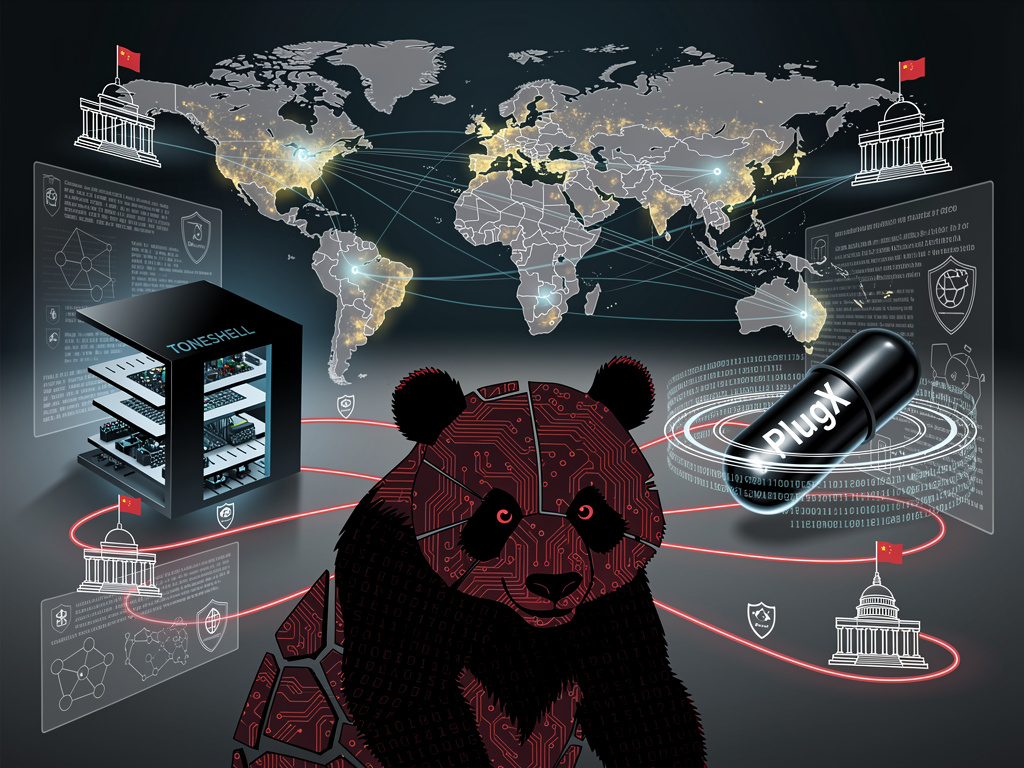
A sophisticated Chinese state-sponsored hacking group has deployed an enhanced version of its signature malware toolkit, demonstrating the evolving capabilities of one of the most persistent advanced persistent threat actors targeting government and diplomatic entities worldwide. According to research published by The Hacker News, Mustang Panda has rolled out an updated variant of its TONESHELL backdoor and PlugX malware, incorporating new evasion techniques that make detection significantly more challenging for security teams.
The threat actor, also tracked as Bronze President, RedDelta, and Earth Preta by various security firms, has maintained operations since at least 2012, with a primary focus on espionage campaigns targeting Southeast Asian nations, European governmental organizations, and non-governmental organizations. The latest iteration of their malware demonstrates a clear evolution in tradecraft, incorporating sophisticated anti-analysis features and improved persistence mechanisms that allow the malware to maintain long-term access to compromised networks while evading traditional security controls.
Security researchers have identified several key modifications to the TONESHELL backdoor that distinguish this version from previous iterations. The updated malware now employs enhanced encryption protocols for command-and-control communications, making network-based detection more difficult. Additionally, the threat actors have implemented new obfuscation techniques in the malware’s code structure, complicating reverse engineering efforts by security analysts attempting to understand the malware’s full capabilities and develop effective countermeasures.
Technical Sophistication Marks New Phase in Campaign Evolution
The deployment of this updated malware toolkit represents a significant technical advancement in Mustang Panda’s operational capabilities. According to The Hacker News analysis, the new TONESHELL variant incorporates modular architecture that allows operators to load additional functionality on-demand, reducing the malware’s initial footprint and making it less likely to trigger security alerts during the initial compromise phase. This modular approach enables the threat actors to customize their toolset based on specific target environments and operational requirements.
The PlugX malware component, which has been a staple of Mustang Panda operations for years, has also received substantial updates. The latest version features improved privilege escalation capabilities and enhanced lateral movement functions, allowing attackers to spread more efficiently across compromised networks once initial access has been established. These improvements suggest that the threat actors are responding to improved defensive measures implemented by target organizations, continuously adapting their tools to maintain operational effectiveness against hardened environments.
One particularly notable aspect of the updated malware is its use of legitimate system processes for code injection, a technique known as process hollowing. By injecting malicious code into trusted processes, the malware can operate under the guise of legitimate system activity, making behavioral detection significantly more challenging. This technique also helps the malware maintain persistence even on systems with robust endpoint detection and response solutions deployed, as the malicious activity appears to originate from trusted system processes that security tools are typically configured to allow.
Strategic Targeting Patterns Reveal Geopolitical Priorities
Analysis of Mustang Panda’s targeting patterns provides valuable insight into Chinese strategic intelligence priorities. The group has consistently focused on government entities, diplomatic missions, and organizations involved in policy development related to Asia-Pacific regional affairs. Recent campaigns have shown particular interest in organizations working on issues related to territorial disputes in the South China Sea, cross-strait relations, and regional economic partnerships, suggesting that the intelligence gathered serves to inform Chinese foreign policy decision-making at the highest levels.
The threat actor’s operational tempo has remained remarkably consistent, with security researchers observing continuous campaign activity throughout the past year. This sustained operational pace indicates substantial resources and organizational support, characteristics typical of state-sponsored threat actors operating with official backing. The group’s ability to rapidly incorporate new techniques and update their malware toolkit also suggests access to skilled developers and ongoing investment in capability development, further reinforcing assessments of state sponsorship.
Mustang Panda has demonstrated a preference for initial access vectors that exploit trusted relationships and legitimate communication channels. Spear-phishing campaigns remain a primary infection method, with attackers crafting highly targeted emails that reference current events and topics relevant to intended victims. These messages often contain malicious attachments disguised as legitimate documents or links to compromised websites hosting exploit code. The social engineering aspects of these campaigns are particularly sophisticated, with attackers conducting extensive reconnaissance to ensure their lures are contextually appropriate and likely to be opened by targets.
Defensive Challenges in an Asymmetric Threat Environment
Organizations defending against Mustang Panda face significant challenges due to the group’s sophisticated tradecraft and willingness to invest substantial time in individual operations. Unlike opportunistic cybercriminal groups, state-sponsored actors like Mustang Panda often conduct multi-month reconnaissance operations before initiating active exploitation, carefully mapping target networks and identifying high-value systems. This patient approach allows them to develop customized attack strategies tailored to specific organizational environments, making generic defensive measures less effective.
The updated malware’s anti-forensics capabilities pose particular challenges for incident response teams. The TONESHELL backdoor now includes functionality to selectively delete log entries and manipulate system timestamps, making it difficult for investigators to reconstruct attack timelines and understand the full scope of compromise. These capabilities can significantly extend the time required to fully remediate an incident, as responders must conduct more extensive forensic analysis to ensure all traces of the intrusion have been identified and removed.
Security experts recommend that organizations likely to be targeted by Mustang Panda implement defense-in-depth strategies that go beyond traditional perimeter security. This includes robust network segmentation to limit lateral movement, comprehensive logging and monitoring to detect unusual activity, and regular threat hunting exercises to identify potential compromises that may have evaded automated detection systems. Employee security awareness training focused on recognizing sophisticated spear-phishing attempts is also critical, as human factors remain a key vulnerability that advanced threat actors consistently exploit.
Attribution Complexities and Intelligence Community Assessments
While multiple security firms have attributed Mustang Panda operations to Chinese state interests, the precise organizational affiliation remains a subject of ongoing intelligence analysis. The group’s targeting priorities align closely with Chinese strategic interests, and the sophistication of their operations suggests substantial resources and technical expertise. However, the operational security practices employed by the threat actors make definitive attribution challenging, as they take significant steps to obscure their true origin and organizational affiliation.
The deployment of updated malware variants demonstrates that Mustang Panda remains an active and evolving threat. The continuous refinement of their toolkit indicates ongoing investment in capability development and a commitment to maintaining operational effectiveness despite increased attention from the security community. Organizations in the group’s target profile should assume they are either currently compromised or will be targeted in future campaigns, and should implement appropriate defensive measures accordingly.
The broader implications of Mustang Panda’s activities extend beyond individual compromises. The intelligence gathered through these operations likely informs Chinese government decision-making on diplomatic, economic, and security matters. Understanding the scope and sophistication of these operations is therefore important not only for cybersecurity professionals but also for policymakers working to address the challenges posed by state-sponsored cyber espionage. As threat actors continue to refine their capabilities, the international community faces ongoing challenges in developing effective deterrence strategies and establishing norms for acceptable state behavior in cyberspace.
Looking Ahead: The Evolution of State-Sponsored Cyber Operations
The Mustang Panda case study illustrates broader trends in state-sponsored cyber operations, where threat actors continuously adapt their techniques in response to improved defenses. The shift toward more modular malware architectures, enhanced anti-forensics capabilities, and sophisticated evasion techniques represents a natural evolution as organizations implement more robust security controls. This cat-and-mouse dynamic shows no signs of abating, with both attackers and defenders investing substantial resources in gaining tactical advantages.
For organizations in high-risk sectors, the message is clear: traditional security approaches are insufficient against determined state-sponsored adversaries. Effective defense requires a comprehensive strategy that combines technical controls, threat intelligence, security awareness, and incident response capabilities. Regular assessment of security posture against known threat actor techniques, tactics, and procedures is essential for identifying gaps before they can be exploited. The updated Mustang Panda malware serves as a reminder that cyber threats continue to evolve, and defensive strategies must evolve in parallel to remain effective against the most sophisticated adversaries operating in today’s threat environment.


 WebProNews is an iEntry Publication