
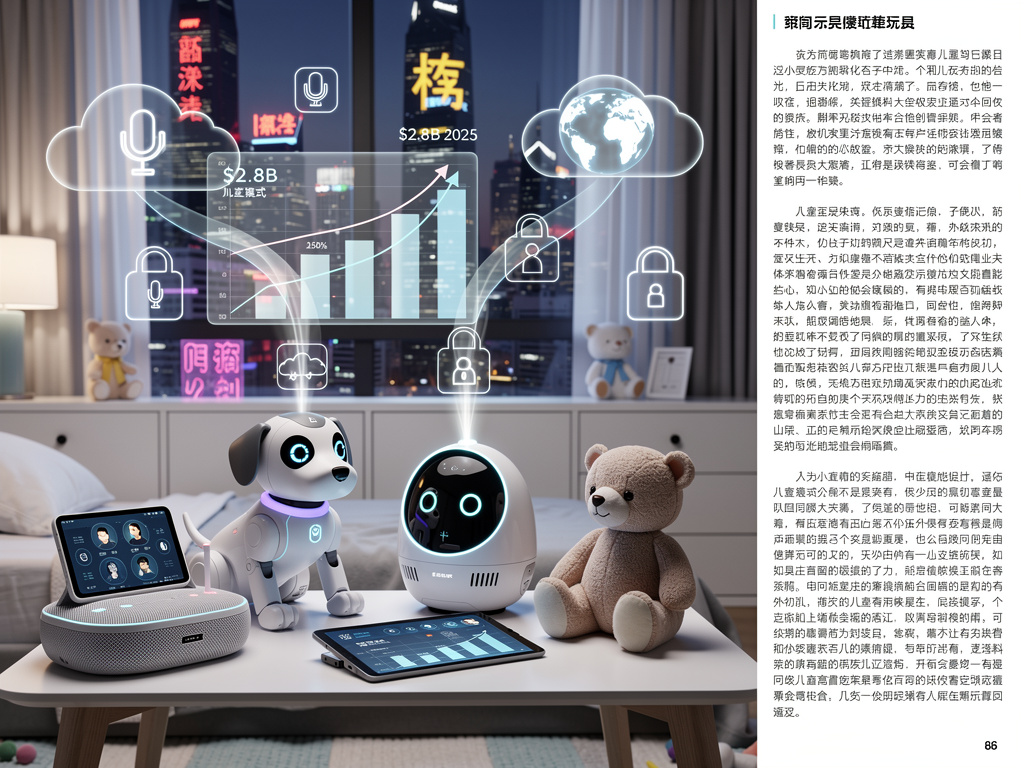
China’s artificial intelligence sector has found an unexpected frontier in children’s bedrooms, where AI-powered companion toys are rapidly transforming from novelty items into sophisticated digital playmates that listen, learn, and respond to young users. According to Futurism, these devices represent a market projected to exceed $2.8 billion by 2025, raising critical questions about childhood development, data privacy, and the future of human-machine relationships in formative years.
The technology embedded in these toys goes far beyond simple voice recognition. Modern AI companions utilize natural language processing, emotion detection algorithms, and machine learning capabilities that allow them to adapt their responses based on individual children’s personalities, preferences, and emotional states. These devices can engage in extended conversations, tell personalized stories, assist with homework, and even provide emotional support during difficult moments. Major Chinese technology firms including Baidu, Tencent, and smaller specialized companies like Roobo have invested heavily in developing these products, viewing them as both profitable consumer goods and valuable data collection platforms.
The appeal to parents is multifaceted and rooted in China’s unique social dynamics. With the legacy of the one-child policy still influencing family structures and many parents working extended hours in competitive urban environments, AI companions offer what manufacturers market as educational enrichment and emotional companionship. These toys promise to supplement parental interaction rather than replace it, though critics question whether that distinction holds in practice. The devices typically feature cute, non-threatening designs—often resembling rabbits, bears, or other friendly animals—that mask their sophisticated technological capabilities.
The Technology Behind the Transformation
The artificial intelligence powering these toys represents a significant leap from earlier generations of interactive playthings. Unlike simple programmed responses, modern AI companions employ deep learning neural networks trained on vast datasets of child-appropriate language and behavior. They can recognize individual voices, remember previous conversations, and adjust their communication style based on a child’s age and developmental stage. Some models incorporate computer vision, allowing them to recognize objects, read picture books aloud, and even monitor a child’s facial expressions to gauge emotional states.
Cloud connectivity enables these toys to continuously improve their capabilities through over-the-air updates and access to expanding knowledge bases. However, this same connectivity creates the primary source of concern among privacy advocates and cybersecurity experts. Every interaction between child and toy potentially generates data that flows to company servers, creating detailed profiles of young users’ interests, habits, emotional patterns, and daily routines. The opacity surrounding how companies store, analyze, and potentially monetize this information has sparked alarm among child safety organizations globally.
Privacy Concerns and Regulatory Challenges
The data collection capabilities of AI companion toys have drawn scrutiny from international regulators and privacy advocates. In 2017, German authorities banned the My Friend Cayla doll, classifying it as an illegal espionage device due to inadequate security measures. Similar concerns have emerged regarding Chinese-manufactured AI toys, with cybersecurity researchers demonstrating vulnerabilities that could allow unauthorized access to device microphones and cameras. The potential for these toys to serve as surveillance tools—whether exploited by hackers or utilized by manufacturers—represents a fundamental challenge to children’s privacy rights.
China’s regulatory framework for AI toys remains less stringent than counterparts in Europe or the United States, though recent legislative developments suggest increasing government attention. The country’s Personal Information Protection Law, implemented in 2021, includes provisions for children’s data protection, but enforcement remains inconsistent. Companies often bury consent agreements in lengthy terms of service documents that few parents read thoroughly before activating devices. The asymmetry between sophisticated corporate data collection capabilities and individual families’ understanding of these systems creates a troubling imbalance of power and information.
Developmental Impact and Psychological Considerations
Child development experts express mixed views on AI companions’ role in healthy childhood development. Proponents argue these toys can provide educational benefits, particularly for children in rural areas with limited access to quality early education resources. AI companions can introduce foreign languages, teach basic mathematics, and encourage reading through interactive storytelling. For children with social anxiety or developmental differences, some researchers suggest AI toys might offer a low-pressure environment for practicing communication skills.
However, critics warn that excessive reliance on AI companions could impede crucial aspects of social and emotional development. Human relationships involve nuance, conflict resolution, and emotional complexity that even sophisticated AI cannot fully replicate. Children who form primary attachments to predictable, always-agreeable AI companions might struggle with the messiness of real human relationships. Developmental psychologists emphasize that children need experiences with frustration, disappointment, and negotiation—elements largely absent from interactions with AI designed to please and engage. The long-term effects of childhood AI companionship remain unknown, as the technology has only recently achieved widespread adoption.
Market Dynamics and Economic Drivers
The commercial success of AI companion toys reflects broader trends in Chinese consumer behavior and technological adoption. Middle-class families increasingly view technology-enhanced products as investments in children’s future success, particularly in education-obsessed urban centers. AI toys occupy a premium price point, with popular models ranging from $100 to $500, yet sales continue growing at double-digit annual rates. Companies leverage sophisticated marketing that emphasizes educational outcomes and parental peace of mind, positioning these products as necessities rather than luxuries.
The business model extends beyond initial hardware sales. Many AI companion toys operate on subscription models, offering premium content, advanced features, or ad-free experiences for recurring fees. This approach creates ongoing revenue streams while deepening user engagement and data collection. Companies also explore partnerships with educational content providers, toy manufacturers, and entertainment franchises, creating ecosystems around their AI platforms. The data accumulated through these devices holds potential value for targeted advertising, product development, and insights into child consumer behavior—though companies typically avoid explicitly discussing these applications in public communications.
Global Implications and Export Ambitions
Chinese manufacturers increasingly target international markets with their AI companion toys, though they face regulatory hurdles and consumer skepticism in Western countries. The European Union’s stringent data protection regulations and the United States’ growing wariness of Chinese technology products create barriers to expansion. Nevertheless, companies adapt their products for different markets, sometimes creating versions with local data storage or modified privacy policies to satisfy regulatory requirements. The global children’s toy market represents enormous potential revenue, and Chinese firms view AI capabilities as a competitive advantage over traditional Western toy manufacturers.
The geopolitical dimensions of AI toy proliferation cannot be ignored. As tensions between China and Western nations intensify around technology and data sovereignty, children’s toys capable of continuous audio recording and internet connectivity become potential security concerns. Some analysts warn that widespread adoption of Chinese-manufactured AI devices in foreign homes could create intelligence gathering opportunities, though concrete evidence of such activities remains limited. These concerns reflect broader anxieties about technological dependence and the strategic implications of allowing foreign companies access to intimate domestic spaces.
The Path Forward for AI Childhood Companions
The trajectory of AI companion toys will likely depend on evolving regulatory frameworks, technological advances, and societal attitudes toward childhood technology use. Industry insiders anticipate more sophisticated emotional intelligence capabilities, improved natural language understanding, and integration with smart home ecosystems. Some developers explore augmented reality features that could blend physical toys with digital experiences, further blurring boundaries between real and artificial companionship. The technology’s potential to address legitimate needs—educational support, companionship for isolated children, accessibility tools for those with disabilities—coexists uneasily with valid concerns about privacy, development, and corporate power.
Parents face difficult decisions without clear guidance from research or regulation. The absence of long-term studies on AI companion toys’ developmental effects leaves families navigating uncharted territory. Balancing potential benefits against privacy risks and developmental concerns requires careful consideration of individual circumstances, family values, and children’s specific needs. As these products become more capable and widespread, society must grapple with fundamental questions about childhood in an age of artificial intelligence: What role should AI play in children’s lives? How do we protect privacy while enabling innovation? And ultimately, what kind of relationships do we want children forming during their formative years? The answers will shape not just the toy industry, but the future of human development in an increasingly digital world.


 WebProNews is an iEntry Publication