
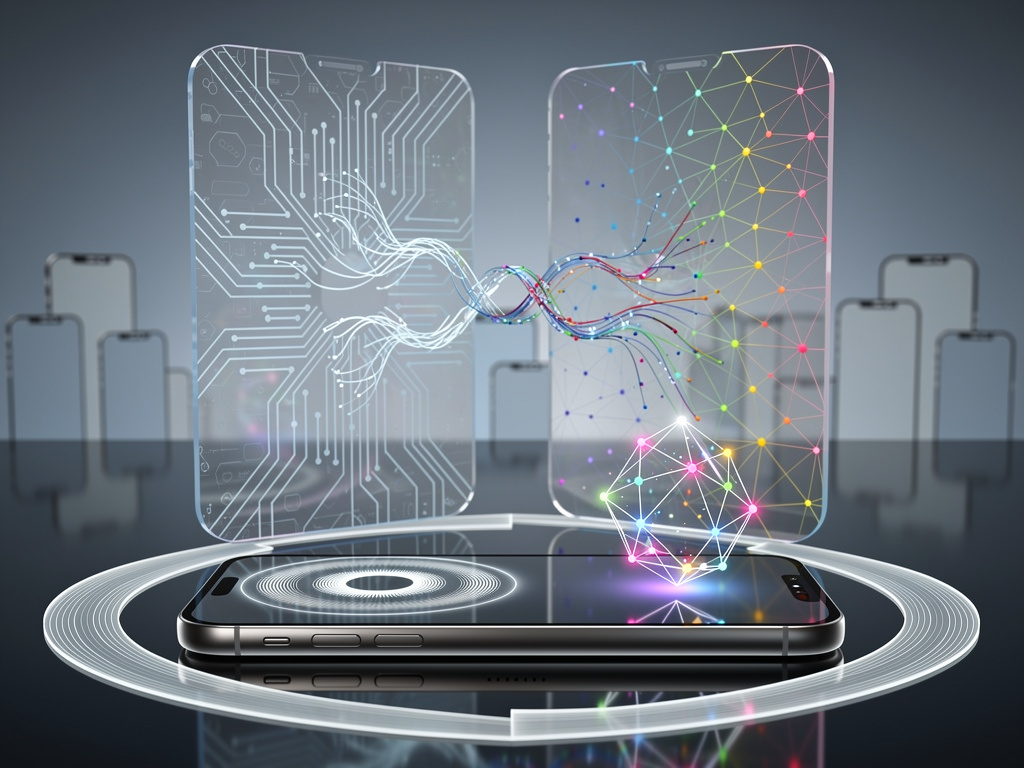
Apple has unveiled comprehensive details about its groundbreaking integration of Google’s Gemini artificial intelligence into Siri, marking a significant shift in the company’s approach to AI assistance and potentially reshaping the competitive dynamics of the smartphone industry. This partnership, which represents one of the most substantial collaborations between two tech giants traditionally at odds, offers insights into how Apple plans to address growing concerns about Siri’s capabilities while maintaining its commitment to user privacy.
According to MacRumors, Apple has outlined a system where Siri will seamlessly hand off certain queries to Google’s Gemini when the assistant determines that the more advanced AI model would provide superior results. This approach differs fundamentally from a complete replacement of Siri, instead positioning the integration as an enhancement that leverages the strengths of both systems. The implementation will require explicit user permission, with Apple maintaining strict controls over data sharing and privacy protocols throughout the interaction.
The technical architecture behind this integration reveals Apple’s careful consideration of both functionality and security. When a user poses a question to Siri, the assistant will first evaluate whether the query falls within its native capabilities or would benefit from Gemini’s more advanced natural language processing and reasoning abilities. For queries deemed suitable for Gemini, Siri will present users with an option to send the request to Google’s AI, ensuring transparency and user control at every step of the process.
Privacy Protections and Data Handling Protocols
Apple has emphasized that privacy remains paramount in this partnership, implementing multiple safeguards to protect user information. The company has stated that queries sent to Gemini will not be permanently stored or used to train Google’s AI models without explicit user consent. This represents a significant concession from Google, which typically leverages user interactions to improve its machine learning systems. The arrangement reflects Apple’s negotiating power and its unwavering commitment to privacy as a core brand differentiator.
The data handling protocols include on-device processing for initial query analysis, encrypted transmission of approved queries to Google’s servers, and immediate deletion of query data after response generation. Apple has also implemented what it calls “privacy-preserving tokens” that allow Gemini to process queries without accessing broader user data stored on Apple devices or in iCloud. This tokenization system represents a novel approach to third-party AI integration, potentially setting a new industry standard for privacy-conscious AI partnerships.
Strategic Implications for the AI Assistant Market
This collaboration arrives at a critical juncture for Apple, as competitors have rapidly advanced their AI capabilities while Siri has faced persistent criticism for lagging behind alternatives like Google Assistant, Amazon’s Alexa, and newer entrants such as ChatGPT and Claude. Industry analysts have long pointed to Siri’s limitations in understanding context, handling complex queries, and providing accurate information as weaknesses in Apple’s ecosystem. The Gemini integration represents Apple’s acknowledgment of these shortcomings while offering a pragmatic solution that doesn’t require years of internal AI development.
The financial terms of the partnership remain undisclosed, but industry observers speculate that the arrangement likely involves revenue sharing when users engage with Gemini through Siri, similar to Google’s lucrative deal to remain the default search engine in Safari. This could represent a significant revenue stream for Google while providing Apple with immediate access to state-of-the-art AI capabilities without the massive investment required to develop comparable technology independently. The arrangement also positions both companies to compete more effectively against Microsoft’s integration of OpenAI technology into its products and services.
Technical Implementation and User Experience Design
Apple’s implementation strategy focuses heavily on maintaining a seamless user experience despite the underlying complexity of routing queries between two different AI systems. The company has designed the handoff process to be nearly instantaneous, with users experiencing minimal delay when Siri determines that Gemini should handle a particular request. The interface will clearly indicate when Gemini is being used, maintaining transparency while avoiding disruption to the natural flow of conversation.
Developers will also gain new capabilities through this integration, with Apple planning to release APIs that allow third-party applications to leverage Gemini’s capabilities through Siri. This opens possibilities for more sophisticated voice-controlled applications, from complex data analysis tools to creative content generation apps. The developer tools will include the same privacy protections as the consumer-facing implementation, ensuring that third-party apps cannot circumvent Apple’s data protection measures to access user information inappropriately.
Competitive Response and Industry Reactions
The announcement has prompted immediate responses from competitors and industry stakeholders. Amazon has reportedly accelerated its own AI enhancement plans for Alexa, while Microsoft continues to promote the advantages of its deeper integration with OpenAI technology. Samsung, which uses Google’s AI technology more directly in its devices, may find its differentiation challenged as iPhone users gain access to similar capabilities. The move also raises questions about the future of standalone AI assistants and whether partnerships like this one represent the industry’s future direction.
Technology industry analysts have offered mixed assessments of the strategy. Some praise Apple’s pragmatic approach to addressing Siri’s weaknesses without compromising on privacy principles, while others question whether the company has conceded too much ground by relying on a competitor’s technology for such a critical component of the user experience. The partnership also raises questions about Apple’s long-term AI strategy and whether the company will eventually develop proprietary technology capable of matching or exceeding Gemini’s capabilities.
Implementation Timeline and Global Rollout Challenges
Apple has indicated that the Gemini-powered Siri features will roll out gradually, beginning with English-language markets before expanding to other languages and regions. This phased approach allows the company to address technical issues and gather user feedback before broader deployment. The initial release will focus on specific query types where Gemini demonstrates clear advantages, including complex factual questions, multi-step reasoning tasks, and creative content requests.
The global rollout faces several challenges, including regulatory considerations in markets with strict data localization requirements and varying privacy laws. The European Union’s Digital Markets Act and similar regulations in other jurisdictions may require specific modifications to ensure compliance. Apple has assembled dedicated legal and technical teams to navigate these regulatory complexities, recognizing that successful global deployment is essential for the partnership to achieve its full potential.
Future Evolution and Potential Expansions
Looking ahead, Apple has hinted at potential expansions of the Gemini integration beyond basic query handling. Future updates may include visual recognition capabilities, where Gemini could analyze images captured by iPhone cameras to provide detailed information and context. The partnership could also extend to more sophisticated task automation, allowing users to accomplish complex multi-step processes through natural language commands that leverage both Siri’s device control capabilities and Gemini’s reasoning abilities.
The success of this integration could pave the way for additional AI partnerships, with speculation that Apple might eventually incorporate specialized AI models for specific tasks such as medical information, legal research, or financial analysis. However, each additional integration would need to meet Apple’s stringent privacy and security requirements, limiting the pool of potential partners. The company has emphasized that it will evaluate all AI partnerships through the lens of user benefit and privacy protection, suggesting a selective approach to future collaborations.
The Gemini-Siri integration represents more than a technical upgrade; it signals a fundamental shift in how Apple approaches artificial intelligence and its willingness to partner with competitors when doing so serves user interests. As the AI revolution continues to reshape technology, this partnership may be remembered as a pivotal moment when pragmatism and user needs trumped corporate rivalry, setting a precedent for future collaborations in an increasingly AI-driven world. The coming months will reveal whether this bold strategy successfully addresses Siri’s limitations while maintaining the privacy standards that Apple’s customers have come to expect.


 WebProNews is an iEntry Publication