
Steve Willey saw the AR hype cycle peak and then stall. Microsoft pulled back from HoloLens. Snap and Google delayed consumer releases. Meta’s Ray-Ban smart glasses gained fans but lacked displays at the time. So the Innovega CEO did something unexpected. He chose the simplest problem he could find.
A person with poor vision who wants good vision.
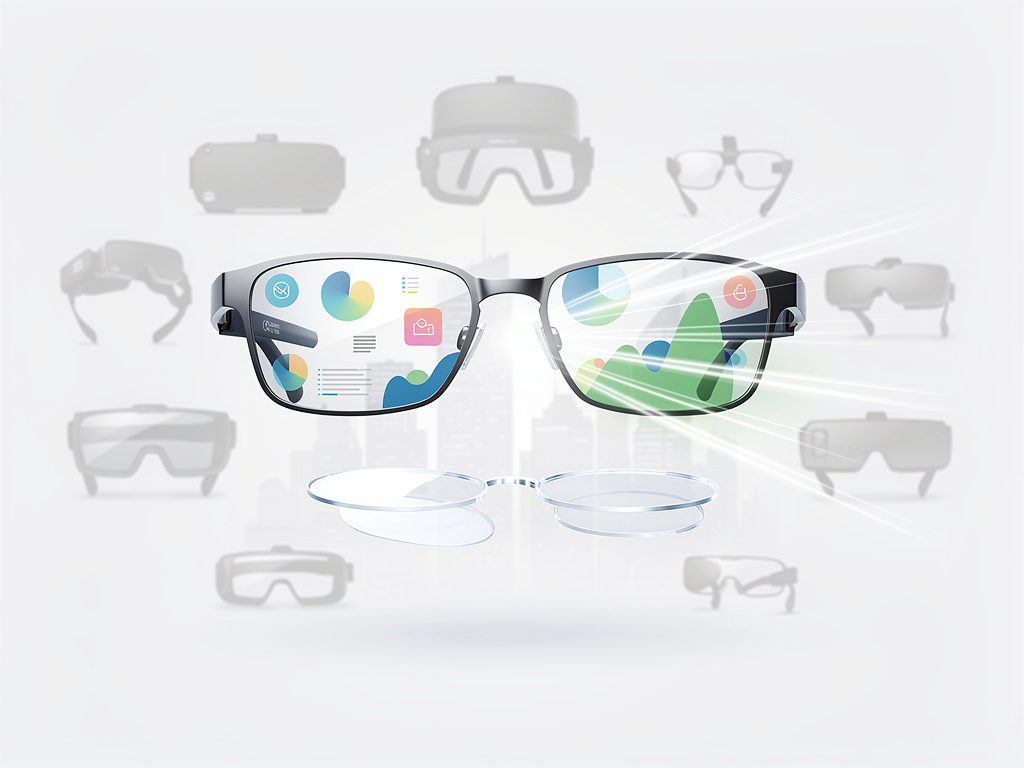
That pivot produced Gen One. The glasses look ordinary. They weigh under 70 grams. A camera captures the scene. Software tuned to the wearer’s specific condition adjusts magnification, brightness, contrast and sharpness. The processed image appears on transparent micro-OLED displays. Tap the frame or speak a command. The enhanced view activates. Turn it off and the lenses stay clear.
The device tethers to a smartphone for heavy processing. Battery lasts about three hours of active use. Yet wearers can keep the glasses on all day. The display only draws power when needed. Early demand shows real interest. More than 100 pairs sold at $2,950 each in the Founder Series. Innovega now accepts orders for 1,000 additional units. Commercial deliveries target early 2027. Pre-orders remain fully refundable until shipment.
Nearly 300 million people worldwide live with significant vision loss. Many cannot read a menu or recognize a face across a room. Willey, Innovega’s CEO and co-founder and former president of laser-projection firm MicroVision, aims higher than incremental gains. He wants to “substantially change the quality of life and independence of tens of millions of people in the U.S. and hundreds of millions globally.” (GeekWire)
The company spent years on augmented-reality contact lenses. Those lenses would have let users focus on tiny displays in ordinary glasses. DARPA and the U.S. Army signed contracts. Tencent invested. Innovega filed more than 75 patents. Yet the broader AR market refused to mature on schedule. Two years ago Willey took stock. Only a fraction of the low-vision population would accept contact lenses. The team shifted to glasses alone.
Requirements for this audience differ sharply from gamers or enterprise users. Central vision loss does not demand 4K resolution or a 100-degree field of view. It demands personalized tuning in a form factor people will actually wear all day. The result stays lightweight. It avoids the bulk of many headsets.
Innovega committed $1 million to manufacturing partners. It signed an agreement with Quanta Computer, the Taiwanese firm that produces devices for Apple, Meta and Google. That deal stands out for a company of Innovega’s size. The firm has raised roughly $25 million total. One-third came from strategic investors including Tencent. Another third arrived from family offices and high-net-worth individuals. The final third, about $9 million, came via crowdfunding from approximately 4,000 shareholders. Plans call for another $10 million to $20 million this year to support manufacturing, launch, marketing and distribution.
The 20-person team draws heavily from big tech. CTO Arthur Zhang served as senior manager of system architecture in Apple’s Vision Products Group and contributed to the first Apple Vision Pro. Chief engineer Jay Marsh and hardware lead Sang Lee, a former Apple Technology Development Group engineering manager, round out the technical side. Business roles include Corrinalyn Guyette on partnerships, Vijay Raghavan as fractional CFO and former Microsoft controller, and Bambo Sofola on strategy from Microsoft’s Devices and Experiences group.
Clinical and engineering operations sit in San Diego. Administration, marketing and advisors remain in the Pacific Northwest. The company completed about $6 million in contract work over its lifetime. Projects touched the U.S. defense community, Microsoft and Oakley.
But the low-vision space already shows competition. Devices from eSight and Vision Buddy deliver strong magnification and contrast for detailed tasks. (Florida Reading) AI-focused options such as Envision Glasses and OrCam provide real-time scene recognition and text reading. Consumer products like Meta’s Ray-Ban models add practical AI features though they were not built specifically for vision loss. (ABILITY Magazine)
Agiga’s EchoVision uses a camera and AI to identify objects, people and text then speaks descriptions aloud. It targets the blind and visually impaired community directly. (Agiga) HumanWare offers smart glasses with hands-free spot reading, voice commands and optional AI. Recent coverage highlights how the low-vision community has embraced AI smart glasses for independence. (Lighthouse for the Blind)
Innovega positions Gen One differently. It projects an enhanced image directly onto the user’s field of view rather than relying solely on audio feedback. The transparent displays let natural vision pass through when the enhancement is inactive. And the personalization happens at the software level for each individual’s condition.
After Gen One ships the company plans expansions. Applications for hearing impairment and cognitive or memory support sit on the roadmap. The original contact-lens technology could return in Gen Two. That version promises wider field of view, further vision gains and even lighter eyewear.
Innovega also launched a related nonprofit called Vision for Humanity. It focuses on the low-vision community beyond the commercial product.
The bet rests on practicality. Low weight. Ordinary appearance. Targeted enhancement rather than general computing. Early pre-sales suggest some in the community see the potential. Delivery in 2027 will test whether the hardware meets real-world needs at scale. Willey and his team, armed with Apple and Microsoft alumni plus defense contracting experience, now face manufacturing deadlines and the expectations of thousands of early backers.
Success here would not remake the entire AR industry. It could, however, deliver meaningful daily gains for people long overlooked by flashy headset demonstrations. Sometimes the simplest application proves the hardest to get right.


 WebProNews is an iEntry Publication