
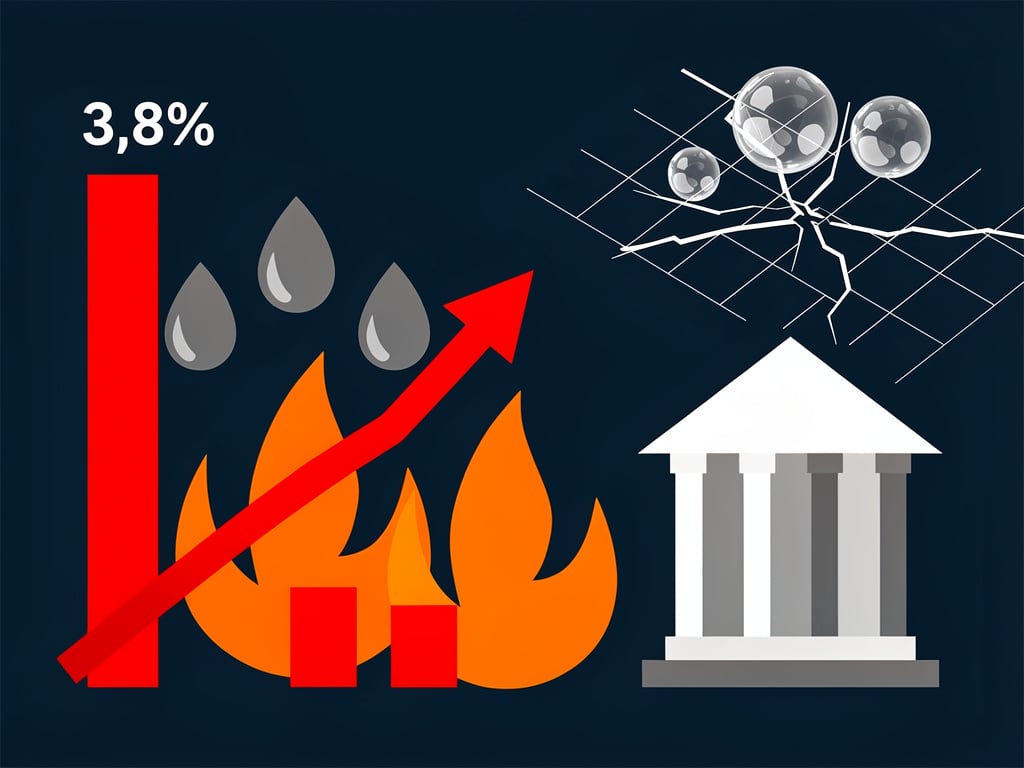
Inflation has roared back. The Consumer Price Index hit 3.8% in April. That figure nearly doubles the Federal Reserve’s long-stated 2% target. Energy costs drove much of the jump. Gasoline prices surged. Producer prices climbed even faster at 6%. Businesses face higher input costs. They pass those along.
The last time CPI reached these levels was May 2023. Back then the Fed responded with another rate increase. Stocks suffered. The S&P 500 sat deep in bear market territory. Corporate earnings took a hit from higher borrowing costs. History now repeats in uncomfortable ways. Yet the stakes feel higher this time around.
Six rate cuts since September 2024 had markets pricing in easier policy ahead. Those expectations evaporated. The CME FedWatch tool now assigns meaningful odds to at least one rate hike by January 2027. More increases could follow if oil stays elevated. Traders shifted fast. So did several Fed officials.
Oil tells much of the story. Iran attacked the Strait of Hormuz in February. The chokepoint carries 25% of global crude. West Texas Intermediate crude spiked to $120 a barrel. It settled near $89 after a ceasefire. Production ramps take months, the International Energy Agency notes. Energy components in PPI jumped 22.7%. That pressure hasn’t eased.
Reuters reported growing unease inside the Fed. (Reuters) Vice Chair for Supervision Michelle Bowman said it still seems early to judge the full effects of the Iran conflict. But if disruptions last into the second half of the year, broader inflation effects could appear. She added that such persistence would make her more likely to shift her view on the balance of risks.
Minneapolis Fed President Neel Kashkari struck a measured tone. “I think it is premature for me to conclude we need to be raising rates right away,” he said. Still, the data makes him watch closely the risk that inflation climbs further and expectations become unanchored. Three officials dissented at the last meeting. That 8-4 vote marked the first such split since 1992.
Philadelphia Fed President Anna Paulson called current policy well positioned given unacceptably high inflation pressures. The central bank stands ready to react. She welcomed markets now pricing both steady rates for a long stretch and the possibility of further tightening. San Francisco Fed President Mary Daly offered calm. No urgency exists to adjust, she said. Policy sits in a good place. Yet she watches oil futures. If they drift higher on persistent conflict, her outlook changes. Services price increases would confirm worries.
Kansas City Fed President Jeffrey Schmid sounded more direct. His primary concern remains inflation, too hot and above target for too long. The old playbook of treating energy shocks as transitory no longer applies. Current policy lacks sufficient restriction. Dialogue has begun on additional tools, including balance sheet measures.
Incoming Chair Kevin Warsh inherits this hawkish tilt. He has voiced skepticism about relying heavily on the Fed’s bond holdings to reinforce rate policy. Minutes from the April meeting, released in May, showed a majority of participants open to policy firming if inflation stays persistently above 2%. The New York Fed’s underlying inflation gauge jumped to 4% in April. Goods and services prices excluding housing accelerated.
Markets responded in kind. The yield on the two-year Treasury note climbed above 4.10%. Federal funds futures now embed roughly 37% to 58% odds of a hike before year-end, depending on the day and source. Nomura scrapped forecasts for two cuts in 2026. Bank of America pushed expected easing into 2027. J.P. Morgan sees rates on hold through the rest of this year with the next move likely higher in 2027.
The Motley Fool laid out the risks for equities. (The Motley Fool) Higher rates squeeze consumer budgets. They raise business credit costs. Both weigh on spending and earnings. The Fed’s 2022-2023 tightening cycle drove the S&P 500 down more than 20%. A textbook bear market. The index has since more than doubled from those lows. Long-term investors cheered. But valuations tell a different tale.
The cyclically adjusted price-to-earnings ratio sits at 39.5. That ranks as the second highest in history, behind only the dot-com bubble. Expensive stocks leave little room for error. A return to restrictive policy could trigger sharp losses. And yet the S&P 500 has overcome every correction, every bear market since its creation. Weakness has often marked the start of strong recoveries.
Recent data reinforces the shift. PCE inflation rose to 3.8% year-over-year in April. The labor market stabilized. Unemployment holds steady. These conditions reduce the urgency for cuts and raise the bar for any easing. Before the Iran conflict, officials leaned toward lowering rates this year. Energy shocks and supply distortions changed the math. Inflation expectations for the near term moved higher in surveys, though longer-run measures remain anchored near 2%.
Economists at major banks adjusted forecasts quickly. Goldman Sachs, once expecting cuts, now sees a more cautious path. Yardeni Research declared rate cuts for 2026 essentially off the table. Persistent inflation above target for five straight years, combined with AI infrastructure costs and a resilient job market, keeps pressure on policymakers. The Federal Open Market Committee holds its next meeting in mid-June. No change in the 3.50%-3.75% target range appears likely. The statement language and Chair Warsh’s press conference will draw intense scrutiny.
Investors face a familiar but evolved challenge. Rate hikes punish growth stocks and high-valuation sectors first. They support bank margins and reward cash. Defensive areas often hold up better. Yet broad indexes rarely escape unscathed when borrowing costs rise. Portfolio managers must weigh short-term volatility against the historical tendency of markets to climb over decades.
The Iran ceasefire extension offers some hope. Oil futures dipped after reports of a 60-day extension. But memories of the $120 spike linger. Any breakdown in talks could send prices higher again. Fed officials repeatedly stress data dependence. They will watch CPI prints, PPI releases, and energy markets through summer. Persistence matters more than one-month jumps.
Corporate America already feels the pinch. Input costs climbed. Margin pressure builds. Companies with pricing power fare better. Those in competitive industries or with heavy debt loads face tougher choices. Guidance for second-half earnings will reflect these realities. Analysts cut forecasts in recent weeks. Stock prices adjusted downward in spots, though major indexes remain near highs.
Long-term investors have heard this tune before. Buy during fear. Hold through cycles. The S&P 500 has rewarded patience. Current starting valuations, however, suggest more modest future returns than those enjoyed after the 2022 bear market. Diversification, selective exposure, and realistic return assumptions matter now more than ever.
The Fed stands at a crossroads. Years of inflation above target tested its credibility. A new chair, geopolitical shocks, and sticky prices complicate the task. Officials signal openness to higher rates if needed. Markets price that possibility. Stocks trade at elevated multiples. The combination demands caution. Not panic. But clear-eyed assessment of risks that have returned faster than many expected.


 WebProNews is an iEntry Publication