
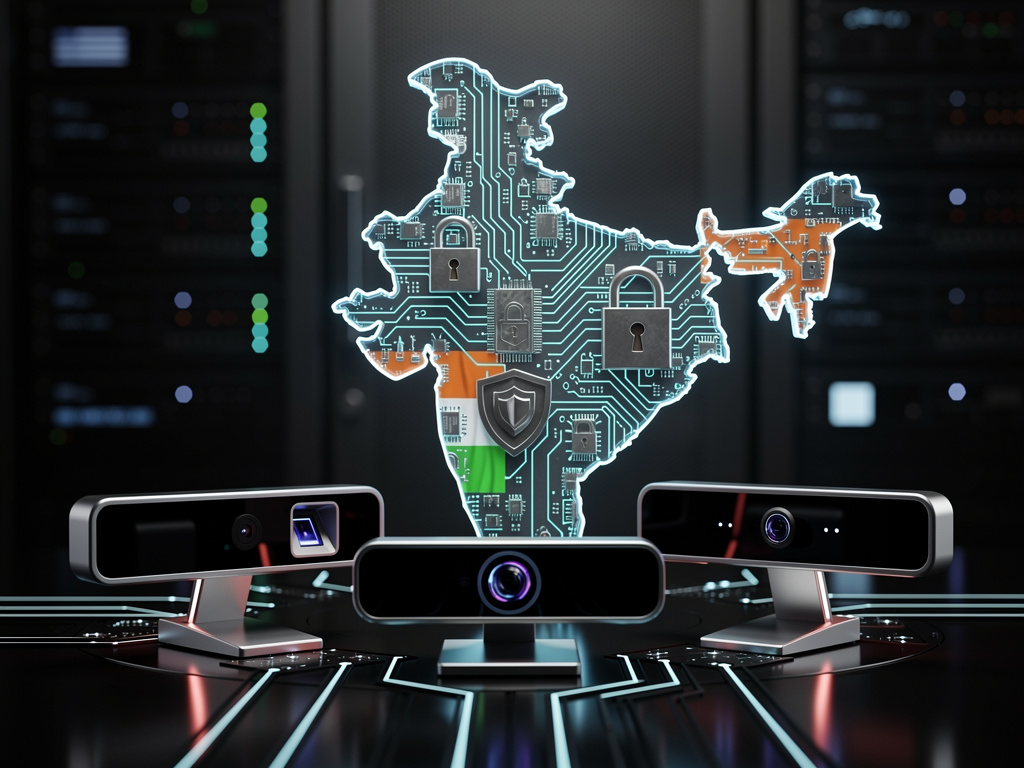
India has begun to draw firm boundaries around the hardware that powers its sprawling digital identity systems and artificial intelligence applications. Electronics and Information Technology Secretary S. Krishnan signaled last week that New Delhi intends to expand controls over devices tied to biometric authentication and AI. The move follows years of rapid adoption across government programs and private enterprise. Yet it also reflects mounting worries about data flows, foreign supply chains and potential backdoors.
Officials speak of strategic autonomy. They want hardware sourced from origins deemed reliable. They worry that sensors feeding AI models can act as black boxes, opaque and difficult to audit. So the government now eyes tighter rules on everything from fingerprint scanners in workplaces to facial recognition cameras in public spaces. The shift carries consequences for global suppliers. It also reshapes how Indian companies build and deploy these systems.
Krishnan made the position clear in recent remarks. The Economic Times reported that India will need to expand strategic autonomy and control over hardware connected to artificial intelligence and biometric authentication systems. The secretary highlighted concerns over trusted sources and the risks of industrial espionage or unintended data leakage to foreign entities. His comments align with a broader pattern. Governments worldwide now question who really controls the infrastructure behind digital public services.
Biometric systems already sit at the heart of India’s digital architecture. Aadhaar, the world’s largest biometric database, relies on fingerprints, iris scans and facial data for everything from welfare distribution to banking. Private firms layer AI on top for liveness detection and fraud prevention. The combination promises accuracy. It also creates new points of vulnerability. A compromised sensor or algorithm could expose millions of identities at once. Officials no longer treat that prospect as abstract.
The scrutiny arrives at a moment of strong market expansion. Projections show the global AI-enabled biometric sector growing sharply. One analysis forecasts the market climbing from roughly $7.3 billion in 2024 toward $19.5 billion in coming years at a compound annual growth rate near 18 percent. Asia-Pacific leads much of that surge. India in particular drives demand through smart city projects, enterprise security and government e-governance. Yet growth now collides with policy caution.
Suppliers already feel the pressure. Biometric Update detailed how senior technology officials point to the growing need for trusted hardware and local capabilities in biometrics, digital public infrastructure and AI. The conversation extends beyond simple procurement. It touches data localization, algorithm transparency and the ability to inspect devices before deployment. Foreign vendors must now demonstrate compliance with an evolving set of expectations.
Recent orders illustrate both opportunity and adaptation. NEXT Biometrics secured three public sector contracts in Taiwan and Malaysia during the second quarter of 2026. The company noted that its sensors carry certifications relevant to Indian programs including Aadhaar. Such wins suggest that providers who align with local standards can still compete. But the bar keeps rising. NEXT Biometrics announced the deals as enabling new use cases for government initiatives across the region.
Industry analysts track the numbers closely. The Indian access control market stood at INR 91.9 billion in 2025 and heads toward INR 249.7 billion by 2034. Biometric readers form a sizable slice of that pie. Demand for contactless solutions accelerated during the pandemic and never fully receded. Enterprises now combine fingerprint, facial and behavioral analytics in single platforms. AI improves accuracy against spoofs and deepfakes. The same intelligence also raises stakes around privacy and oversight.
Concerns extend to the sensors themselves. Many AI models depend on continuous streams of biometric and environmental data. Those inputs often arrive from IoT devices manufactured abroad. Krishnan described some of these components as black boxes. Their internal operations resist easy inspection. That opacity clashes with India’s push for verifiable digital infrastructure. The result is a policy pivot toward greater hardware vetting and, where feasible, domestic manufacturing.
Global trends reinforce the Indian stance. The United States, European Union and China each pursue forms of technology sovereignty. Export controls on advanced chips, data residency rules and security certifications proliferate. India draws from these examples while tailoring them to its own context. Aadhaar’s scale makes any misstep particularly visible. One breach or perceived foreign influence could erode public confidence built over more than a decade.
Private sector players watch developments with mixed feelings. Some welcome clearer rules that could favor compliant vendors and reduce gray-market competition. Others fear added compliance costs and delays. System integrators already report longer approval cycles for new biometric hardware. Yet few dispute the underlying risks. Cyberattacks on critical identity systems have risen. State-sponsored actors target supply chains. The hardware layer represents an attractive entry point.
Technology providers respond with localization efforts. Several multinational firms now maintain Indian research and testing facilities. They adapt algorithms to local languages, skin tones and environmental conditions. Liveness detection models train on diverse Indian datasets to cut error rates. These steps address performance but also help satisfy regulators focused on sovereignty. The dual benefit explains why many companies invest despite the added friction.
Market forecasts paint an optimistic picture even amid regulation. The broader biometric technology sector could reach $61.7 billion globally in 2025 and continue expanding at more than 20 percent annually in following years. Asia-Pacific captures a large share thanks to population size, urbanization and government digital programs. India contributes through initiatives that embed biometrics in banking, healthcare, transportation and law enforcement. The policy tightening may slow some imports. It could also stimulate local innovation and manufacturing.
Public discourse on X reflects the tension. Recent posts highlight both the TechRepublic coverage of India’s scrutiny and calls for trusted local solutions. Government-linked accounts emphasize strategic autonomy. Industry voices point to successful deployments and certifications already in place. The conversation reveals no consensus yet on exact implementation details. Regulators have signaled direction. Specific rules and timelines remain under discussion.
One thing appears certain. The era of unchecked hardware imports for sensitive biometric and AI applications draws to a close in India. Companies must adapt their sourcing, documentation and design processes. They will face audits, certification requirements and possibly preferences for domestically produced components. Those that move early gain advantage. Those that delay risk exclusion from major projects.
The balance between security, innovation and openness will define outcomes. India wants reliable systems that protect citizens and fuel economic growth. It also insists on retaining control over foundational digital infrastructure. Achieving both tests policymakers and technology providers alike. Early signals suggest a more assertive approach. How it unfolds will influence not only India’s digital future but also supply chains across the Asia-Pacific region.
Further reading from recent coverage includes analysis of market growth projections and specific vendor responses to the policy signals. The conversation continues as officials refine their framework. Industry insiders anticipate additional guidance from the Ministry of Electronics and Information Technology in coming months. Until then, caution shapes investment and deployment decisions.


 WebProNews is an iEntry Publication