
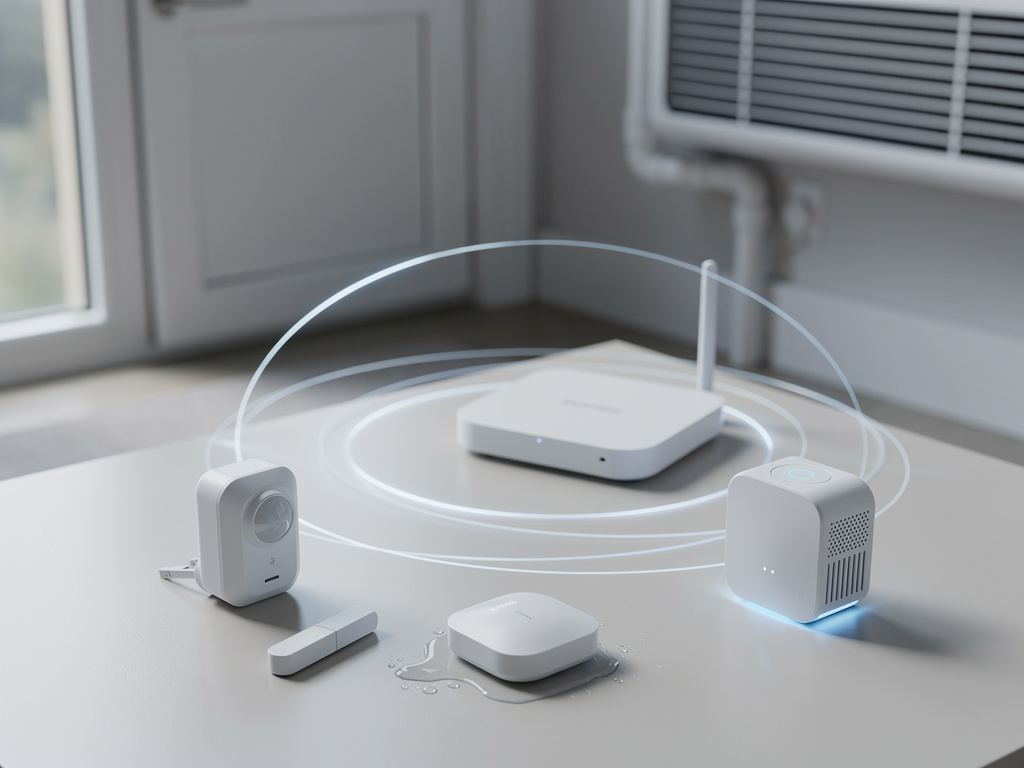
In the ever-evolving world of connected living, IKEA has quietly emerged as a formidable player, blending its signature affordability with cutting-edge functionality. The Swedish furniture giant’s latest foray into smart home devices is turning heads, particularly with the recent rollout of its Matter-compatible sensors in the United States. This move not only expands IKEA’s footprint in the American market but also underscores broader shifts in how everyday consumers are integrating automation into their homes. Drawing from recent announcements, these sensors promise to make intelligent living more accessible, without the premium price tags often associated with tech-heavy brands.
At the heart of this launch are four key sensors: the Vallhorn motion sensor, Parasoll open/close sensor, Badring water leakage sensor, and Vindstyrka air quality sensor. Priced between $8 and $30, they represent IKEA’s commitment to democratizing smart technology. According to details from Android Authority, these devices are now available both online and in select IKEA stores across the US, marking a significant step after their initial unveiling in November 2025. The rollout follows a pattern seen in Europe, where similar products debuted earlier, allowing IKEA to refine compatibility and user experience before hitting the lucrative US market.
What sets these sensors apart is their adherence to the Matter standard, a universal protocol designed to ensure seamless integration across various ecosystems like Apple HomeKit, Google Home, and Amazon Alexa. This interoperability addresses a long-standing pain point in the smart home sector, where device silos have frustrated users. IKEA’s strategy here is savvy; by leveraging Matter, the company positions its products as plug-and-play options that don’t lock consumers into a single platform.
Seamless Integration and User-Friendly Design
The Vallhorn motion sensor, for instance, detects movement to trigger lights or alerts, making it ideal for security or energy-saving automations. Its compact design and battery-powered operation mean it can be placed discreetly in hallways or closets. Similarly, the Parasoll sensor monitors doors and windows, sending notifications if something is left ajar—a boon for forgetful homeowners or those concerned about intrusions. These features aren’t revolutionary on their own, but IKEA’s execution emphasizes simplicity, with easy setup via the company’s Dirigera hub, which acts as the central nervous system for its smart ecosystem.
Pricing plays a crucial role in IKEA’s appeal. The Badring water leakage sensor, at around $10, alerts users to potential floods from appliances like washing machines, potentially saving thousands in repair costs. Meanwhile, the Vindstyrka air quality monitor tracks pollutants, humidity, and temperature, providing data that can inform ventilation decisions. As reported in The Verge, US pricing aligns closely with European models, ensuring affordability without sacrificing quality. This approach contrasts with competitors like Philips Hue or Nest, where similar devices often cost double or more.
Beyond individual products, IKEA’s expansion reflects a maturing market where smart home adoption is surging. Recent data from industry analysts suggests that over 40% of US households now own at least one connected device, up from 25% just five years ago. IKEA is capitalizing on this by offering entry-level options that encourage gradual upgrades, rather than overwhelming users with complex systems.
Affordability Meets Advanced Compatibility
The Dirigera hub, essential for full functionality, supports Matter and Thread protocols, enabling low-power, mesh networking that extends range and reliability. This is particularly relevant in larger homes where signal drop-offs can plague wireless setups. Posts on X (formerly Twitter) from tech enthusiasts highlight excitement around this compatibility, with users noting how IKEA’s sensors integrate effortlessly with existing setups, reducing the need for multiple apps or bridges.
IKEA’s timing couldn’t be better, aligning with a wave of innovation in home automation. The company’s November 2025 announcement of 21 Matter-compatible products, including lights and remotes, set the stage for this sensor launch. As detailed in IKEA Global, the range focuses on real-life needs, from energy-efficient lighting to environmental monitoring. In the US, availability has been staggered, starting with online orders and trickling into physical stores, a strategy that builds anticipation while managing supply chains.
Critics and insiders alike praise IKEA for bridging the gap between budget-conscious consumers and high-tech aspirations. Unlike luxury brands that prioritize aesthetics over accessibility, IKEA’s sensors are designed with modularity in mind, allowing users to mix and match without voiding warranties or complicating configurations. This modular ethos extends to software updates, with IKEA promising ongoing support to keep devices current amid evolving standards.
Market Dynamics and Competitive Edges
Looking deeper, IKEA’s push into the US market comes amid intensifying competition. Giants like Google and Amazon dominate with their ecosystems, but IKEA differentiates through its retail presence—shoppers can see and touch products in stores, demystifying smart tech for novices. A recent article in Dataconomy notes that this hands-on approach has boosted adoption rates, as consumers experiment with setups in mock home environments at IKEA showrooms.
Trends in home automation point to a future where sensors play pivotal roles in predictive maintenance and health monitoring. For example, air quality sensors like Vindstyrka could integrate with HVAC systems to optimize indoor environments, potentially reducing allergy triggers or energy bills. X posts from users in the smart home community emphasize this potential, with discussions around automating routines based on sensor data, such as dimming lights when no motion is detected.
IKEA’s sensors also tap into sustainability trends, a core brand value. By enabling smarter energy use—think lights that turn off automatically—these devices align with global efforts to reduce carbon footprints. Industry reports indicate that smart homes can cut energy consumption by up to 15%, a statistic IKEA leverages in its marketing, positioning itself as an eco-friendly innovator.
Innovation in Everyday Automation
Delving into specifics, the Gömpyssling light and sensor, a recent quiet launch, exemplifies IKEA’s innovative streak. This battery-powered LED with built-in motion detection is priced at just a few dollars in some markets, making it one of the most affordable entry points into smart lighting. Coverage from TechRadar highlights its simplicity, ideal for small spaces like cabinets, where it activates upon opening.
This product ties into broader patterns where automation is infiltrating mundane tasks. In the US, where home sizes vary widely, such compact solutions address niche needs that larger brands overlook. Moreover, IKEA’s embrace of Matter ensures future-proofing; as the standard evolves, these devices won’t become obsolete, a common complaint with proprietary systems.
Challenges remain, however. Not all sensors are available in every US store yet, and some users report initial setup hiccups with the Dirigera hub. Yet, IKEA’s responsive customer support, including app-based troubleshooting, mitigates these issues. Insiders note that this launch is part of a larger roadmap, with potential expansions into voice assistants or AI-driven analytics.
Broader Implications for Home Tech Evolution
The US availability of these sensors signals IKEA’s ambition to capture a slice of the $100 billion smart home market. By undercutting prices—Vallhorn at $8 versus competitors’ $30 equivalents—IKEA is forcing rivals to rethink their strategies. An analysis in Fast Company suggests this could accelerate mass adoption, especially among millennials and Gen Z, who prioritize value and sustainability.
On X, conversations reveal a mix of enthusiasm and skepticism. Tech influencers praise the affordability, while some question long-term durability compared to premium brands. Nonetheless, positive sentiment dominates, with users sharing integration success stories, like linking sensors to smart thermostats for automated climate control.
IKEA’s journey into smart homes began modestly with products like wireless charging furniture, evolving into a comprehensive lineup. The 2025 launches build on this foundation, incorporating feedback from global markets to refine offerings. For industry watchers, this represents a shift toward inclusive technology, where innovation isn’t reserved for the affluent.
Strategic Positioning and Future Horizons
Strategically, IKEA is positioning itself as a one-stop shop for home furnishing and automation. Imagine outfitting a new apartment with furniture that includes built-in smart features—sensors embedded in shelves or lights synced to daily routines. This vision is gaining traction, as evidenced by partnerships with tech firms to enhance compatibility.
Emerging trends also include the rise of health-focused automation. With air quality sensors, users can monitor for pollutants like VOCs, tying into wellness apps. A piece in Forbes underscores how IKEA’s affordable monitors could democratize air quality tracking, previously a luxury.
Privacy concerns, a perennial issue in connected devices, are addressed through Matter’s secure framework, which emphasizes local processing over cloud dependency. IKEA’s transparency in data handling further builds trust, crucial in an era of increasing cyber threats.
Global Reach and Localized Adaptations
Globally, IKEA’s smart products have seen rapid uptake in Europe, with sensors selling out in countries like the UK and Germany. The US launch adapts to local preferences, such as integration with popular platforms like Home Assistant. NotebookCheck.net reported on similar availabilities in Europe, noting quick stock replenishments due to demand.
In terms of pricing strategy, IKEA maintains consistency, with US tags mirroring those in other regions after currency adjustments. This global parity ensures brand loyalty across borders, appealing to expatriates or frequent travelers.
Looking ahead, experts anticipate IKEA expanding into more advanced categories, perhaps smart appliances or outdoor sensors. The company’s R&D investments, fueled by profits from its core business, position it well for sustained growth.
Ecosystem Expansion and Consumer Empowerment
Ultimately, IKEA’s sensors empower consumers to build bespoke smart homes without breaking the bank. By focusing on core functionalities—detection, monitoring, and control—these devices lay the groundwork for more sophisticated setups. Integration with third-party apps amplifies their utility, allowing custom automations like alerting to water leaks via smartphone notifications.
Industry insiders see this as a catalyst for wider adoption, potentially influencing standards bodies to prioritize affordability. As smart homes become ubiquitous, IKEA’s role could evolve from furniture retailer to tech enabler.
The ripple effects extend to supply chains, with IKEA sourcing components that meet Matter certifications, boosting smaller manufacturers. This ecosystem approach fosters innovation, ensuring that advancements benefit a broad user base rather than a select few.


 WebProNews is an iEntry Publication