
Reviving the Art of Minimalist Computing: IceWM 4.0’s Bold Strides in Window Management
In the realm of open-source software, where resource-heavy environments often dominate discussions, a quiet revolution persists among those who prioritize speed and simplicity. IceWM, the venerable lightweight window manager for X11, has just unveiled its 4.0 version, marking a significant milestone in its nearly three-decade history. This release, announced on the first day of 2026, brings a host of enhancements that cater to users seeking efficient desktop experiences without the bloat of modern alternatives. For industry insiders, this update underscores a continued commitment to performance in an era increasingly leaning toward Wayland and composited interfaces.
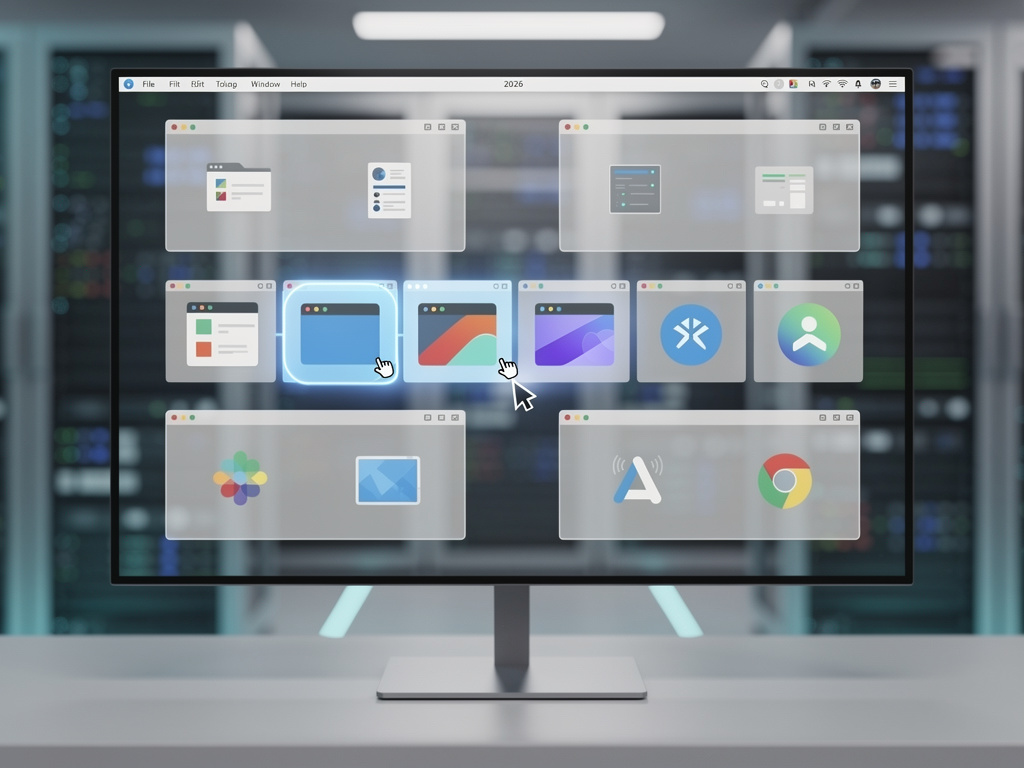
At the core of IceWM 4.0 lies a revamped Alt+Tab window switcher, a feature that has long been a staple for quick navigation. Developers have expanded its capabilities to handle a larger number of application windows, supporting both horizontal and vertical layouts with greater fluidity. Users can now preview applications in a new mode, type the first letter of an application class name to jump to instances, or even select windows using number keys or mouse input. These changes address longstanding pain points, making multitasking more intuitive on systems with limited resources.
Beyond the switcher, the release introduces support for high-resolution icons, standardizing sizes from 16 to 256 pixels and integrating better with modern displays. Alpha blending and 32-bit RGBA visuals are now default, enhancing transparency effects and overall aesthetics without compromising performance. Fixes for BSD systems ensure broader compatibility, while language translation updates cover a wider array of locales, from Catalan to Slovenian.
Enhancements Tailored for Efficiency
IceWM’s evolution reflects a philosophy rooted in minimalism, dating back to its inception in 1997 by Marko Maček. Unlike heavier managers that demand significant CPU and memory, IceWM thrives on modest hardware, making it ideal for older machines or embedded systems. The 4.0 update builds on this foundation by optimizing icon rendering for speed, a detail highlighted in reports from linuxiac.com, which notes faster processing and improved HiDPI support. This means sharper visuals on high-density screens, a boon for developers working on laptops or high-end monitors.
Integration with contemporary tools has also seen upgrades. The icewm-menu-fdo now initializes the user’s default locale, ensuring seamless operation in diverse environments. New commands and options allow for finer control over window behaviors, such as navigating the quick switch with all standard keys. These tweaks, while subtle, accumulate to create a more polished user experience, particularly for those customizing their setups via configuration files.
Industry observers point out that IceWM’s persistence in the X11 space is noteworthy as the open-source community shifts toward Wayland. Yet, for many, X11 remains indispensable, especially in enterprise settings where stability trumps novelty. The release notes, as detailed on the project’s official site at ice-wm.org, emphasize bug fixes that resolve issues from previous versions, including better handling of composite extensions and resource management.
Community Buzz and Practical Implications
Social media platforms like X have lit up with reactions to the release, with users praising the improved Alt+Tab functionality as a game-changer for productivity. Posts from enthusiasts highlight how these updates make IceWM feel fresh amid a sea of resource-intensive options. One notable sentiment echoes the efficiency gains, positioning IceWM as a counterpoint to bulkier desktops in discussions around sustainable computing.
For system administrators and developers, the practical benefits are clear. In environments like servers or virtual machines, where every megabyte counts, IceWM 4.0’s lightweight footprint—often under 1MB of RAM—allows for running multiple instances without strain. The addition of live window previews in the switcher, as covered in a piece from 9to5Linux, introduces a touch of modernity, enabling users to glimpse content before switching, which can streamline workflows in coding or data analysis tasks.
Comparisons to prior releases reveal a pattern of incremental yet impactful improvements. The 3.9.0 version, released in late 2025 and discussed on OSnews, focused on cursor enhancements via libXcursor, ditching dependencies on outdated libraries. Building on that, 4.0 refines the visual layer further, ensuring IceWM remains competitive without abandoning its core tenets.
Technical Deep Dive into Key Features
Delving deeper into the Alt+Tab overhaul, the new implementation supports dynamic scaling for extensive window lists, preventing the interface from becoming cluttered. This is particularly useful in scenarios with dozens of open applications, a common setup for software engineers juggling terminals and editors. The mouse integration allows for point-and-click selection, blending keyboard-centric navigation with graphical ease.
High-resolution icon support extends to WM_ICON_SIZE hints, enabling applications to provide scalable graphics that adapt to user preferences. This feature, combined with the default 32-bit RGBA, facilitates true alpha transparency, which can enhance themes and reduce visual artifacts on composited desktops. Reports from Phoronix emphasize how these changes position IceWM as a viable option even in 2026, amid ongoing hardware advancements.
Language and localization updates are more than cosmetic; they broaden accessibility, making IceWM a global tool. For instance, enhancements in Japanese and Indonesian translations ensure that non-English users can configure and troubleshoot with ease, fostering adoption in emerging markets where lightweight software is crucial for affordable computing.
Broader Context in Open-Source Ecosystem
IceWM’s release comes at a time when the open-source world is grappling with transitions, such as the maturation of Wayland protocols. While IceWM sticks to X11, its updates suggest a strategy of refinement rather than reinvention, appealing to purists who value reliability over hype. Insiders note that this approach mirrors projects like Fluxbox or Openbox, but IceWM distinguishes itself with robust taskbar and menu systems out of the box.
User feedback on platforms like X indicates a surge in interest from retro computing enthusiasts and those reviving old hardware. One post likened the 4.0 update to “breathing new life into classic setups,” underscoring its role in preserving computing heritage. This sentiment aligns with broader trends toward sustainable tech, where extending device lifespans reduces electronic waste.
From a development perspective, the project’s GitHub repository shows active contributions, with the 4.0 tag including commits that address edge cases in window focusing and event handling. These fixes, while technical, prevent frustrations in daily use, such as misplaced focus during rapid switching.
Innovation Amid Tradition
Looking ahead, IceWM’s trajectory hints at potential hybrid features, perhaps bridging X11 and Wayland in future iterations. For now, 4.0 solidifies its niche by enhancing usability without inflating requirements. The inclusion of new modes in the quick switch, like application preview, draws inspiration from more feature-rich managers but implements them lightly.
Enterprise adoption remains a key area, with IceWM powering thin clients and kiosks where stability is paramount. Its configuration flexibility allows for locked-down environments, ideal for public access points or educational settings. As detailed in historical overviews on the project’s wiki, this versatility has kept IceWM relevant through multiple Linux distribution cycles.
Comparatively, while KDE and GNOME push boundaries with effects and integrations, IceWM’s focus on core functionality resonates with a dedicated user base. The 4.0 release, by refining these essentials, ensures it doesn’t fade into obscurity.
Voices from the Community and Future Prospects
Discussions on X reveal a mix of excitement and suggestions for further tweaks, such as enhanced theme support or integration with notification daemons. These inputs could shape upcoming patches, given IceWM’s community-driven model.
In terms of performance metrics, benchmarks from sources like Phoronix suggest that IceWM 4.0 maintains sub-second startup times, even on hardware from a decade ago. This efficiency is critical for developers in resource-constrained environments, like remote servers or IoT devices.
Ultimately, IceWM 4.0 represents a thoughtful evolution, blending nostalgia with necessity. For industry professionals, it serves as a reminder that innovation isn’t always about adding layers but perfecting the basics. As the project continues under the GNU Library General Public License, its open nature invites contributions that could propel it further.
Sustaining Relevance in a Changing World
The release also includes minor but meaningful BSD-specific fixes, broadening its appeal beyond Linux. This cross-platform ethos strengthens IceWM’s position in heterogeneous environments, where consistency across operating systems is valued.
Translation efforts, as updated in this version, reflect a commitment to inclusivity, potentially expanding its user base in non-Western regions. Insiders speculate that such features could lead to greater adoption in educational software stacks, where lightweight managers reduce overhead on shared systems.
Reflecting on the release history available at ice-wm.org, IceWM has consistently delivered updates that prioritize user needs over flashy additions. The 4.0 milestone, with its focus on navigation and visuals, caps a year of steady progress, setting the stage for what comes next in minimalist window management.


 WebProNews is an iEntry Publication