
Voiceless Echoes: How Emerson’s Offline Smart Devices Are Redefining Home Privacy
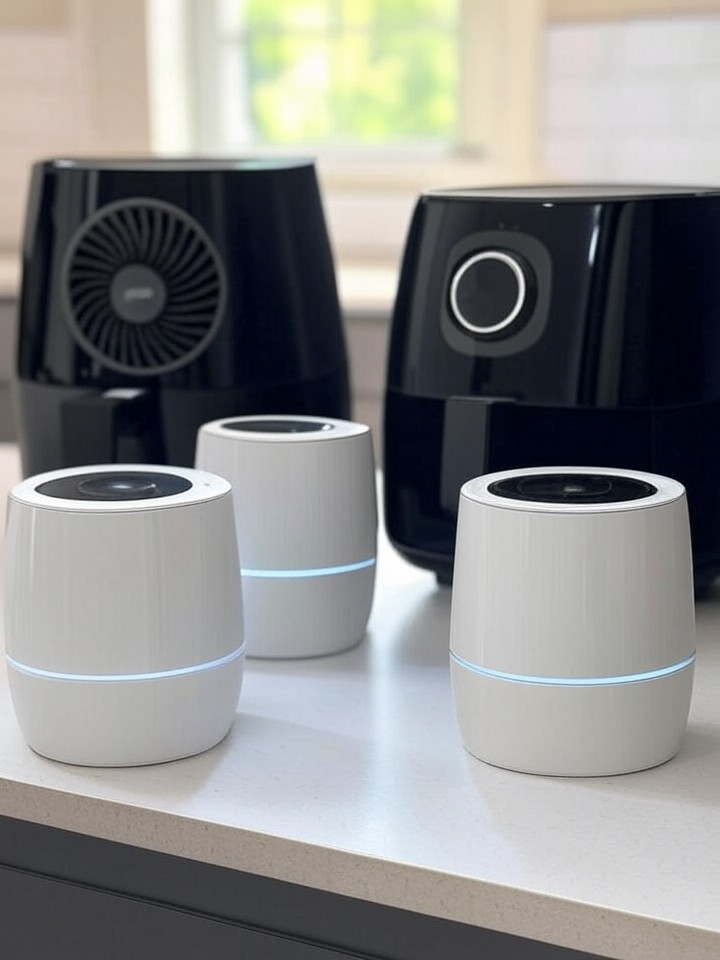
In an era where smart home devices often come with a side of surveillance concerns, a new player is challenging the status quo. Emerson Smart, unveiled by IAI Smart at CES 2026, promises voice-controlled appliances that operate entirely offline, eschewing the need for Wi-Fi, apps, or cloud connections. This innovation arrives amid growing unease about data privacy in connected homes, where traditional voice assistants like Amazon’s Alexa or Google’s Assistant routinely send user commands to remote servers for processing. According to a recent article from CNET, the Emerson Smart lineup includes everyday items such as fans, heaters, electric plugs, and air fryers, all equipped with built-in voice recognition that keeps commands local and private.
The technology, dubbed SmartVoice, processes voice inputs directly on the device using embedded AI models. This means no data leaves the appliance, addressing a core vulnerability in conventional smart home ecosystems: the constant transmission of personal information to corporate servers. Industry experts note that this approach not only enhances privacy but also eliminates setup hassles. Users can simply speak commands like “turn on” or “set temperature to 350 degrees” without downloading an app or connecting to the internet. As reported in The Verge, the devices respond instantaneously, bypassing the latency issues that plague cloud-dependent systems.
This shift toward offline intelligence reflects broader industry trends toward data sovereignty. Consumers increasingly demand control over their personal information, especially after high-profile data breaches and revelations about eavesdropping by smart speakers. Emerson’s solution positions it as a privacy-first alternative, potentially appealing to tech-savvy homeowners wary of Big Tech’s reach into their living spaces.
Privacy in Isolation: The Mechanics of Offline Voice Control
Delving deeper into the mechanics, SmartVoice leverages lightweight AI algorithms optimized for low-power hardware. Unlike resource-intensive models that require cloud computing, these devices use on-board processors to handle speech-to-text conversion and command execution. A piece from PCWorld highlights how this eliminates the need for intermediary smart speakers or hubs, streamlining the user experience while fortifying security.
Accuracy remains a key concern for offline systems, which can’t rely on vast cloud datasets for refinement. However, IAI Smart claims high recognition rates through proprietary training methods that focus on common household commands. Early demos at CES showcased seamless interactions, with devices understanding natural language variations without faltering. This is particularly noteworthy for appliances like air fryers, where users might issue specific cooking instructions mid-preparation, as detailed in a Yanko Design review that praised the hands-free convenience for busy kitchens.
Moreover, the absence of connectivity means these devices are immune to remote hacking attempts that target Wi-Fi networks. Cybersecurity analysts point out that while no system is foolproof, isolating voice data reduces exposure dramatically. Posts on X (formerly Twitter) from tech enthusiasts echo this sentiment, with users like Brian Roemmele demonstrating real-time, offline speech recognition that processes normal speech patterns without internet dependency, underscoring the feasibility of such tech in everyday scenarios.
The rollout of Emerson Smart products marks a pivotal moment for the smart home sector, potentially pressuring incumbents to innovate similarly. Companies like Amazon and Google have long dominated with their ecosystems, but privacy scandals have eroded trust. Emerson’s app-free model could attract a niche but growing market of privacy-conscious consumers, including those in rural areas with unreliable internet.
From a manufacturing standpoint, integrating voice AI into basic appliances requires balancing cost and functionality. IAI Smart has managed this by partnering with established brands like Emerson, known for reliable home goods. According to a press release on PRNewswire, the initial lineup is priced competitively, starting at around $30 for smart plugs, making offline smarts accessible without premium markups.
Critics, however, question the limitations of offline processing. Advanced features like personalized responses or integration with other devices are inherently restricted without connectivity. For instance, while an Emerson fan can adjust speed via voice, it can’t sync with a thermostat for automated climate control across a home network. This trade-off is explored in an Engadget hands-on report, which notes that while privacy is paramount, users accustomed to interconnected ecosystems might find the isolation limiting.
Market Ripples: Adoption and Industry Response
Adoption metrics will be crucial in determining Emerson Smart’s success. Early indicators from CES 2026 suggest strong interest, with booth demonstrations drawing crowds eager for privacy-focused tech. News from The AI Journal reports that the no-setup requirement—simply plug in and speak—resonates with non-tech-savvy users, potentially broadening the smart home market beyond early adopters.
Competitive responses are already emerging. Rivals are exploring hybrid models that combine local processing with optional cloud features, aiming to offer the best of both worlds. For example, open-source projects like Home Assistant, as mentioned in older posts on X by figures like Emin Gün Sirer, advocate for self-hosted systems that keep data local, aligning with Emerson’s philosophy but requiring more user effort.
On the regulatory front, Emerson’s design could influence upcoming privacy laws. With frameworks like the EU’s GDPR emphasizing data minimization, offline devices inherently comply by not collecting extraneous information. This positions IAI Smart favorably in international markets, where concerns about data export to U.S. servers have stalled some smart home expansions.
Looking at consumer sentiment, recent X posts reveal a mix of excitement and skepticism. Some users hail it as a breakthrough for true privacy, with one noting the speed and security of local AI processing on personal devices. Others worry about voice recognition in noisy environments or accents, potential pain points that IAI Smart must address through firmware updates—delivered via USB, given the offline nature.
Economically, the push for offline tech could disrupt supply chains reliant on cloud infrastructure. Manufacturers might invest more in edge computing chips, driving down costs for embedded AI. Analysts predict that by 2030, a significant portion of smart appliances could adopt similar offline capabilities, spurred by Emerson’s precedent.
Furthermore, this innovation extends beyond homes into commercial spaces. Imagine voice-controlled devices in offices or hotels where data security is critical, without risking leaks through public Wi-Fi. While not yet announced, industry insiders speculate expansions into such sectors, building on the core SmartVoice tech.
Beyond the Hype: Challenges and Future Horizons
Despite the promise, challenges loom. Battery life for portable devices could suffer from constant voice monitoring, though Emerson’s lineup focuses on plugged-in appliances to mitigate this. Maintenance is another hurdle; without over-the-air updates, users might need manual interventions, a step back from seamless cloud syncing.
Interoperability remains a sticking point. In a fragmented smart home arena, Emerson devices stand alone, unable to communicate with Zigbee or Z-Wave networks. This isolation, while a privacy boon, might deter users invested in ecosystems like Apple’s HomeKit. As CNET’s coverage points out, the appeal lies in simplicity for standalone use cases, not whole-home automation.
Sustainability angles also merit attention. By reducing reliance on energy-hungry data centers, offline AI contributes to lower carbon footprints. Each cloud query avoided saves minuscule but cumulative energy, aligning with global efforts to green the tech sector.
Peering into the future, Emerson Smart could evolve with advancements in on-device AI. Imagine integrating multimodal inputs, like gesture recognition, all processed locally. Partnerships with chipmakers like Qualcomm or Arm could enhance capabilities, allowing for more complex commands without compromising the offline ethos.
Broader implications for AI ethics arise too. By keeping data local, these devices empower users, shifting power from corporations to individuals. This democratizes smart tech, making it viable in regions with poor connectivity, as PCWorld’s article suggests.
Ultimately, Emerson’s foray signals a maturing industry where privacy isn’t an afterthought but a foundational feature. As more details emerge post-CES, the true test will be real-world performance and user feedback, potentially reshaping how we interact with our homes.
Ecosystem Evolution: Integrating Offline Innovations
Expanding on integration possibilities, third-party developers might create bridges for offline devices, using local networks without internet. This could foster a new wave of privacy-centric accessories, complementing Emerson’s lineup.
From a business perspective, IAI Smart’s strategy leverages Emerson’s brand heritage in HVAC and appliances, ensuring market trust. Financial projections, though speculative, suggest robust sales if privacy concerns continue to mount.
In educational contexts, such tech could teach principles of secure computing, demonstrating how AI functions without big data dependencies. Schools and makerspaces might adopt these for hands-on learning.
Voices from the tech community on X emphasize the revolutionary potential, with discussions around building custom offline assistants echoing Emerson’s approach. This grassroots enthusiasm could drive open-source alternatives, further diversifying options.
As the dust settles from CES 2026, Emerson Smart stands as a beacon for privacy advocates, proving that convenience and security can coexist without constant connectivity. Its success may well dictate the direction of future smart home developments, prioritizing user control above all.


 WebProNews is an iEntry Publication