
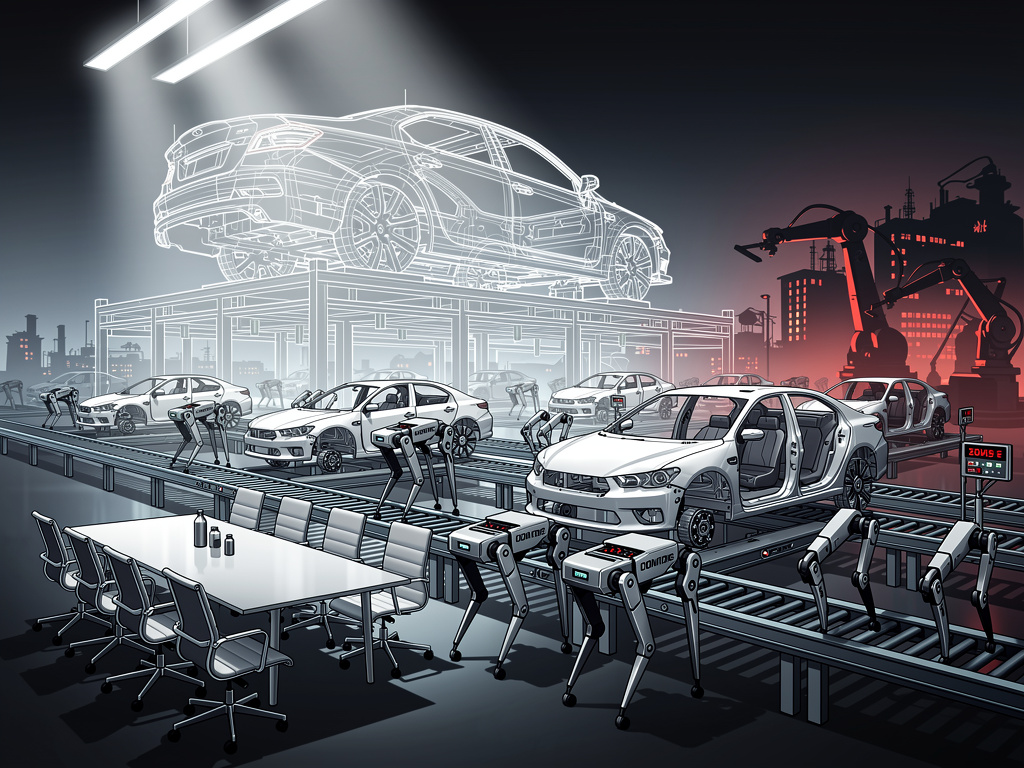
Hyundai Motor Group isn’t waiting for perfection. The automaker, which snapped up an 80% stake in Boston Dynamics for $1.1 billion in 2021, now wants tens of thousands of its robots flooding factory floors—and fast. Former insiders say the pressure has triggered a C-suite purge at the Waltham, Massachusetts, firm. CEO Robert Playter retired in February. The chief operating officer and chief strategy officer followed. CTO Aaron Saunders jumped to Google DeepMind. Senior engineers and researchers piled out too.
Board members, frustrated by production delays, lit the fuse. Boston Dynamics churns out just four Atlas humanoids a month right now. That’s nowhere near the scale Hyundai demands for its car plants. Competitors like Tesla’s Optimus loom large. Semafor broke the story, citing ex-employees who claim the exits were forced.
A Boston Dynamics spokesperson pushed back. “These changes are designed to help us prepare for the next chapter of Boston Dynamics, where we will need a structure that supports our ability to mass manufacture robots and rapidly drive scale in this emerging industry,” the statement read. The company insists it’s shifting from prototype to production Atlas. Capacity ramps soon, they say.
But numbers tell the real tale. At CES 2026 in January, Hyundai and Boston Dynamics unveiled a factory-ready electric Atlas. Specs dazzle: 56 degrees of freedom. Human-scale hands with tactile sensing. Full rotational joints for lifting 50 kilograms, spinning 360 degrees, maneuvering under cars. A new U.S. plant targets 30,000 units a year by 2028. Hyundai’s press release spells it out: phased rollouts across global sites, starting with sequencing at Metaplant America near Savannah, Georgia, in 2028. Assembly by 2030. Tens of thousands overall.
From Viral Videos to Factory Lines
Boston Dynamics built its name on YouTube spectacles—robots dancing, backflipping, parkouring. Spot, the dog-like quadruped, hit commercial sales first. Hyundai already deploys Spots for inspections and predictive maintenance at facilities like Metaplant America. Stretch unloads trailers. Now Atlas steps up for heavier lifts: material handling, machine tending, repetitive tasks that wear down humans.
Hyundai’s bet pays off in dollars too. A $26 billion U.S. investment over four years from 2025 funds the robotics push, alongside $125.2 trillion in Korea over five years from 2026. Partnerships stack up. NVIDIA for AI simulation. Google DeepMind for foundation models like Gemini Robotics. Affiliates like Kia, Hyundai Mobis, Glovis form an end-to-end chain—actuators from Mobis, logistics from Glovis.
Zachary Jackowski, Atlas VP and general manager, gushed at CES. “The convergence of robotics and AI represents more than a technological advancement… By combining capabilities of Boston Dynamics and Google DeepMind… we are taking a significant step toward redefining the future paradigm of the industry.” Carolina Parada of DeepMind echoed: “We are excited to begin working with the Boston Dynamics team to explore what’s possible with their new Atlas robot.”
Earlier signals matched the frenzy. In April 2025, The Robot Report reported Hyundai’s commitment to buy tens of thousands across the lineup—Atlas, Spot, Stretch. Jaehoon Chang, Hyundai vice chair, called it crucial: “Physical AI and humanoid robots will transform our business landscape to the next level.” Then-CEO Playter added: “Hyundai Motor Group will become our biggest customer.” Newsweek pinpointed Metaplant America as a key site.
Scale remains the bottleneck. Four per month? Laughable against 30,000 annually. X chatter amplifies doubts. One user noted: “Boston Dynamics has done a masterful job making people believe that they’re mass producing… without actually saying it.” Another highlighted Kia’s 2029 Georgia deployment, mapping 16 processes.
Pressure Mounts as Rivals Accelerate
Hyundai eyes Robotics-as-a-Service too. Trials with DHL, Nestlé, Maersk hint at broader markets: logistics, energy, construction. A Robot Metaplant Application Center opens in the U.S. in 2026 to train Atlas fleets.
Yet execution falters. The Semafor report lands amid IPO whispers. Talent drain to DeepMind stings—Saunders brings hardware know-how. Tesla, Figure, Unitree close gaps with cheaper bots. Hyundai’s captive demand—owning buyer, builder, factories—buys time. But only if production hits warp speed.
So. Factories transform. Humans shift to oversight. Hyundai leads the charge. Boston Dynamics? It delivers—or gets replaced.


 WebProNews is an iEntry Publication